
Episode 188
Ep. 188: New Year, New You: Finding Your Triathlon Why in 2026 + Sara Black
In this episode:
The Tridoc Podcast kicks off 2026 with a bang, diving headfirst into the ever-elusive concept of 'finding your why' in the world of multisport. It’s that magical question that every triathlete grapples with at some point, often while gasping for air and questioning their life choices during a brutal workout. The hosts, Jeff and Juliet, tackle how motivations can evolve as we age and our lives change—because let’s face it, the reason I signed up for a triathlon at 20 might not cut it when I’m staring down my 40s and wondering if I should just take up knitting instead. They share their own journeys, emphasizing that it’s totally normal for your motivations to shift like a triathlete dodging a rogue bike on race day. Whether you’re racing for glory, fitness, or just to escape your responsibilities for a few blissful hours, the hosts remind us that as life throws curveballs, our 'why' doesn’t have to remain stagnant. They sprinkle in some audience feedback, highlighting stories of how other athletes have navigated the rollercoaster of motivations, which serves as a comforting reminder that we’re all in this crazy ride together. So grab your favorite snack and settle in for an insightful chat about embracing the chaos of our triathlete lives and redefining what keeps us pushing through those early morning swims.
Diving deeper into the realms of triathlon and personal growth, this episode of the Tridoc Podcast doesn’t just stop at 'why'; it also ventures into practical advice for handling the inevitable ups and downs of endurance training. Jeff and Juliet, who act like the wise old sages of the triathlon world, stress the importance of adaptability. They acknowledge that as our lives morph into a whirlwind of responsibilities—like juggling kids, jobs, and the occasional existential crisis—our training must adjust accordingly. The hosts share their personal experiences of how their own motivations and training regimens have shifted over the years, often with the tangible wisdom of trial and error. They encourage listeners to embrace the idea that it’s perfectly okay to take a step back and re-evaluate what they want from their athletic pursuits, without feeling the guilt trip of ‘shoulds’ and ‘musts’. Listeners are treated to a buffet of relatable anecdotes, from the awkwardness of transitioning from youth triathlons to age-group competitions, to the realization that races don’t always define success—sometimes, just showing up is a win. This episode feels like a warm hug from a fellow triathlete who’s been through it all and is here to remind you that it’s not just about the race results, but the journey that gets you there.
Lastly, the episode features a delightful guest, Sarah Black, who brings a refreshing perspective on the intersection of physical therapy and triathlon. With her background as a Division 1 swimmer turned triathlete, Sarah dives into the nitty-gritty of pelvic health—which, spoiler alert, is a topic that doesn’t get nearly enough airtime in the world of sports. She spills the tea on how pelvic floor health impacts triathletes, especially women, and why it’s crucial to address these often-ignored issues. Trust me, if you’ve ever felt discomfort on the bike or had a sneaking suspicion that your saddle might be out to get you, Sarah’s insights will resonate deeply. The conversation flows effortlessly from pelvic health to overall athletic performance, shedding light on why understanding our bodies is key to thriving in the sport. Jeff and Sarah discuss practical strategies for maintaining pelvic health, addressing issues like bladder leakage and discomfort, and how to empower athletes to prioritize their well-being. This episode is not just a deep dive into the science of triathlon, but an empowering reminder that knowledge is power, and taking care of our bodies is paramount in achieving our multisport goals. So, if you want to race smarter, train better, and laugh a little along the way, this episode is a must-listen!
Segments:
[6:18]- Medical Mailbag: Finding your why
[31:22]- Interview: Sara Black
Links
Transcript
That's the whole idea behind having a personalized approach.
Speaker A:What you need is going to be totally different within what the next person needs.
Speaker A:But that kind of goes to our topic of durability, right?
Speaker A:You can't just log in the miles and expect to reach durability just by doing that.
Speaker A:You've got to get your muscles, tendons, ligaments ready for the load that we place on it as triathletes.
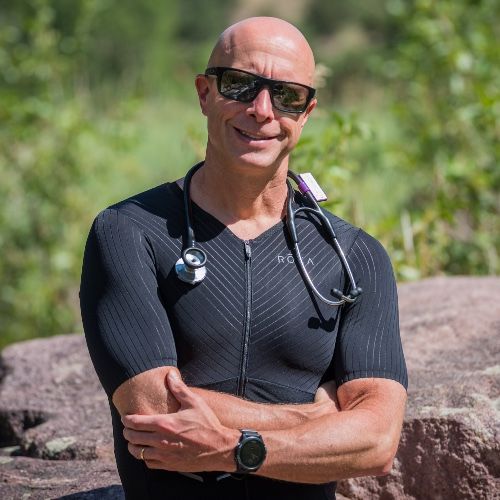
Speaker B: ,: Speaker B:I'm your host, Jeff Sankoff, the Tridoc an emergency physician, a triathlete, a triathlon coach, and of course a multiple Ironman finisher.
Speaker B:Coming to you as always from beautiful sunny Denver, Colorado.
Speaker B:It is a new year.
Speaker B:It is a time to get going from the slumber that has been winter.
Speaker B: ire and time get going on the: Speaker B:What do you have coming up this year?
Speaker B:What races are you looking forward to?
Speaker B:What are your start lines going to be and what will your finish lines hold in your not too distant future?
Speaker B:These are all questions that most of us are going to be considering and getting there is something that I look forward to helping you accomplish.
Speaker B:But before we do that, I should acknowledge that the voice at the beginning of the program today was that of my guest, and that is Sarah.
Speaker B:Sara is a kinesiology physiotherapist who was a Division 1 swimmer and now makes her business of helping men and women, but principally women, deal with aches and pains and all of the different problems that we can encounter as we make our way through training and racing.
Speaker B:She is a specialist that works with women specifically on pelvic health and she is here to talk to me about all of that and more and will be joining me a little bit later on the program.
Speaker B: times over the Latter Half of: Speaker B:Not specifically how to find it, although we will touch on that, but also how finding what your why is in terms of why you do what you do in multi sport or endurance sport in general.
Speaker B:How that can change over time as you move through different phases of your life and whether or not that is not just okay understandable given how requirements that are asked of you as we move through different phases of life.
Speaker B:The why that motivates us in multisport can change and that is not only understandable but completely acceptable and also can alter how we approach our training and racing.
Speaker B:Well, we're going to talk about all of that.
Speaker B:It's something that, as I mentioned, Juliet and I have hinted at wanting to do for some time.
Speaker B:We had some fantastic feedback in the Tridark podcast Facebook group from many listeners who illustrated to us just that point that their why changed over time and we look forward to sharing some of those comments with you as well.
Speaker B:So that's coming up in just a short bit.
Speaker B:But as I mentioned at the top of the podcast, this is a new year.
Speaker B:This is the time when you are now coming out of that holiday period where maybe your training dipped, maybe your intensity and volume and even your interest in training had taken a little bit of a slumber and now it's time to get going again.
Speaker B:I know for me, January 1st is always when I flip over the calendar.
Speaker B:Not just, just literally because we're into a new year and a new month, but also because I mentally make that switch that now I'm ready to go and here I am.
Speaker B:And I am now going to get back into serious training in earnest.
Speaker B:Not just because it's a new year, but also because now I can actually see the races popping up in the distance.
Speaker B:I know for me my first race is going to be in Victoria at the end of May.
Speaker B:I'm sure many of you are planning on racing Chattanooga, which takes place in late April, so there are going to be all kinds of people who have raced is popping up anywhere from Oceanside in March all the way through different races at the beginning of June.
Speaker B:So many of you now are going to start seeing that hey, races are coming only four or five months away, so time to really buckle down and get going.
Speaker B:If you are still not sure of how to get yourself going in terms of how to develop your race plan, how to make sure that you show up at the start line ready to go.
Speaker B:Maybe you need a coach and that's why Juliet is here.
Speaker B:That's why I am here.
Speaker B:And if you're interested in pursuing coaching in any form, please do reach out.
Speaker B:You can either reach out to me by email@tridocloud.com you can take a look at lifesportcoaching.com where I am listed, Juliet's listed and a whole bunch of other life support coaches are available for personal coaching.
Speaker B:And also we have a tri club where you can actually get coaching as a coaching plan.
Speaker B:So there are all kinds of different options available.
Speaker B:Through myself and through the company I work with.
Speaker B:But of course, there are other coaches out there as well.
Speaker B:If you want to have some ideas or suggestions for how to make that move, just take a look at the Tridoc podcast Facebook group.
Speaker B:Put your questions in there.
Speaker B:There are lots of athletes who have worked with all kinds of different coaches.
Speaker B:We have many people who are members of that group, who are coaches themselves and who would be happy to answer any questions you might have.
Speaker B:We hope to see you participate in that conversation.
Speaker B:2026 is hopefully going a phenomenal year, not just for you, but for everybody who's listening and for, of course, the podcast itself.
Speaker B:We are looking forward to answering the questions that you may have.
Speaker B:Send them our way.
Speaker B:We have a few that are already lined up and ready to go, but we are always looking for more, so please send them along with that.
Speaker B:Now, out of the way, let's get to the medical mailbag where Juliet and I are going to be talking about finding your why, understanding why that why can change, and how that's not only expected, but it's totally okay.
Speaker B:And that's coming up right after this.
Speaker B:All right.
Speaker B:It is the first medical mailbag of the new year.
Speaker B:We are recording this in December because I have some travel and I'm very excited about that travel.
Speaker B:But for you all, you are hearing this in the new year.
Speaker B:So happy New Year, Juliet.
Speaker B:Happy New Year to everybody listening.
Speaker B:And this is a special medical mailbag because it is not necessarily a question.
Speaker B:It is not a medical question, but rather it is a topic that Juliet and I have hinted at, talked about many times over the course of last year.
Speaker B:And we wanted to get to it and really give it kind of time and attention that it deserves, and it has to do with kind of globally.
Speaker B:We were just talking about this, Juliet, about how it's a two part kind of question.
Speaker B:Right, Right.
Speaker B:You did a good job of summing it up.
Speaker B:So do you want to give your take on this?
Speaker C:So, as you all know, Jeff and I are both coaches, but we're also both active age group athletes.
Speaker C:And I would categorize this both on the pointy end, which may or may not be relevant for the conversation.
Speaker C:But what we see through both our work and through our own individual athletic experience is the constant question of, why do we do this?
Speaker C:What is your why?
Speaker C:And the question itself is a little bit of a cliche.
Speaker C:What is your why?
Speaker C:It sounds like it has to be this great big deep thing.
Speaker C:But what I think is the more interesting question is not only what is your why?
Speaker C:But what happens when that why changes in different chapters of your life?
Speaker C:And does your why always have to be completely linear to the episodic nature of triathlon when it mixes with life?
Speaker C:So I thought, or we thought what we would do during this episode is talk a little bit about some of the trends we see with our athletes in terms of why they do triathlon and also just give you some of our own experience.
Speaker C:We've both been doing this for a very long time.
Speaker C:You know, how it's changed for us, how it started, where it's going, where it is right now, and how we've both come to peace with the fact that it's not always the same year to year.
Speaker C:And that's okay because we still feel like it really tracks positively for our overall triathlon experience.
Speaker B:Yeah.
Speaker C:Yeah.
Speaker C: ing a new business venture in: Speaker C:And she just emailed me yesterday and said, oh, boy, I think I'm going to have to take a couple of steps backwards.
Speaker C:And that was how she's very much thinking of it because I need to make sure that I can fulfill these financial commitments to my business.
Speaker C:And I don't know if that means I'm going to be able to race in these places that I thought I was going to be able to race.
Speaker C:And you could tell there's a little bit of anxiety in her email just about is this taking me off this really positive forward trajectory that I've been on for the last two years in terms of showing pretty significant forward improvement?
Speaker C:And this is something you could tell, it's just, oh, I qualified for world class year.
Speaker C:I need to qualify for this year.
Speaker C:It needs to be always going up to the right.
Speaker B:Right.
Speaker C:That trajectory.
Speaker C:And I just don't think that's the way it works.
Speaker C:None of us are paying our mortgage on our race winnings as a triathlete.
Speaker C:And I think that it is completely wonderful to recognize that each year brings something different.
Speaker C:And when life sends you in a particularly different direction, whether it's because of work or because of children or aging parents or your own health injuries, whatever it is, that it's completely okay to say, okay, I can't get this X out of my year, but I can completely get Y out of my year.
Speaker C:And we have such an opportunity to.
Speaker C:If you can't run for a whole season because you're injured, that doesn't mean that you can't Continue to add to that bank of experience and knowledge and fitness.
Speaker C:Because you can do two other sports, you can focus on something else.
Speaker C:You can gravel race for the year, you can road race for the year, you can open water swim for the year, you can do a million different things.
Speaker C:And I guess the ability to pivot both physically and emotionally is just really important.
Speaker C:And to see the benefit in that.
Speaker C:You probably see this in your athletes all the time as well.
Speaker B:I think it's a really great example because I went through that myself last year when I changed jobs.
Speaker B:I came from working as a clinical emergency physician, where I had a lot of flexibility in my schedule to be able to really pack a lot of training in.
Speaker B:And then all of a sudden I found myself in a job where I was working fixed hours.
Speaker B:And while I still had a reasonable amount of time to train, I was in a position where I was doing a lot more of the heavy lifting around the family about doing driving to practices, children to practices.
Speaker B:Yep, children stuff.
Speaker B:And with all everything else, my coaching and the podcast and everything else, it actually reduced my available time.
Speaker B:And so I came to realize that I was gonna have to adjust my own expectations and my own kind of why.
Speaker B:And it was not too hard to do simply because my priority suddenly shifted.
Speaker B:I realized I had been very unhappy in my personal professional life.
Speaker B:And when my personal professional life became so much more rewarding, I didn't need the huge amounts of satisfaction that I was getting from my multi sport life.
Speaker B:That balance was put into a little bit more perspective.
Speaker B:And I realized that the reason I was training as hard as I was, and I needed so much of it, it was because it was filling this huge void I had in my professional life.
Speaker B:And now that my professional life was so great that I still get so much out of multisport and I still enjoy it and I still want to do it, but I was okay with taking a few steps back in my performance because I had that satisfaction.
Speaker B:And so you can, I think, find that your why can shift based on what else is going on in your life, just like you explained with your athlete.
Speaker B:And I have other athletes who have a kind of a different take on it, where they are motivated by a why that isn't necessarily congruous with their personal and professional life, and that their why is maybe, oh, I really want to qualify for Worlds, for example, but they don't have a personal professional balance that allows them to dedicate the necessary time to do that.
Speaker B:So that is where I think some of our listeners who contributed in the Facebook group I thought was really helpful and really insightful because many of them talk about how their why has changed as well.
Speaker B:Some of them said and I want to thank each of them.
Speaker B:It was Brian and Layla and Justin and Xenia.
Speaker B:They all made some really great comments and many what I kept seeing as a recurring theme is that for each of them they would go from hey, I did this for me, I did this for results, I did this for personal fulfillment, to I did this to win.
Speaker B:And then it would come back for whatever reason, changes in life or changes in maybe an injury or whatever, to all of a sudden to I did this for me.
Speaker B:I did this for fitness or so you can have those cycles.
Speaker B:And I think it's actually quite normal.
Speaker B:Yeah, I think it's really interesting and satisfying still all the same.
Speaker C:Oh and absolutely.
Speaker C:And I think it's a great introspective experience to look at how the why has changed over the years.
Speaker C:As a so many of I came from rowing in my late teens, early 20s, rode on the Olympic team at age 21.
Speaker C:And back then it was all about I want to be the best in the world, I want to be the best in the world.
Speaker C:And I not only want to be in the best in the world, but I want to crush all comers.
Speaker C:And that's particularly.
Speaker C:That is.
Speaker C:It's an interesting sort of nature of rowing in that you have to compete against everybody to win a spot in the boat.
Speaker C:But then the minute you win a spot in the boat, it is a completely team effort to get that boat to go fast.
Speaker C:So it's a.
Speaker C:It's an interesting sort of duality there.
Speaker C:And then growing up and getting into triathlon and I still very much am driven, me personally, and this is me speaking as an athlete now, not as a coach.
Speaker C:I'm very much driven by putting the work in.
Speaker C:Winning is very much still very important to me.
Speaker C:But now more and more it's I love training.
Speaker C:If there was never another race out there, I would still train.
Speaker C:I love the way it makes my body feel strong.
Speaker C:At my age, I feel powerful, I feel empowered, I feel challenged when I look at a really hard workout and think, ooh, I don't know if I can do that.
Speaker C:And then I can.
Speaker C:Then I do it.
Speaker C:I love the feeling of being completely emptied after a workout.
Speaker C:I love all of these things.
Speaker C:And so now it's much more what it gives me from health benefits and how I feel about myself than the sort of external the races.
Speaker C:I don't need the races necessarily anymore.
Speaker C:And that's a different thing.
Speaker C:And as I look forward, my children are now adults.
Speaker C:I can see that as soon as the next generation comes along, there will be a lot fewer hours spent on this fairly selfish endeavor of triathlon training and a lot more hours spent on grandbabies.
Speaker C:So that's another chapter that's coming up.
Speaker B:And that's another kind of I think good insight which is that pad these amazing accomplishments which I think makes it easier to shift the why.
Speaker B:And I know for me, like I was trying very hard to get to win my age group, for example, and I was very fortunate to have a year where I won my age group.
Speaker C:Yeah, it did.
Speaker B:And that really satisfied that itch for me.
Speaker B:I don't feel like I listen, I still go out there, I still compete.
Speaker B:I still would love to win my age group again.
Speaker B:But if I never win my age group again, you can't take away those races where I did win and I'll always have that and I can always look back on that and be satisfied.
Speaker B:I'm not one of those people who is going to be feel like a failure if I never win my age group again.
Speaker B:It's just not the case.
Speaker B:I feel quite content in that I had a great year where I was really able to dedicate myself and train and now I can have other years where I do my best and I show up and I perform as well as I can and I get what I get and I'm okay with it.
Speaker B:And I think that that shows how your why can change.
Speaker B:Just like some of the listeners commented in the Facebook group.
Speaker B:You saw that with Brian.
Speaker B:Brian says very similar to you.
Speaker B:He's I went from being constant age group world that his mom was an age group world.
Speaker C:Yes, that's right.
Speaker B:And he just wanted to see her race.
Speaker C:Yeah.
Speaker B:And then he now is still a very high level age grouper.
Speaker B:But it's less important to necessarily be out there and get on a podium.
Speaker B:It's more important to get the journey is more important.
Speaker B:And I feel that way as well.
Speaker B:I also like you.
Speaker B:Your kids are at a different age than mine.
Speaker B:And so I'm still enjoying watching my kids compete and do their thing.
Speaker B:More so even than I enjoy the competing because watching them succeed has been quite a remarkable thing.
Speaker C:That's right.
Speaker C:And in 18 months when your guys go off to your last two go off to college, it may change again for you.
Speaker C:You may be thinking, oh my gosh, empty nesting.
Speaker B:You have to train more.
Speaker C:Yeah.
Speaker C:You have more time to train.
Speaker C:You may feel like, okay, let's see if I can get back on top of some podiums again.
Speaker C:And I actually think that's one of, that's one of the wonderful elements of age grouping, any age grouping sport, but triathlon in particular, where every five years you have the opportunity to change age groups.
Speaker C:And when you get to mine, Jeff's age, you actually want to be on the bottom of the age group.
Speaker C:Yeah, even that five year tranche, there's a big difference between 50, 55, 55, 60, et cetera.
Speaker C:And so you can almost think a little bit in terms of that four to five year time horizon and plan your life out that way.
Speaker C:In a year and a half, I will be at the bottom of my age group again.
Speaker C:Is that a time that I want to think, you know, am I going to step up again and see what we can do or am I not?
Speaker C:And I think that's one of the beauties of age grouping.
Speaker B:What do you tell your athletes who are struggling to figure out?
Speaker B:Because I usually start with my athletes, when they come to me, I'm like, okay, what's your goals?
Speaker B:And sometimes they aren't sure or sometimes their goals are things they just pick out of thin air.
Speaker B:And so eventually I will come down to, what is it that motivates you?
Speaker B:Why are you here?
Speaker B:What is your why?
Speaker B:And I will say that I have some athletes that don't know and they're not 100% sure.
Speaker B:So I know what I do.
Speaker B:But how do you help athletes find their why?
Speaker C:I don't think it's the product of a single conversation, particularly with an athlete who's just walked in the door and you don't know them very well yet.
Speaker C:Sometimes it's a sort of unfolding story as you get to know them.
Speaker C:I think that sometimes athletes get very discouraged when they had a particular why and now it's changing, they don't really know what to do with that.
Speaker C:I think it's also really important to put athletes on a track where their why is not 100% performance related.
Speaker C:Because you can't control who shows up at a start line.
Speaker C:So if an athlete's only goal is I want to win my age group or I want to win your age group is a perfect example.
Speaker C:Right.
Speaker C:Or to, in, in the new qualifying system, make it to world championships.
Speaker C:Because so much of that depends on who else shows up and you can't control that.
Speaker C:You can only control how you show up.
Speaker C:Right.
Speaker C:So I think it's really important to look at athletes strengths and challenges, find out what really makes them excited.
Speaker C:At the end of the day, you can't say to an athlete, hey, let's really go after your swim time.
Speaker C:If your athlete's least favorite discipline is swimming, you're not going to be there to shake them out of bed in the morning and get them to the pool.
Speaker C:So it has to be when athletes are looking at their race schedule or the event schedule.
Speaker C:And this is very much the time of the year that we're in right now for the following year.
Speaker C:My conversation is never, oh, these are the races I think you should do.
Speaker C:It's more what excites you.
Speaker C:What do you look at and think, oh, that looks really fun.
Speaker C:I want to go to that race.
Speaker C:I want to do that.
Speaker C:Now, of course, you know, if an athlete only has a 70.3 in September, I'm going to say, hey, let's try to do a local Olympic before that, or something like that.
Speaker C:So you have a little bit of a rust buster race.
Speaker C:But there's so many other opportunities out there.
Speaker C:So for an example, to pull from my own experience this fall, our last.
Speaker C:My last 70.3 was with you at 70.3 Washington.
Speaker C:And then I had this long fall of a lot of fitness stretching out before me, and I'm like, ooh, swim run.
Speaker C:Let's go try a swim run.
Speaker C:I've never done a swim run.
Speaker C:And that really excited me because I was completely different.
Speaker C:And so I really try to have the conversation with athletes around, what excites you in terms of an event?
Speaker C:What would you like to improve?
Speaker C:What are the goals that scare you?
Speaker C:I'm an athlete this year for the first time.
Speaker C:She came to me 18 months ago saying declaratively, I am not a runner.
Speaker C:I hate running.
Speaker C:I suck as a runner.
Speaker C:And then over time, she has really begun to define herself as a runner.
Speaker C:So imagine my delight when she told me a couple months ago that she wanted to do a marathon in April of next year.
Speaker C:Right.
Speaker C:Huge process achievement.
Speaker C:She's, I'm a runner and I'm going to do a marathon.
Speaker C:Yeah.
Speaker C:It just makes me weep.
Speaker C:Right?
Speaker C:So that.
Speaker C:So what.
Speaker C:What excites you?
Speaker C:What gets you out of bed in the morning?
Speaker C:Because at the end of the day, if we aren't enjoying around 80% of the training that we do, given it a rough number, some days suck.
Speaker C:I get it.
Speaker C:They suck for all of us.
Speaker C:But we should be enjoying this around 80% of the time.
Speaker C:And if we're not, let's go pick up something else.
Speaker B:Yeah.
Speaker B:What's the Point.
Speaker B:Otherwise, yeah, that's.
Speaker B:It's supposed to be fun.
Speaker B:If we're.
Speaker B:If it's not.
Speaker B:I always tell people, if this isn't fun, then why are we doing it?
Speaker B:I think that.
Speaker B:I think that process is pretty similar to my own.
Speaker B:I always sit with people and I always say, I understand that you have XYZ as kind of your goals, and.
Speaker B:But why?
Speaker B:What is it that that motivates you to get up and do this?
Speaker B:Because goals are nice, but there's gotta be some reason.
Speaker B:Maybe you're doing it for health, maybe you're doing it because you have disposable income.
Speaker B:Who knows?
Speaker B:Everyone's got a different reason.
Speaker B:And that's all good.
Speaker B:I just think that knowing what it is, though, and knowing can really help make it clear and always be the thing that gets you through those hard workouts and gets you through those days.
Speaker B:Because like you said, there's gonna be days that you don't feel up to it or days that you wake up and you're like, ah, do I have to do this?
Speaker B:And it's.
Speaker B:If you know it, if you have a concrete idea and a concrete kind of like in your head of what my why is makes it so much easier.
Speaker B:And nothing ever sucks because like you said, it becomes much more enjoyable.
Speaker B:Yeah.
Speaker B:And everybody, not every why has to be super inspirational.
Speaker B:Some people are like, oh, my why is I have an athlete now who has a child with a genetic disease, and their why is to raise money for them.
Speaker B:And that's wonderful.
Speaker B:I think that's amazing.
Speaker B:But not everybody has that, and that's okay.
Speaker B:Maybe your why is just because you can, and that's okay too, and you enjoy it and you just get great joy out of it.
Speaker B:And that's all good.
Speaker C:But I think it's really cool when you see an athlete's why emerge over time.
Speaker C:And you've probably had the same experience where you see a comment in training peaks one day about how this athlete has suddenly realized that the example.
Speaker C:The example that they're being for their children and never occurred to them that might be a why before.
Speaker C:Or, boy, I've seen this a bunch of times.
Speaker C:How the regular training, the structure of training, the showing up every day is really helping with their anxiety and they're off their anxiety nets.
Speaker C:Like, I've seen that once or twice.
Speaker C:And I'm like, oh, my gosh, this is incredible.
Speaker C:Or, hey, Coach, I've lost 40 pounds, right?
Speaker C:And weight was never really part of the conversation.
Speaker C:But they're so delighted that they are on this trajectory, or I'm eating better, I'm drinking less, my relationships are.
Speaker B:Are.
Speaker C:Are easier somehow, or easier to navigate because I have this thing that I do for myself every day, which is achievable.
Speaker C:And I think that's an impossible why to be able to name if you're a newer athlete out of the gate and you haven't had that experience yet, but six months, nine months a year in, to have athletes come back and say, okay, I get it.
Speaker C:These are all I have.
Speaker C:So I have five whys, and they're all important.
Speaker C:And I wouldn't have been able to name them for you a year ago, which is why I think it's a little bit of a part of an iterative process of particularly newer athletes figuring that out.
Speaker C:I know for me, over the years, training is absolutely therapy.
Speaker C:Right?
Speaker C:I have been in tears in the pool.
Speaker C:I have yelled at the sky.
Speaker C:I have had major arguments in my head on long bike rides with people that I'm upset with.
Speaker C:And it's just for me, it is total therapy.
Speaker C:And I always come back feeling better.
Speaker C:And I don't know, rue the day that I'm no longer going to be able to do this because I think I might actually have to go to therapy for the first time.
Speaker B:Therapy.
Speaker C:Yeah, exactly.
Speaker B:Well, and it's interesting because you've mentioned a few of the whys that I keep hearing repeatedly.
Speaker B:There's the personal whys, which is just weight loss, fitness, longevity.
Speaker B:There's the personal whys in terms of accomplishments.
Speaker B:I found out I'm good at this, and I found out that I can actually do well and potentially win or at least become get better every year.
Speaker B:And those are all very valid.
Speaker B:And then there's the why of doing it for family, doing it to be a role model for my kids or for whoever.
Speaker B:Then there's the why of, like you say, therapy.
Speaker B:I have used all of those to some degree over time.
Speaker B:And that's what I love about.
Speaker B:That's what has kept me in this.
Speaker B:I had a friend who said when I first started doing triathlon, he said to me, oh, you'll do this for a couple years and you'll stop after that.
Speaker B:You'll find something else.
Speaker B:And I was like, I don't know, I guess we'll see.
Speaker B: ut I have been doing it since: Speaker C:Incredible.
Speaker B:And I love it.
Speaker B:I have not found anything.
Speaker B:I'm probably better as a cyclist than I am as a runner or swimmer.
Speaker B:I still, after 20 something years, I don't love swimming.
Speaker B:I do it because I love triathlon as a thing.
Speaker B:I do triathlon well.
Speaker B:And my why has been this amalgamation of all of these things.
Speaker B:And I see it and my kids have told me many times that they look up to what I do.
Speaker B:I, I have this, I have a trophy case I bought because I wanted to put my trophies somewhere where I could see them.
Speaker B:And my, my wife makes fun of me.
Speaker B:She's, oh, I hate that thing.
Speaker B:I don't want to.
Speaker B:And I'm like, you know what?
Speaker B:I do.
Speaker B:And so there's the selfish there, but there's also the, there's also the just, hey, this is 20 something years of accomplishment.
Speaker B:And it shows dedication, it shows how much hard work went into everything.
Speaker B:And I think that all the whys that people have, no matter what they are, I think they're each have their merit.
Speaker B:They each are important.
Speaker B:And whatever it is that gets you to show up day in and day out, that's what matters.
Speaker C:I think it's just, well, they're all 100% validated.
Speaker C:I think that's just the important thing.
Speaker C:And you're the only one who gets to decide what they are.
Speaker C:And I guess I just want to return for a moment to what we were talking about right before we started the podcast, which was just the episodicness of this and how it can change over time.
Speaker C:And if I look at my, my trajectory over the last, let's call it 10 years, right?
Speaker C: I mean, it was: Speaker C:2018 was winning 70.3.
Speaker C:2019 was cancer, totally fell off the wagon.
Speaker C:2020 was the pandemic.
Speaker C: Nobody was racing: Speaker C:We were getting back into it.
Speaker C:2022 was a huge year of race for me.
Speaker C:2023, I was injured, completely done, right.
Speaker C:And.
Speaker C:But the point is that, so each year that life happens, whatever it is, you still get to redefine what that year means for me and you still for you.
Speaker C:And you still get to have a why during that year.
Speaker C:So I guess I would really encourage athlete.
Speaker C:As life happens and you don't always have control over it, whether it's a worldwide pandemic or a disease or an injury or a family tragedy or whatever it is.
Speaker C:I've got to take the year off to take care of my mother.
Speaker C:I've seen that a couple times with athletes, right.
Speaker C:I have a child who's really struggling.
Speaker C:I need to pay attention to them.
Speaker C:So many reasons that we have to take hours away from triathlon.
Speaker C:But there's.
Speaker C:But that doesn't mean it stops.
Speaker C:Like you can still have a why.
Speaker C:You just have to pivot.
Speaker C:There's ways to get around it.
Speaker C:There's always something that you can do.
Speaker C:I really do believe that and it really does.
Speaker C:Your why can change, but your not commitment to the sport, because that's often equated with time.
Speaker C:But what you can do in this endeavor that we enjoy so much can still be really positive.
Speaker B:Yep, yep.
Speaker B:I think that's very well said.
Speaker B:Very well said.
Speaker B:I think that just to put a bow on it is it doesn't matter what your why is, but I think it really matters that you have one.
Speaker B:And I think if you are casting about for what it is, give some thought to not just what your goals are, but why you have those goals and why it is you want to get up every day to do this.
Speaker B:And if you're having trouble figuring that out, put a note in the group and see what people say.
Speaker B:Because I'm telling you, everybody out there either struggles with this at some point or has a story that will help you figure out what your why is.
Speaker B:Because not everybody knows and that's okay.
Speaker B: g and starting off this year,: Speaker C:And I would remind athletes, and I actually just wrote a note to an athlete in training piece about this week is that at this time of year when the days are short and everybody's sick and it's cold and wet and a lot of of North America, it is really easy to doubt your why.
Speaker C:I'm feeling really undermotivated.
Speaker C:I can't seem to get out of bed, I'm feeling tired, I'm feeling stressed, everybody's sick, et cetera.
Speaker C:That is very typical for this time of year.
Speaker C:And so just remind yourself that if you're struggling a little bit right now, it's okay.
Speaker C:Take some time.
Speaker C:It's very common experience right now.
Speaker C: that you're excited about for: Speaker B:Great way to end.
Speaker B:I can't think of a better way.
Speaker B:I hope that you all found this to be a useful and fruitful and helpful way to spend a medical mailbag.
Speaker B:If you enjoyed this, please let us know.
Speaker B:And if you hated it, you can let us know too.
Speaker B:But either way, please do drop us a line, leave a rating and a review wherever you listen to the show because it really does help and because we want to know that you get something out of this kind of content.
Speaker B:We will be back in a couple of weeks time with another medical question and if you have a medical question, be it about training, racing or recovery, please do let us know.
Speaker B:You can email@triodocloud.com you can drop a question into the Facebook group or you can just reach out on my website.
Speaker B:There are innumerable ways to contact us, so please do.
Speaker B:Juliet, thank you so much.
Speaker B:Happy New Year once again.
Speaker B:I look forward to chatting with you in a couple weeks.
Speaker C:Thanks so much Jeff.
Speaker B:My guest on the program today is a native of Richmond, Virginia.
Speaker B:Her name is Sarah Black.
Speaker B:She attended East Carolina University, was an NCAA Division 1 swimmer, which means she swims a hell of a lot better than I do.
Speaker B:She earned a Bachelor of Science in Exercise Physiology with a minor in Business and later went on to receive a doctorate in Physical Therapy from Lynchburg University where she developed a passion for helping patients with pelvic floor dysfunction and pregnancy related concerns and postpartum musculoskeletal issues.
Speaker B:Sarah is also the creator of the Triathlete Project, blending her physical therapy expertise with her athletic background to help swimmers, bikers and runners train safely and effectively in her free time as though she actually has any.
Speaker B:She participates in triathlons, running races, hiking and backpacking, and enjoys time outdoors with friends, family and her dogs Frankie and Chola.
Speaker B:I'm sure we'll get to all of that, but for right now I'm glad that Sarah has taken some time to join me here on the Tridarch podcast.
Speaker B:Sarah, welcome and thanks for being here.
Speaker A:Yeah, thank you so much for having me.
Speaker B:Sarah, tell me about your background in triathlon as a Division 1 swimmer.
Speaker B:You're going to make all of us jealous because of course most of us age groupers the swim is not the most fun part.
Speaker B:But do tell.
Speaker B:What is your experience in triathlon?
Speaker B:What have you been up to in multi sport?
Speaker A:Sure I did start my career as a swimmer.
Speaker A:I started swimming age 4 competitively and on through college and just felt after college like I really needed to fill that void and triathlon was next.
Speaker A:I said hey, I've got the swim down.
Speaker A:I just need to get better at the biking and running.
Speaker A:So yeah, I dabbled in sprints and Olympics for several years.
Speaker A:I've been doing that for about 15 years now.
Speaker A:Just recently got into long distance triathlon.
Speaker A:My first half Ironman was Eagle man two years ago.
Speaker A:Since then, I've done seven halves, and I actually just finished my first full Ironman in Wisconsin this weekend.
Speaker B:Oh, Just a couple days ago.
Speaker B:How did it go?
Speaker A:It's really hard.
Speaker C:Yeah.
Speaker B:You picked.
Speaker B:You picked a doozy of a course.
Speaker A:I know the bike was just hilly and.
Speaker A:And that was my first marathon that I had ran, but I did great.
Speaker A:I was first in my age group.
Speaker A:I took my Kona slot, and so I guess I'm doing another one.
Speaker B:Oh, you're just going to drop that at the end.
Speaker B:How did it go?
Speaker B:First Ironman.
Speaker B:Oh, I won my age group.
Speaker B:I'm going to Kona.
Speaker B:That's not generally how it's supposed to work out, but congratulations to you.
Speaker B:That's really wonderful.
Speaker B:I have spent some time in Verona, Wisconsin, and did the Wisconsin bike course every time I was out there.
Speaker B:And every time I would finish riding that bike course and be like, who volunteers to do this as part of a race?
Speaker B:This is a very legitimate bike course and I am a very strong cyclist and I was.
Speaker B:Yeah.
Speaker B:Not too encouraged to want to do that as a race.
Speaker B:So all props to you on doing that.
Speaker B:Yeah.
Speaker B:And first, that's a very nice accomplishment.
Speaker B:So congratulations on that Kona slot.
Speaker B:That's amazing.
Speaker B:Tell me about Zia physical therapy, which I guess is your main job.
Speaker A:Yes, I am the owner of Zia Physiotherapy.
Speaker A:Right now I do mobile in home visits for my patients.
Speaker A:I am a physical therapist and I specialize in pelvic health.
Speaker A:Also work with athletes on orthopedic care and performance optimizations.
Speaker A:I just really enjoy helping people, from new moms to triathletes and very active people, build strength, durability, confidence in their bodies.
Speaker A:Really help them perform at their peak.
Speaker A:A big part of my work is progressive strength training for folks, professional bike fitting and running gait analysis.
Speaker B:So you're really tickling all of my fancies here because I have spoken on this program numerous times about the value of having a physical therapist as part of your team.
Speaker B:Should you have issues with injury or even just for health maintenance.
Speaker B:I've talked a lot about strength training and.
Speaker B:And I have talked a lot about the value of having metrics and things like that.
Speaker B:But you mentioned pelvic floor health, and I really want to focus on that because women's issues are very important to me and to my audience.
Speaker B:And I want to understand how pelvic floor health, or just pelvic health in general is important to your women clients and to your male clients.
Speaker B:As well, and how it intersects with triathlon.
Speaker A:Sure, it's.
Speaker A:It's pelvic health comprises a whole bunch of things.
Speaker A:So it's very simply our bladder, bowel and sexual function, three very vital functions as humans.
Speaker A:It's really sad when it gets neglected and isn't talked about as much as it probably should be.
Speaker A:For women, it's primarily based around the prenatal postpartum stages of life.
Speaker A:But there can be issues in as early as adolescence and your early 20s.
Speaker A:And then certainly after prenatal postpartum stages, we're then talking about menopause.
Speaker A:And that's a real hot topic now.
Speaker A:But all the things that go along with that for me and women specifically, I primarily treat pain with intimacy, bladder leakage, constipation, pelvic girdle pain, low back pain.
Speaker A:And it's all really connected in that sense.
Speaker B:One of the things that gets brought up to my attention frequently, and I don't always have a good answer for it, I go through my usual sort of process of trying to solve problems.
Speaker B:But one of the things that comes to me frequently is women who have issues with comfort on a saddle.
Speaker B:Many saddles are made traditionally for men.
Speaker B:There are an increasing number of saddles out there that are designed for women.
Speaker B:There are split saddles.
Speaker B:There are a variety of different kinds of sad.
Speaker B:A couple of women I've met through the years who insist that regardless of what kind of saddle they use, fitters that they go to, they're just not able to find a saddle that suits them, is able to be comfortable for them.
Speaker B:Is this something that you've run into?
Speaker B:And as somebody who focuses on pelvic health, what is your approach to helping these kinds of women and find something that is a solution for them?
Speaker A:That is a really tough, tough topic because it really can ruin your bike when you're not comfortable on the saddle.
Speaker A:My best advice is just keep trying different saddles because you shouldn't have to be in pain there.
Speaker A:But also considering frequent bike fits because women are returning to the sport postpartum and their posture has totally changed their ribcage positioning, their pelvic floor capacity.
Speaker A:All of that's going to have a huge impact on how comfortable they are in the saddle.
Speaker A:So that's.
Speaker A:It's just a tough one.
Speaker B:Is there anything that you often will work with a woman who has a problem like this to try and strengthen the pelvic floor or strengthen different areas of their abdominal musculature to help with that?
Speaker C:Sure.
Speaker A:Women in general, or are we Talking.
Speaker B:Women who have problems with seat comfort.
Speaker A:Then it's definitely tapping into the deep core.
Speaker A:Okay, and then what's the outer core group doing?
Speaker A:How is glute med, glute max strength?
Speaker A:How are our hamstrings?
Speaker A:How are our adductors functioning?
Speaker A:Yep.
Speaker A:Certainly pelvic floor, all of that kind of goes hand in hand.
Speaker A:Yeah.
Speaker B:And returning to your more traditional clientele, women who are postpartum, they've had their kids, they have pelvic floor weakness, many of them.
Speaker B:What are the kinds of exercises that you work with them to try and keep the pelvic floor strong, avoid problems later in life, but also allow them to be very active, because we know that being active puts stresses on a weak pelvic floor.
Speaker A:I think starting with the big question, what's a weak pelvic floor?
Speaker A:More often than not, we're talking about Kegels and strengthening the pelvic floor.
Speaker A:Having a really strong contraction or your concentric contraction.
Speaker A:I would argue with most women, they need to focus more on lengthening the pelvic floor and being strong with that eccentric load of the pelvic floor.
Speaker A:Most women hold tension, develop trigger points in the pelvic floor, and their muscles are too overactive.
Speaker A:So there can be underlying weakness that needs to be addressed.
Speaker A:But that's the big first step that is deciphering with an internal exam.
Speaker A:Generally.
Speaker A:What's going on with the pelvic floor?
Speaker A:Getting your hands on the pelvic floor, digital assessment.
Speaker A:What is the left side of the pelvic floor doing compared to the right side?
Speaker A:And how is glute weakness or inner thigh weakness, Hamstring weakness.
Speaker A:How's that impacting the pelvic floor?
Speaker A:More often than not, the pelvic floor muscles are not the main source of the issue.
Speaker A:So it's getting to the root cause of what's going on with the rest of their core.
Speaker A:What's not showing up to help in sport or daily activities?
Speaker A:So exercise wise, everybody is different.
Speaker A:And it's super important to have a personalized, progressive approach to pelvic floor strengthening and pelvic floor coordination.
Speaker B:So how will women present to you if they have an issue with the pelvic floor that needs to be addressed?
Speaker B:What tends to be the kinds of complaints that they'll come with?
Speaker A:Yeah, the big ones that we talked about before.
Speaker A:Pain with intimacy, pain with any.
Speaker A:With gynecologic exams, not even being able to insert tampons when it's so severe.
Speaker A:We have diagnoses like vaginismus and vulvodynia GI issues, abdominal bloating, which can stem from a whole slew of issues.
Speaker A:But leakage is one of the more popular ones.
Speaker A:Leakage with exertions, laughing, coughing, sneezing.
Speaker B:And by leakage you mean bladder.
Speaker A:Bladder leakage also bowel leakage.
Speaker B:Okay.
Speaker B:And in those cases it's again a matter of looking at the pelvic floor, looking at lengthening those muscles and then potentially strengthening them.
Speaker A:Yes, but a head to toe approach too.
Speaker A:How has posture, how is posture having an impact on what?
Speaker A:How the pelvic floor muscles are functioning.
Speaker A:Again, ribcage positioning that we talked about before.
Speaker A:Are we overusing or external obliques for instance.
Speaker A:And is that causing pressure and load down into the pelvic floor when you are exerting yourself?
Speaker A:Very common in runners as being an issue.
Speaker A:So is there an imbalance throughout the rest of the core foot intrinsics?
Speaker A:How are those guys functioning?
Speaker A:Do we have collapse at the arches when we're running, when we're cycling, when we're just going through day to day life?
Speaker A:Because that will have an impact on the load and the pressure management of the pelvic.
Speaker A:Pelvic floor too.
Speaker B:And then you mentioned to me before we started recording that you also work with men who have pelvic floor health issues or pelvic health issues.
Speaker B:Sorry.
Speaker B:So what kind of issues do you see with male athletes who might need your services?
Speaker A:Sure.
Speaker A:That can stem all the way from erectile dysfunction and whether there's nerve compression, muscle concerns that might be impacting that.
Speaker A:There's.
Speaker A:The prostatectomies are so common these days.
Speaker A:So post op issues with those surgeries, Nerve compression specific to cyclists.
Speaker A:Pudendal neuralgia is a common one.
Speaker A:Really severe pain in the genitals and dysfunction there.
Speaker A:So yeah, there's a high prevalence of pelvic floor dysfunction in men as well.
Speaker B:So pudendal neuralgia.
Speaker B:Let's focus on that for a second because that's something I'm familiar with, but I'm not sure that many of my listeners will understand.
Speaker B:What is it, what causes it and how can it be avoided?
Speaker B:Because really avoidance of those kinds of nerve injuries are the most important.
Speaker B:So first, what is it?
Speaker A:Yeah, your pudendal nerve, it has huge control over the pelvic floor and how those muscles function.
Speaker A:And it's coursing through those structures that for cycling specifically, that are your points of contact on the saddle.
Speaker A:Back to what we were talking about with ladies, positioning on the saddle for men is just as important.
Speaker A:And that pudendal nerve then along with Other nerves that are in that general vicinity can get compressed and can cause very severe pain and symptoms with day to day activities too.
Speaker B:And so the best way of preventing that is again just an appropriate fit, an appropriate fitted saddle and then positioning.
Speaker A:On the bike, that's one main piece.
Speaker A:And then back to that head to toe whole body approach.
Speaker A:How are your hips functioning?
Speaker A:How mobile are your hips?
Speaker A:How's your low back and lumbosacral spine functioning?
Speaker A:Really taking a look, taking a step back and looking at where we might have a lack of mobility, all too often that might be contributing to stiffness, rigidity in the saddle and then impact on the pelvic floor.
Speaker B:And then moving away from the pelvis and just focusing on some of the other extremities or what are the other kinds of common things that you see amongst triathletes that don't necessarily need a visit to a physician but can be mo can be taken care of just with strengthening, stretching and just TLC through movement of body and better preparation.
Speaker B:What are the kinds of common ailments that you encounter amongst triathletes?
Speaker A:Oh goodness.
Speaker B:And this, I know there are so many.
Speaker A:This has been lined with your tendinopathies, your tendon podcast that I listened to recently.
Speaker A:That's just a big one.
Speaker A:Overload, overuse injuries is just super common with running.
Speaker A:It can be that patellofemoral pain, plantar fasciitis, Achilles concerns, hamstring strain, the list is really endless.
Speaker A:But biking, then low back, neck concerns, you've got that knee pain and then swimming and it's rotator cuff, tendon issues, let's call them that.
Speaker A:Yeah, just shoulder impingement.
Speaker B:It's.
Speaker A:Some studies claim up to 91% of triathletes have some sort of injury over their life in sports.
Speaker B:Oh, I'm sure it's.
Speaker B:I'm sure it's more than that, but fortunately most of them are minor.
Speaker B:But just running right running itself is, lends itself to injuries.
Speaker B:We know that biking also, as you mentioned, positioning on the bike can lead to all kinds of low back stuff and knee stuff and then of course swimming with shoulders.
Speaker B:And what I have experienced in my own career at 20 plus years in this sport is really a nuance about how to manage injuries.
Speaker B:And I'm really curious for your insights on this.
Speaker B:For example, I have this chronic shoulder thing.
Speaker B:It's.
Speaker B:I know myself as a physician, it's a rotator cuff thing.
Speaker B:And I know by virtue of the fact that I'm a 58 year old man with a rotator cuff thing, it's just never going to get better.
Speaker B:And I can do all the things I want and I'm stuck with it.
Speaker B:And eventually it's either going to tear and I'm going to need to have surgery, or it'll just stay the way it is and I'll be fine and I'll muddle my way through it.
Speaker B:Conversely, I recently had issues with back spasms.
Speaker B:And I'm old, right?
Speaker B:So I'm going to have all these problems.
Speaker B:But I had back spasms, and they were really bothering me.
Speaker B:What I learned through my own experimentation.
Speaker B:I had been doing this stretching routine that I started at the beginning of the year, and I was really actively working to try and prevent back spasms.
Speaker B:And when I got them, I continued with my stretching routine and realized that my stretching wasn't making me feel better, it was making me feel worse.
Speaker B:And if I just stopped after a week of not stretching, my back was miraculously cured.
Speaker B:I've been fine ever since.
Speaker B:And so I'm noticing that benign neglect sometimes is what you need to do, whereas in other cases, we know that rest is so important and we're terrible as triathletes in doing it.
Speaker B:Resting is awful.
Speaker B:But then when you look at tendinopathies, like the Achilles tendinopathy, I have an athlete who also raises.
Speaker B:Raised Wisconsin called me this morning.
Speaker B:He was very excited about how his race went.
Speaker B:But he's telling me about his Achilles, and it really sounds like he's got a tendinopathy there.
Speaker B:And I told him, I said, look, we're going to let it cool off, but then we need to get on it immediately with strength, because there are some injuries where you have to attack it and doing so in a thoughtful manner and not stretching necessarily, but with strength work and things like that.
Speaker B:And I'm curious, you, as a physical therapist, do you find yourself having to give this kind of advice to people?
Speaker B:Almost like having them look at you with their heads cocked to the side going, make up your mind.
Speaker A:Yeah, it's.
Speaker A:That's the whole idea behind having a personalized approach.
Speaker A:What you need is going to be totally different than what the next person needs.
Speaker A:But that kind of goes to our topic of durability, right?
Speaker A:You can't just log in the miles and expect to reach durability just by doing that.
Speaker A:You've got to get your muscles, tendons, ligaments ready for the load that we place on it as triathletes.
Speaker A:Strength training is super important.
Speaker A:I'm totally on board with you, and it's A non negotiable in my opinion, for triathletes.
Speaker A:We need it physiologically and that's two to three times a week, 30 to 45 minutes.
Speaker A:You've got to make time for heavy load.
Speaker A:Three to five sets, three to six reps. That is just vital for the sport that we're doing.
Speaker A:I really am not a fan of saying let's avoid doing what you're doing because most triathletes are not going to listen to that anyway.
Speaker A:But rest is more often than not, it's not appropriate and it's back to the tissue time healing charts and timelines.
Speaker A:Muscle needs something different than tendons, than ligaments.
Speaker A:It's taking the remodeling into effect a person's stage of life and their collagen rebuilding.
Speaker A:All of that needs to be taken into account and can approach these injuries with a personalized approach.
Speaker B:I love a couple of the things you said there.
Speaker B:I'm just going to rephrase them.
Speaker B:Number one, the idea that different tissues need different approaches, I really like that.
Speaker B:And then I also love that you don't love rest.
Speaker B:So I want to go back to that because I as a coach, I tell my athletes when they start working with me is that I am not fond of rest days, like complete days off.
Speaker B:I believe that especially as we age, a day off is a day to get stiff and sore.
Speaker B:And that instead of a rest day, I prescribe light days or active recovery days.
Speaker B:And I'm curious, as a physical therapist, what is your sense through your education and kinesiology background, physical therapy background?
Speaker B:Am I making this stuff up or am I right to be telling my athletes this?
Speaker B:Because rather than just doing what I say, it's coming from a place of, of science and understanding.
Speaker A:It is, it definitely is.
Speaker A:And I am totally on board with you just going through right muscles, they generally take just higher blood flow.
Speaker C:Right.
Speaker A:It's taking two to six weeks to fully recover that from that.
Speaker A:But they need functional healing.
Speaker A:You've got to load early and be smart about how you're loading the tendons then and ligaments with less blood flow, 6 to 12 weeks for your tendons and then that structural loading.
Speaker A:Tendons need slow, heavy, progressive loading and it's super important to get them back.
Speaker A:And that's with tendon issues again, making up a huge portion of injuries in triathletes.
Speaker A:That's a big one.
Speaker A:But yeah, I am not a fan of rest.
Speaker A:There's a time and place for rest for sure, but it just all has to be be very Meaningful.
Speaker B:I want to finish up with a couple of things.
Speaker B:Number one, you obviously have had great success throughout your career.
Speaker B:We, and I'm going to preface this question because I don't want to sandbag you.
Speaker B:We are not a big fan on this program of supplements because we believe here at the Triduck podcast that the gains that you get from supplements are far inferior to the gains you get just from putting in the hard work.
Speaker B:But we also understand that people, people do take supplements and sometimes they get great benefits from it.
Speaker B:So we are curious, with your great success that you've had, are there any particular supplements that you take and have found benefit from?
Speaker A:Yes.
Speaker A:Creatine is super important for me.
Speaker A:I have found that to be very helpful and this is anecdotally too right for me as a female in perimenopause.
Speaker A:It has made significant changes with respect to muscle mass.
Speaker A:Zinc, magnesium and iodine.
Speaker A:Those are my go tos.
Speaker B:And then the second question I wanted to ask you.
Speaker B:Great, successful season going to Kona next year.
Speaker B:Have a great business going.
Speaker B:What is next for Sarah Black?
Speaker A:The full distance was a bucket list for me.
Speaker A:I really love the half iron distance.
Speaker A:So I'm still shocked at myself that I said yes and accepted that the slot.
Speaker A:I recognize it's a once in a lifetime opportunity.
Speaker A:I'm really excited to, to be able to do that.
Speaker A:Yeah, I'll, I will be preparing for that.
Speaker A:But I love the half distance.
Speaker A:I love the racing that you can still do in the half distance.
Speaker A:I love Eagle man.
Speaker A:I'll sign up for that for next year.
Speaker A:So I'll do a couple.
Speaker A:But for Zia's growing, Zia's doing great things.
Speaker A:I hope to have.
Speaker A:Fingers crossed.
Speaker A:Hope to have a clinic space where I can offer more in terms of bike fitting and running, gait analysis.
Speaker A:And in the next month or so, we're in the process of signing the lease for space for Zia and Owned.
Speaker B:Why?
Speaker B:Why Zia?
Speaker A:Zia, My husband's from New Mexico.
Speaker A:Albuquerque, New Mexico.
Speaker A:And that is the state flag, that symbol.
Speaker A:And it's very deep for something so simple.
Speaker A:It's the four stages of life.
Speaker A:It's the four times times of the day.
Speaker A:It's very deep and I think that's just so important for what my passion is, which is just helping active patients through every stage of life and really focusing on longevity and helping them remain in the sport that they love and want to do.
Speaker B:That's wonderful.
Speaker B:That's a great sentiment and a great thought.
Speaker B:And I can't think of a better way to finish there.
Speaker B:Sarah Black.
Speaker B:She is the owner and proprietor and the main therapist at at Zia Physiotherapy and she is based in Washington D.C. or just outside Washington D.C. and she joined me today on the Tridoc Podcast to talk all about that, about pelvic floor health for men and women and about much else.
Speaker B:Good luck to you on your work endeavors and of course on your Kona training that you have a little bit of time to recover from Wisconsin and then get going on for next year.
Speaker B:Thank you.
Speaker A:Yeah, great chatting with you.
Speaker A:Thanks so much.
Speaker D:Hi, my name is Rebecca Adamson and I am a proud Patreon supporter of the Tridock Podcast.
Speaker D:The Tridock Podcast is produced and edited by Jeff Senkoff along with his amazing interns Cosette Rhodes and Nina Takashima.
Speaker D:You can find the show notes for everything discussed on the show today as well as archives of previous episodes@www.tridockpodcast.com.
Speaker D:do you have a question about any of the issues discussed on this episode or do you have a question for consideration to be answered on a future episode?
Speaker D:Send jeff an email tridocloud.com if you are interested in coaching services, Please visit tridot coaching.com or lifesportcoaching.com where you will find a lot of information about Jeff and the services that he provides.
Speaker D:You can also follow Jeff on the Tridoc Podcast Facebook page, Tridoc Coaching on Instagram and the TriDoc coaching YouTube channel.
Speaker D:And don't forget to join the Tridoc Podcast private Facebook Facebook group.
Speaker D:Search for it and request to join today.
Speaker D:If you enjoy this podcast, I hope that you will consider leaving a rating and a review as well as subscribe to the show wherever you download it.
Speaker D:And of course there's always the option of becoming a supporter of the podcast@patreon.com trydockpodcast the music heard at the beginning and the end of the show is radio by empty hours and is used with permission.
Speaker D:This song and many others like it can be found at www.reverbnation.com where I hope that you will visit and give small independent bands a chance.
Speaker D:The Tridot Podcast will be back again soon with another medical question and answer and another interview with someone in the world of multisport.
Speaker D:Until then, train hard, train healthy.