
Episode 191
Ep. 191: Olympians, Injuries, and the Quest for Recovery: Let's Talk Labral and Meniscus Tears!
In this episode:
In this episode, we tackle the serious and often absurd world of knee injuries with none other than Dr. Kevin Stone, who’s here to enlighten us on the magic of meniscus grafts. Who knew that those pesky, creaky knees could be treated in ways that actually buy you time? We delve into a recent study where older adults facing knee replacements found salvation in meniscus grafts, with 42% enjoying years of relief! It’s like finding out that your old, broken-down car can actually run again with just a little tinkering – who knew? Dr. Stone's optimism shines as he shares how these new treatments are changing the game for athletes, allowing them to bounce back and even improve post-injury. But it’s not all sunshine and rainbows; we also touch on the grim reality of injury in sports, highlighting stories of tragic accidents that remind us just how precious our time on the bike or the track is. This episode serves as both a wake-up call and a beacon of hope, reminding us that with the right care, we might just find ourselves back on the starting line, ready to tackle our next challenge with gusto.
Segments:
[11:36]- Medical Mailbag: Shoulder Labral Injuries
[43:33]- Interview: Dr. Stone
Links
IM 70.3 Boise info and register here
Transcript
We published a study on that recently where we took 50 years and older people coming in who are told to have a knee replacement or partial knee replacement who still had joint space and who entered into our study and had a meniscus put in with a cartilage graft sometimes.
Speaker A:About 42% of those got eight and a half years of relief before they went on to their joint replacement and the other 48% never went on to a joint replacement and in a 2 to 25 year outcome study.
Speaker A:So we know that even in the arthritic knee we can provide a patient with a shock absorber and buy them time and return them back to sport.
Speaker B:Hello and welcome once again to the Tridock Podcast.
Speaker B: ,: Speaker B:Coming to you as always from beautiful sunny Denver, Colorado.
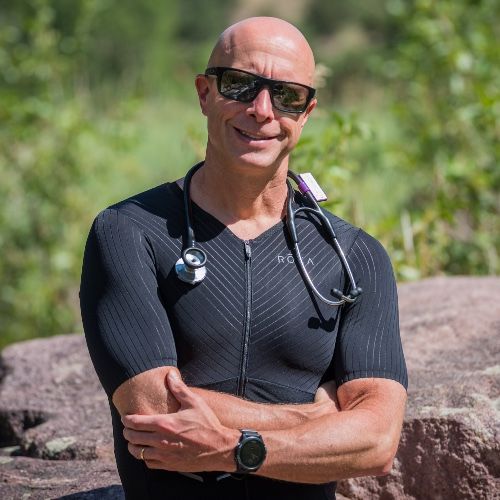
Speaker B:The voice you heard at the beginning of this week's episode was that of my guest on the podcast today, Dr. Kevin Stone.
Speaker B:Dr. Stone was a guest about a year ago when he joined me from the Stone Clinic where he works in San Francisco to talk about his book Play Forever.
Speaker B:And that was a really excellent book book that he published around about that time that he joined me that talks all about the advances that have been made in orthopedic science and medicine that allow for athletes to return from injury and be potentially better than they were before.
Speaker B:He has come back to the podcast now to talk about some of the even more exciting recent advances in orthopedics that have come to be through science and research and the kinds of things that he's doing in his clinic and can be done in other orthopedic offices around the country and even around the world, can allow athletes to return to sport sooner, potentially even better, and definitely better than was possible in the past when they have sustained injuries that previously would have kept athletes out for a very long time and potentially even been considered career ending.
Speaker B:He is going to be talking to me about all of those things and that's going to be coming up a little bit later on in the program.
Speaker B:Before that, as always, I will be joined by my friend and colleague, Coach Juliet Hockman, a former Olympian.
Speaker B:We will be discussing the just about finished Olympic Games that are happening in Milano Cortina right now.
Speaker B:But we will of course be answering a listener question on this episode's Medical Mailbag.
Speaker B:That question is going to be concerning an injury and rehabilitation from an injury.
Speaker B:So very timely given that we'll be talking to Dr. Stone about injuries as well.
Speaker B:But we don't get a lot of injury questions anymore.
Speaker B:We used to get a lot more of them and I hope that this will stimulate listeners to think about other injury questions that we might take on on future Medical Mailbag.
Speaker B:But this particular episode we will be answering questions related to labral tears of the shoulder.
Speaker B:What is the potential rehabilitation that can be undertaken for that?
Speaker B:What are the alternative treatments and what can athletes assume is the kind of trajectory for their course and can they return to sport as soon as possible and what will that return look like?
Speaker B:We're going to look at the evidence that supports a few physiotherapy based kind of treatment strategy for this and we're going to look at what athletes can expect and that's going to be coming up right after this brief discussion of some very tragic news.
Speaker B:And I'm sure if you have paid any attention to any triathlon news, you've heard the terrible, terrible story of what happened about 10 days ago.
Speaker B:Now actually coming up on two weeks to a very talented young woman who lives in the Phoenix, Arizona area and her name was Hannah Henry.
Speaker B:She was a tw 22 year old, two time NCAA Division 1 Triathlon Champion.
Speaker B:She was a Junior World Championship competitor from Canada.
Speaker B:She was a Arizona Sun Devil NCAA Division 1 triathlete who as I mentioned had won the Division 1 NCAA championship twice and she was struck by a impaired driver and killed tragically while out for a training bike ride.
Speaker B:I'm not going to spend a lot of time talking about the wonderful person that Hannah was.
Speaker B:If you want to hear more about her and the accomplishments she made and really the life that was struck down too early, I would urge you to take a listen to my sister podcast where Matt Sharp, who knew Hannah and myself will be discussing this wonderful young woman in more detail.
Speaker B:You can listen to Tempo Talks which will be out today as well.
Speaker B:I would urge you to take a listen to that because Matt will give a very heartfelt tribute to Hannah's memory.
Speaker B:But what I want to discuss ongoing slaughter of cyclists as they try to do what they love to do and that is to get on a bicycle and go outside and enjoy the outdoors.
Speaker B:We are too often faced with this kind of horrible news.
Speaker B:You will recall of course, that a friend of mine, Courtney Waltmire, was struck and killed in a very similar fashion just a few short years ago while training for Ironman Arizona.
Speaker B:This is just the latest of a litany of similar stories and cyclists are killed on almost a daily basis, certainly during the spring and summer and fall, but it even happens during these winter months where cyclists can be riding outside, such as in the southwest of this country.
Speaker B:The reasons for this are of course lengthy and too long for me to detail in a brief monologue here, but for the most part it has to do with our society that diminishes the value of cyclists and pedestrians to the benefit of cars.
Speaker B:And of course the fact that drivers continue to have a very hostile attitude to anybody who would dare to take up space on the road and take away from their ability to drive as fast as possible wherever they want to be going.
Speaker B:The attitudes of drivers towards cyclists is no doubt contributing to the wholesale deaths of cyclists on a daily basis and across the country it is worse in some areas than others.
Speaker B:But wherever you find cyclists in numbers, you are going to find the kinds of attitudes that prevail in the comments section whenever you hear about a cyclist like Hannah being struck down and killed in her prime.
Speaker B:These comments are representative of what a lot of drivers feel and it is really just scandalous.
Speaker B:It is unacceptable that anybody would view a human being out trying to do something that they love and get the kind of benefits that one can get from cycling as anything less than another fellow human being who deserves the right to be doing what they want to be doing.
Speaker B:I don't have answers for this.
Speaker B:There's no question that the built environment does not support the separation of cyclists and cars and so long as that continues we are going to see this kind of death toll.
Speaker B:There doesn't seem to be the willpower amongst either people or drivers to change anything.
Speaker B:We had not that long ago in Denver, after the pandemic we had the rise of dedicated cycling lanes and within about six months of the pandemic ending, those cycling la were taken down because motorists just could not be inconvenienced by having dedicated cycling lanes shorten or narrow their road by any degree because heaven forbid, their speeding could be taken down a couple of notches.
Speaker B:I am a driver.
Speaker B:I know that almost every cyclist drives a car as well.
Speaker B:We know that it can be somewhat inconvenient to be behind a cyclist.
Speaker B:It can lengthen the duration of our drive by a good 30 seconds as we have to wait for it to be safe to pass them and not kill them.
Speaker B:Oh the temerity that the cyclist has to bother to be on the road that they themselves pay for through their own driver's license because again, they drive as well.
Speaker B:I know I'm preaching to the choir on this podcast where everybody listening is of course going to be an avid cyclist as well.
Speaker B:And my outrage is shared by all of you.
Speaker B:And honestly, I. I don't have the answers.
Speaker B:I do know though that it just doesn't seem fair that our only solutions are to spend most of our time riding in the basement, as I do, or to just ride on gravel roads, or to just do mountain biking, which are excellent pursuits, no question.
Speaker B:But the reality is a lot of us are triathletes and we want to be out there trying out and practicing in our aero bars and being able to ride the bike that we love riding and so that we can show up at our races in form and able to handle the kinds of rigors that we face during a race.
Speaker B:And to know that we can't do that safely, to know that every time we leave our house we have to say goodbye to our loved ones with that fear in the back of our mind that we may not be coming home, that just doesn't seem right.
Speaker B:Again, I don't have answers.
Speaker B:I wish that I did.
Speaker B:I wish that I could say that Hannah was doing something wrong and that led to her being struck, but that just was not the case.
Speaker B:She was doing everything right, just like Courtney Waltmire was several years riding during the day, very visible in a dedicated bike lane.
Speaker B:And that was just not enough.
Speaker B:So again, I wish that I could say more than just, you know, recite the well known and well rehearsed statistics.
Speaker B:I wish that I could say more and give solutions, but at the end of the day, I can't.
Speaker B:And I know that I'm going to be having this very same talk at some point in the future.
Speaker B:I can only hope that no one out there is going to be having this talk about me or my loved ones because they were out on a bike ride and they had the same misfortune happen to them.
Speaker B:All I could say, my friends, is stay safe, do what you need to to make sure that you don't encounter these kinds of things.
Speaker B:And if that means spending all of your time riding indoors like I do, or only riding in places where you know you're not going to encounter cars, or at least by minimizing the likelih that you're going to encounter cars, then that's what you need to do.
Speaker B:But hold your loved ones close tonight and be happy and thankful that you are around to hear this and not the one that I'm talking about.
Speaker B:And I hope that I am never going to be talking about you in this way.
Speaker B:If you have thoughts about this, if you have answers, if you have potential solutions, please share them.
Speaker B:Send them to me tri docloud.com I'd be happy to share them with the listeners and get their feedback.
Speaker B:You can also head over to the private Facebook group for TRADOC podcast.
Speaker B:Take a look for it on Facebook.
Speaker B:If you're not a member, answer the easy questions.
Speaker B:I'll gain you admittance and I'd love to hear your thoughts.
Speaker B:And please do join the conversation.
Speaker B:If you knew Hannah, I would love to hear your remembrances in that group as well.
Speaker B:With all of that said, let's move on to more pleasant conversation.
Speaker B:Juliette Hockman is going to join me right after this break.
Speaker B:We'll talk a little bit about the Olympics and we will talk about labral tears of the shoulder, what you can do to come back from that injury and what you can look forward to in terms of return to sp.
Speaker B:All right.
Speaker B:It is that time of the show when I'm joined by my friend and colleague and it's very relevant today because of when we're talking.
Speaker B:But she is a former Olympian herself and I am always in awe of that.
Speaker B:The fact that I get to do two podcasts with two Olympians is just amazing to me in this stage of my life.
Speaker B:But my friend and colleague Juliette Hockman is joining me for the Medical Mailbag.
Speaker B:Juliet, how are you doing?
Speaker C:I'm great, how are you?
Speaker B:I'm really well.
Speaker B:Really well.
Speaker B:Juliet and I are recording this on the first Friday of the Olympics but well, I guess technically the second cause the opening ceremony.
Speaker B:Yeah.
Speaker B:But we will be releasing this episode on the final Friday of the Olympics and the Olympics are something that I know both of us very much enjoy.
Speaker B:Me as a lifelong observer and Juliet as a one time participant and I had this conversation with my other co host Matt Sharp, who co host the Tempo Talks podcast with me on a weekly basis.
Speaker B:We talked about his perspective.
Speaker B:As a former Olympian watching the Olympics, I am really interested in getting your perspective as well.
Speaker B:As somebody who's been to the Olympics, what's it like watching these events every two years now?
Speaker B:I mean obviously you participated in the Summer Olympics.
Speaker B:I know I had a great deal of joy listening to your enthusiasm for the rowing events during the Summer Olympics.
Speaker B:But now it's the Winter Games.
Speaker B:Are there specific events that you like to watch?
Speaker B:And also, what's it like an Olympian watching the Olympics?
Speaker C:Right.
Speaker C:Yes, absolutely.
Speaker C:Huge fan of the Olympics as well.
Speaker C:Love that you can watch them whenever you want.
Speaker C:Because you can pull what you want down and then see it.
Speaker C:You don't have to wait until 7:30 at night anymore.
Speaker C:So, yeah, I love watching it.
Speaker C:My favorite sports in the Winter Olympics are Nordic skiing.
Speaker C:Nordic skiing and Biaflon, actually, both.
Speaker C:Which of course are completely related to.
Speaker C:And I think that's because physiologically they're so close to rowing.
Speaker C:You know, in fact, they've been compared often.
Speaker C:So I love watching the skiing.
Speaker C:My husband's also a great cross country skier.
Speaker C:Our kids grew up cross country ski racing.
Speaker C:So we know a little bit about it as a sport.
Speaker C:To me, that is the most appealing.
Speaker C:There are so many winter sports where you win because you're judged, like figure skating or freestyle or something like that.
Speaker C:Whereas skiing, it is the first man and woman across the line and that's the end of the deal.
Speaker C:There's no judging.
Speaker C:There's no anything.
Speaker C:I just learned the other day, the ski jumping has a judged element.
Speaker C:I didn't know that.
Speaker C:I was.
Speaker C:I thought it was the far.
Speaker C:The person who goes the farthest, but it's not.
Speaker C:There's a whole.
Speaker B:Yeah, I don't know if the judging.
Speaker B:Yeah, I don't know if the judging is more of.
Speaker B:Is a newer element.
Speaker B:I know that there's judging on the form, but I, I suspect, and I could be wrong.
Speaker B:I'm not a huge student of the sport.
Speaker B:Yeah.
Speaker B:My thinking is that that is a relatively newer thing as the jumpers have become closer and closer in terms of their abilities could be wrong on that.
Speaker B:So I don't know.
Speaker C:I had no idea.
Speaker B:I agree with you on the judge sports.
Speaker B:I actually, Matt and I were talking and I don't pay attention to a lot of the judge sports.
Speaker B:I love watching ski moguls because that, to me, is something I do.
Speaker C:You love doing that.
Speaker B:But I don't watch a lot of the judge sports because to me, anything where you're against the clock, anything where you are against another team like, or against another person, I much prefer that.
Speaker B:I agree with you.
Speaker B:I think there's too much subjectiveness.
Speaker C:I mean, but I take nothing away from the figure skaters in particular for their athletes.
Speaker B:Everything they're doing.
Speaker B:Yeah.
Speaker B:Oh, yeah.
Speaker C:Is unbelievable.
Speaker B:And any of the judge sports require phenomenal amounts of skill.
Speaker C:Gymnastics is everything.
Speaker B:Unbelievable.
Speaker B:But I just.
Speaker B:It's just not my.
Speaker B:I agree with you.
Speaker B:I prefer the sports that are timed or scored.
Speaker B:Yeah.
Speaker B:But as a former Olympian, what is, you know, is your perspective different than mine?
Speaker B:I mean, I'm not really casual observer in that I really do have a passion for the sport.
Speaker B:But, you know, you've been there.
Speaker B:How is your perspective?
Speaker B:Maybe a little bit different.
Speaker C:Well, I will say, I mean, compared to your other co host, I feel like my Olympics was like a lifetime ago, almost out of memory.
Speaker C:But I will say, I mean, one of the most remarkable memories, a story that I have told hundreds of times that I still can't get through without crying, is the opening ceremonies.
Speaker C:And so I love watching the opening ceremonies.
Speaker C:Not so much the performances and the artistry and the dancing and all that, but the moment when the athletes walk in.
Speaker C:Like, to me, that is such a big deal and such a big part of something that I visualize is I was trying to make the Olympic team.
Speaker C:And then of course, when it happened, it was this sort of fairytale moment.
Speaker C:And of course, for both this Olympics and the Paris Olympics, the opening ceremonies, I mean, some of my athletes know I've been on a care about it because I was so disappointed with both of them because of course, in Milan you had four different opening ceremonies.
Speaker C:In Paris, they all went down a seine on a bunch of boats.
Speaker C:And so you don't have that moment where you walk into the stadium in front of 100,000 people, which was so impactful for me and I think for probably many, many other Olympians over the years.
Speaker C:So that is one element of the Olympics I really love watching.
Speaker C:And I get very emotional watching it and just I can't even talk about it right now without getting emotional.
Speaker C:So that's a big deal.
Speaker C:And then also just watching the athleticism of some of these.
Speaker C:And performance athletics really has changed a lot in 98, 08 18.
Speaker C:It's 35 or 40 years since I competed.
Speaker C:So, you know, performance athletics have really has changed.
Speaker C:And you know, when I was competing in the Olympics, we didn't talk about nutrition except to make sure you ate enough.
Speaker C:There were so many things that we know now that we didn't know nearly four decades ago.
Speaker C:And on the other hand, in my era, we were competing against what was then the Eastern bloc, and that was a whole different kettle of fish.
Speaker C:So there's always different elements and different sort of nuances.
Speaker C:But I do watch athletes, especially in the cross country skating, which is so brutal.
Speaker C:And I mean, my husband and I are standing in front of the television yelling at the screen like we're so engaged in what they are putting their bodies through and.
Speaker C:And you do feel a little bit nauseous sort of in the moment.
Speaker C:I mean, rowing races are only six minutes, but you're blind.
Speaker C:By the end, you can't see a thing.
Speaker C:Like you've been in zone five for six minutes or zone five plus, and you can't see anything.
Speaker C:It's complete like little pinpricks.
Speaker C:And just knowing that those athletes are feeling that way because they've been pushing for so long, so hard.
Speaker C:Even those sprint races, which only three minutes.
Speaker C:Right.
Speaker C:Actually have.
Speaker C:I have pins and needles just off you.
Speaker B:Yeah, no, I, I hear you.
Speaker B:And, and I said to Matt, and I'll say it to you, I was a way to put like a.
Speaker B:Just an average Joe at these sports into the games so that all of us could understand.
Speaker B:I mean, you know, you saw that Mexican woman, the last woman.
Speaker B:A great story.
Speaker B:I love the story.
Speaker B:But she's still.
Speaker B:She's still so much better than most people.
Speaker C:Oh, yes.
Speaker B:And to say, oh, well, she's the normal.
Speaker B:No, she's not.
Speaker B:She's still way better than most people.
Speaker A:People.
Speaker B:So.
Speaker C:Well, and then you look at, I mean, the guy that we have been just drooling following is Clabo, the Norwegian skier who has already won five gold medals at the last Olympics.
Speaker C:He's trying to win seven this time.
Speaker C:And if you have not seen this yet, Jeff and I, anybody who's listening to this, go back and watch claybo.
Speaker C:He's only done two so far.
Speaker C:He's won two already.
Speaker C:And he gets to that last hill.
Speaker C:And it is a different species from not only you and I, Jeff, but like the rest of the Olympians in the race, who are already the best in the world, he'll be skiing with everybody.
Speaker C:And all of a sudden everybody else is standing still during the sprint race, which is a three minute race.
Speaker C:On that last hill, he was going uphill on skis at faster than a six minute mile.
Speaker B:Wow.
Speaker C:I mean.
Speaker C:And so you look at that type of performance and it's just.
Speaker C:I mean, it's so inspiring and so otherworldly in terms of just wow.
Speaker C:It's beautiful.
Speaker C:It's so inspiring.
Speaker B:Yeah, it really is.
Speaker C:It really is.
Speaker C:So the person is at the back, the person who's at the front, they're all inspiring.
Speaker C:I guess that's the point.
Speaker B:I totally agree.
Speaker C:Yeah, it's amazing.
Speaker B:Before we get to our medical question, because we do have a listener question, I do want to get your take on the Lindsey Vaughn story.
Speaker B:It's now been a couple of weeks since that.
Speaker B:That went down, but it's something that has given me a lot of thought.
Speaker B:It's given me pause in a lot of ways.
Speaker B:And I've actually heard from listeners of this podcast who've reached out and asked about it.
Speaker B:And, you know, it's not for me to judge as to whether or not it was appropriate for her to come back, because everybody's motivated by their own thing.
Speaker B:And I honestly, I think she's amazing, regardless of what happened in that downhill.
Speaker B:And I think that her legacy stands.
Speaker B:She's one of the most decorated downhill skiers of all time, and for good reason.
Speaker B:The one sort of thing that I came away with, and that I was wondering before the Olympics, and I will continue to wonder about afterwards, is whether or not she is the latest victim of kind of this mindset of an athlete who reaches a very high level of being able to perform and do something better than anybody else in the world, faces throngs of crowds and adulation.
Speaker B:And when she retires, there is suddenly this emptiness that she's unable to fill with anything else.
Speaker B:And did that motivate her coming back?
Speaker B:And if so, is that unfortunate?
Speaker B:Because it ended the way it did.
Speaker B:And I'm just curious for your thoughts on that.
Speaker C:Yeah, you know, I think that it's such an individual decision as to whether you want to go through that process, which is so tough on your body, demands so much resources to come back to be competing as one of the best in the world, and that I'm never going to take that decision away from an individual.
Speaker C:I think a lot of it is all about their expectations in the rest of the world.
Speaker C:I mean, I can only speak for myself where for me, it was very much, this is the Olympics.
Speaker C:This is the only thing that I'm going to do right now.
Speaker C:I'm completely focused on this, this.
Speaker C:But I have expectations that I will go on and do other interesting things with my life.
Speaker C:And that was hardwired in that this is not.
Speaker C:I mean, of course, it's the top.
Speaker B:Right.
Speaker C:I don't want to take anything away from being Olympian.
Speaker C:It's an incredible achievement, but that if you have the skill set to make it to the top of your sport, you probably also have a skill set to do other interesting things.
Speaker A:Things.
Speaker C:And so, I mean, we see this over and over again in athletes, right?
Speaker C:We apply all these same skills that we learn in terms of hard work and perseverance and tenacity and not taking no for an answer.
Speaker C:All of these things, we can apply them to anything.
Speaker C:So I find it always an interesting decision when athletes decide, after a couple of quadraniums of retirement, to come back.
Speaker C:We've seen swimmers do this We've seen lots of people do this, and you hope the best for them, but I also also feel a little bit like, gosh, I bet the world could have benefited from another great thing that you could have done, because you clearly have all of these talents.
Speaker C:Now, as I was mentioning before we got on air, you know, once you've made the decision and you're there, then you know whether your knee is going to blow out or not, or, you know, from that first crash.
Speaker C:And then nine days later, 11 days later, she had to race again.
Speaker C:Once you're there, you're all in.
Speaker A:In.
Speaker C:You're racing, no matter what.
Speaker C:Doesn't matter.
Speaker B:Yeah.
Speaker B:If you can, you will.
Speaker B:Yeah.
Speaker C:Yeah.
Speaker C:If you can, you're gonna do it.
Speaker C:But it is that decision.
Speaker C:Two years, three years, four years earlier of, am I gonna make a run at this?
Speaker C:That is.
Speaker C:It's so individual.
Speaker B:I mean, that's the question.
Speaker B:Yeah.
Speaker B:And.
Speaker B:And look, we don't know her, and we obviously wish her well, and she's in for a very long road, I'm afraid.
Speaker B:And I just hope that, gosh, 20 years down the road, she doesn't regret the decision she made.
Speaker C:I don't think you ever regret it, but what I hope is that she realizes that she has so much more to give the world.
Speaker B:Yeah.
Speaker C:In addition to this amazing thing she's already given us.
Speaker B:Yeah, let's hope so.
Speaker B:Let's hope so.
Speaker B:Yeah.
Speaker B:All right, well, let's move on from the Olympics.
Speaker B:When this podcast airs, we will be moving on.
Speaker B:There'll just be a couple of days left.
Speaker B:There'll be.
Speaker B:There'll be two titanic collisions between our countries.
Speaker B:Canada and the U.S. will be, I am sure, battling for gold on both men's and women's hockey sides.
Speaker B:At least that's.
Speaker B:That's where things are headed.
Speaker B:Anything can happen with a single game elimination.
Speaker B:So I don't want to, you know, count my chickas before they're hatched, but that would be ideal if we get those two final matchups.
Speaker B:So let's hope for the best, and we'll see how that goes.
Speaker B:All right.
Speaker C:The Canadian and American women have already
Speaker B:played each other once.
Speaker C:They play each other once.
Speaker B:That was in the round robin.
Speaker B:And I will say that for the first time in all of the Winter Olympiad, there is definitely an imbalance there.
Speaker B:The American women are definitely coming in as a noticeably stronger team this year than has been the case in the past.
Speaker B:They've been much more evenly matched previously.
Speaker B:The men's side.
Speaker B:The Canadian men's team is the Stronger team on paper.
Speaker B:But, you know, like I said, single games, you never know, Right?
Speaker C:That's right.
Speaker B:Okay, we have a medical question to ask.
Speaker B:It comes from a listener, so why don't we get to that?
Speaker B:What are we answering and who's it coming from?
Speaker C:Right, so this comes from Heidi Werner.
Speaker C:Heidi, thanks so much for sending this in.
Speaker C:Heidi has been dealing with a labral tear in her shoulder for quite some time.
Speaker B:Both shoulders.
Speaker B:She has one.
Speaker C:Both shoulders.
Speaker C:Oh, wow.
Speaker C:Okay, I'm sorry, Heidi.
Speaker C:Anyway, label tears in both shoulders shoulders.
Speaker C:And she's tried PRP injections, which it sounds like have not been very effective.
Speaker C:And she's just sort of wondering, like, what does the future hold for her in the pool and in the lakes and oceans and streams and everything else in terms of her being able to get back back to swimming as part of her life as triathlete?
Speaker B:Yeah, this is a very unfortunately common ailment.
Speaker B:And I do want to thank Heidi because.
Speaker B:Well, I'm sorry, Heidi, that you're dealing with this injury, but I do want to thank you for sending us in an injury related question.
Speaker B:We used to get a lot more of these and we haven'.
Speaker B:We've been so focused on supplement questions and questions around gear and it's really nice to get an injury question, not because you're having one, but because it gives us a very different kind of thing to take on.
Speaker B:Labral tears define a specific part of the anatomy within the shoulder.
Speaker B:So the hips and the shoulders are girdle joints.
Speaker B:Basically the thorax and the abdomen can be thought of as the kind of main components of our body.
Speaker B:And then coming off of the body are our four limbs.
Speaker B:And those limbs attach at what are called the shoulder girdle and the hip girdle.
Speaker B:And both of those joints are ball and socket joints.
Speaker B:And what that means is that the end of the humerus or the upper arm ends in a ball, basically, and it plugs into the socket of the acromion or the scapula.
Speaker B:So your shoulder blade has a cup on it into which this ball of the humerus.
Speaker B:And I'm making pictures on.
Speaker B:For those of you watching YouTube, the Glenoid is the cup that the scapula has, and then the humeral head fits into that and it kind of allows for movement and all degrees of motion.
Speaker B:It's a very nice joint in that way to keep the ball in the socket.
Speaker B:You have this fibrous tissue that kind of latches on.
Speaker B:It's kind of like a gasket or an O ring.
Speaker B:And that is formed of cartilage and collagen, and that is known as the labrum or the lip of the glenoid.
Speaker B:And that, unfortunately, is put under a lot of stress, specifically when we do overhead movements.
Speaker B:So anytime you raise your head, your arm over your head, you are causing some stress against that labrum.
Speaker B:And the labrum is the point of anchorage for the biceps tendon.
Speaker B:So also, when you reach up above your head, you are extending the biceps and you are pulling on that labrum.
Speaker B:And so you get some fraying or stressing of the labrum that can lead to fraying of the labrum right at the point where it attaches to the glenoid itself.
Speaker B:And so you can end up with tears.
Speaker B:The degree of tearing determines the severity of the injury, determines how much symptoms you're going to have, and then also determines what you can look forward to in terms of rehabilitation and the likelihood of it improving on its own.
Speaker B:A grade one tear involves basically just some tearing of the fibers where the biceps tendon inserts into the labrum and then the labrum onto the glenoid.
Speaker B:It tends to be an incomplete tear.
Speaker B:It's not particularly severe, but it can be symptomatic.
Speaker B:These will generally heal on their own, given time.
Speaker B:Most people don't have grade one tears, unfortunately.
Speaker C:Right.
Speaker B:Most people will develop what's called a slap tear or a grade two labrum tear.
Speaker B:SLAP is a common acronym that most people have probably heard of.
Speaker B:It stands for superior labral, anterior to posterior tear.
Speaker B:And basically, this is just.
Speaker B:You can imagine.
Speaker B:And I'm going to put an image up here for people watching the video.
Speaker B:They can see the image.
Speaker B:So A is the grade one tear, B is the slap tear.
Speaker B:And that's really the most common of these tears.
Speaker B:And you could see how the glenoid is the cup in the middle here and there is the labrum has just sort of peeled away from the glenoid.
Speaker B:Almost like when you.
Speaker B:What am I thinking of?
Speaker B:It's like if you peeled back a tab off of a Pringles.
Speaker B:Off of Pringles, yeah, Pringles, Yeah, exactly.
Speaker B:That's exactly it.
Speaker C:Yeah.
Speaker B:So if you peeled that off, that's kind of what's happening here, is the labrum is just sort of peeling off of the glenoid.
Speaker B:Because this area doesn't have great blood supply, because cartilage isn't particularly robust in terms of its ability to heal, these tears tend to not do particularly well in terms of healing.
Speaker B:So it's more a matter of allowing the area to kind of adapt to the new anatomy and allow for the symptoms to improve.
Speaker B:Now, fortunately, there are a lot of things that you can do through physical therapy in order to regain function without discomfort.
Speaker B:But not everybody gets there.
Speaker B:So there's been several studies that have looked at the different things you can do.
Speaker B:And I know that Heidi had prp.
Speaker B:She's had physical therapy.
Speaker B:She went on to get prp.
Speaker B:And I wish that I had had the chance to talk to her before the prp, because I will just sort of.
Speaker B:Before getting to the studies, I will tell you that PRP is not useful for this.
Speaker B:PRP has never, ever been shown to help with slap tears.
Speaker B:It is not particularly useful for anything in the shoulder, and unfortunately, it's not covered by insurance.
Speaker B:So that's money out of pocket and, alas, not particularly useful treatment.
Speaker B:So I'm sorry that you went that route, and I am unfortunately unsurprised it didn't help.
Speaker B:But it is something that a lot of people will do prior to having to have surgery because they want to avoid having surgery.
Speaker B:So I can understand why someone might want to try that.
Speaker B: that we looked at way back in: Speaker B:So doing a lot of.
Speaker B:Now, when we think of strengthening the shoulder, we think a lot of overheads, like shoulder press.
Speaker B:We think about things like lateral raise, anterior raise.
Speaker B:Those are all great exercises, but they tend to work the larger muscles that support the shoulder.
Speaker B:And when we want to show strength.
Speaker B:Exactly.
Speaker B:When we want to strengthen the rotator cuff, we really need to work on the small muscles.
Speaker B:So we need to work on the external rotators, the internal rotators.
Speaker B:We need to work on supraspinatus, which does some of the abduction.
Speaker B:And again, I'm showing things that you can't see if you're not watching a video.
Speaker B:But abduction is where you lift your arm and you want to do all these things that emphasize strengthening those small muscles.
Speaker B:So it's really.
Speaker B:Because those are small muscles, it's not big weights.
Speaker B:It's doing a lot of repetitive motions.
Speaker B:And it's really anchoring the elbow against your thorax while you do external and internal rotation.
Speaker B:You could use elastics for this.
Speaker B:Rubber tubing is very helpful stuff like that.
Speaker B:And you do a lot of this stuff with your.
Speaker C:Oh, I do a ton.
Speaker C:I mean, I have a swim cord permanently attached to my garage, and I'll go out there for five minutes several times a day and just do my little.
Speaker B:But you do this with the Life sport, do you?
Speaker C:Yeah, not everybody, not everybody has, has the tubing available.
Speaker C:But we certainly during the pandemic did a whole series of swim cords videos that have been used since.
Speaker C:But certainly those lightweight, those lightweight cords that you can attach in a doorway or in a hook in your garage or whatever.
Speaker C:I attach it to a bicycle storage hook.
Speaker B:Yeah.
Speaker C:And yeah, internal, external, all of the different.
Speaker C:They're very light.
Speaker C:You can talk to somebody, you can be on the phone with somebody you can listen to.
Speaker C:I mean, they're very, they're not difficult, they're just repetitive.
Speaker B:Yeah.
Speaker B:And the thing is, is like, even though they don't seem like they're difficult, those muscles are so weak normally that just doing them a few times, they start to become fatiguing.
Speaker B:And so that's what you're looking for.
Speaker B:Six to eight week program.
Speaker B: Yoma in: Speaker B:So scapular retractor is like doing rowing exercises where you really emphasize pulling the shoulder blades together.
Speaker B:So doing those kind of scapular retraction as well as external rotation exercises could really reduce shoulder pain and allow for swimmers to actually regain some of their swimming motion.
Speaker B:Now, I'm sure Heidi's been working with physical therapy to do all of these things and she's still not getting there because she probably has an extensive tear in one or both of her shoulders.
Speaker B: Now, Corbin showed that in: Speaker B:So you end up.
Speaker B:Because the labrum is where the biceps tendon attaches, you end up with involvement of the biceps tendon as well.
Speaker B:So it's not uncommon to have problems with the long head of the biceps as well as within the shoulder as well.
Speaker B:So it's really, really problematic.
Speaker B:So all of this doesn't sound great.
Speaker B:It sounds like, you know, at the end of the day when you, you know, even though you may be able to restore some range of motion, you may still have some issues with discomfort.
Speaker B: The good news is Steinmetz in: Speaker B:And this was in athletes who did any kind of rehab.
Speaker B:If they completed a full rehab program, they had a much higher degree of success with three quarters of them returning to play.
Speaker B:And this was a full rehab program being three months of physical therapy.
Speaker B:So if you did three months of physical therapy, you could look at returning to play with a slap test.
Speaker B:And, I mean, that's pretty good.
Speaker B:The problem is that a lot of these people end up having to have surgery.
Speaker B:And I think Heidi's probably at that point right now in her rehab journey where she's probably thinking about getting surgery.
Speaker B:And I'll talk about what that surgery entails in just a second.
Speaker B:But surgery is unfortunately not that much better.
Speaker C:It's not great.
Speaker C:Not great.
Speaker B:Athletes, yeah.
Speaker B:Return to play rates have ranged anywhere from 20 to 100%.
Speaker B:So 20% at the low range, that's not great.
Speaker B:But systematic reviews show about 80%.
Speaker B:So when you consider that a full three months of PT gives you 78% and surgery gives you 79.5%, that's not a huge bang for the buck on getting surgery.
Speaker B:And what does the surgery entail?
Speaker B:Well, the surgery entails a partial suturing of the labrum itself, but the big thing it does is it anchors the biceps tendon to the humerus, because by suturing the biceps tendon to the humerus, you take away that constant sort of pulling on the labrum so you don't end up tearing away the labrum again.
Speaker B:Further, the rehab from the surgery is very prolonged, like six to nine months.
Speaker B:So the surgery is not great, both in terms of how long it takes to get better and also in terms of of the actual outcomes.
Speaker B:So if you can avoid the surgery, it's definitely something you want to do.
Speaker B:So summing it up, this is a very common sort of thing.
Speaker B:Grade 1 tears probably are in a lot of people who maybe don't even realize it.
Speaker B:Grade 2, the slap tear is also unfortunately, reasonably common and is a cause of symptoms for a lot of older people who've been swimming for a long time.
Speaker B:It's also seen in overhand throwing.
Speaker B:PT is probably your best bet.
Speaker B:A very aggressive PT that works on strengthening the rotator cuff and on the scapular retractors.
Speaker B:And all that's doing is really emphasizing supporting the muscles around the shoulder.
Speaker B:And what that will do is allow you to return to Sport at around 3/4 to maybe 80% of athletes who do good, solid PT for three months will get back to their regular sport after three months.
Speaker B:The alternative then Becomes surgery.
Speaker B:Surgery involves tacking down the biceps tendon to the humerus, which is the upper arm.
Speaker B:You're looking at about six to nine months of rehab and then about a similar return to Sport at around 75 to 80%.
Speaker B:So not a great injury to have.
Speaker B:I know, Julia, you've dealt with this, so what has your experience been?
Speaker C:Yeah, so I, like, I tore my labrum by jumping off of a cliff into the water.
Speaker C:And as I hit the water, instead of hugging my.
Speaker C:I'm also just gesticulating on YouTube instead of hugging my arms to my body, I was loosey goosey with my arms and one of my arms caught the water and ripped up.
Speaker C:Right.
Speaker C:So a lot of pain.
Speaker C:Couldn't swim at all.
Speaker C:Couldn't get my arm above my head.
Speaker C:And went on for months and months and months.
Speaker C:And I went to see doctors and I looked at all of these possibilities that you've just discussed, the surgery, et cetera, etc.
Speaker C:I do do a lot of functional strength.
Speaker C:It's part of my job.
Speaker C:And I also just know it makes my body feel better.
Speaker C:So I just started and then I was advised by a couple of different pts after really.
Speaker C:I was still biking and running, but couldn't swim at all and was advised, hey.
Speaker C:And I don't know if this is true or not, Jeff, but basically said, look, you've got to continue to work on mobility in that shoulder even when it hurts, because otherwise it could freeze up.
Speaker C:And then that was the last thing I wanted, right, this frozen shoulder shoulder, because that lasts a long time.
Speaker C:And so all over the course of the winter, even though I wasn't swimming, I was working through quite a lot of pain to do the exercise, do the light cord exercises, do the flexibility exercises, the downward dog types of exercises, which were brutal to try to keep mobility in there.
Speaker C:And then I think I finally got back into the pool.
Speaker C:Seven months, something like that.
Speaker C:I think I was out of the pool for six or seven months and it still hurts.
Speaker C:I mean, it's not completely healed, but I know my limit in terms of volume per session, in terms of what I can manage, and it's less than it used to be, but I'm back in the water and I managed to avoid surgery because that surgical outcome, I mean, I'm willing to take all kinds of risks with surgery.
Speaker C:I've had a lot of surgeries, but that's bad.
Speaker B:Yeah, it's really impressive.
Speaker B:Yeah, it's impressive, actually.
Speaker B:I have to say, when I read about these things, it just seems like, oh, you know, you've torn something, fix the tear, you're going to be better.
Speaker B:And it's surprising to me that that's just not the case.
Speaker B:And it's just a reminder that some of these joints are just really complex.
Speaker B:And restoring the original anatomy is just not always possible.
Speaker B:And if you can't restore the original anatomy, you're just not going to get back to where you were.
Speaker B:And once again, getting old kind of sucks.
Speaker C:Well, we don't know how old Heidi is.
Speaker C:Right.
Speaker C:And we also don't know exactly where she is in the whole recovery process.
Speaker C:But I guess I would say Heidi, again, knowing almost nothing.
Speaker C:I think depending on your age and everything else, I think that you get to a certain age and, you know, maybe you're never going to get back to exactly where you were, but isn't close enough to be able to avoid some of these more drastic procedures.
Speaker C:And just a lot of strengthening, tons of strengthening around the joint, whether it's this or another one.
Speaker B:Yeah.
Speaker B:And I would add to that and just say, look, I don't have the same injury.
Speaker B:I have a rotator cuff tear, which is not complete.
Speaker B:It's partial.
Speaker B:And I have found that by doing the strengthening and also just modifying my stroke a little bit, I've been able to swim pain free, which has been great.
Speaker B:I mean, I feel it's such a revelation to be able to get in the water, do my whole swim set, and not have pain, which is really nice.
Speaker B:So there is hope.
Speaker C:Yeah.
Speaker C:My first couple months back in the pool, I was just really careful to always breathe towards the injured side rather than breathe away from it when you're pressing down a little bit more with that injured side.
Speaker C:And that kind of got me through the first couple months, and then I was able to breathe bilaterally again.
Speaker C:So you might be able to make some adjustments, as you said, to your stroke, to get back in the water.
Speaker C:Yeah, yeah.
Speaker B:Well, Heidi, we wish you nothing but luck and success, and we hope that we don't anticipate this has been terribly helpful, obviously, but we hope that maybe we've given you some ideas in terms of, you know, sticking with the pt, being really, really diligent about it, and maybe finding ways to modify your stroke in some ways.
Speaker B:And we hope that.
Speaker B:That you will let us know how things go, because we are optimistic that you will be able to get through this at some point and then find your way back into the pool and back to multisport.
Speaker C:Choose downriver races.
Speaker B:Yeah, yeah, no kidding.
Speaker B:There are several now.
Speaker B:There are several.
Speaker C:There are many choices.
Speaker C:Now.
Speaker B:Yeah.
Speaker B:Yeah.
Speaker B:All right, well, that's all we've got for you on this episode of the Medical Mailbag.
Speaker B:As always, we thank you for sending in your continued questions.
Speaker B:We love answering them.
Speaker B:So if you have something you'd like like for us to answer, please do send them our way.
Speaker B:You can drop them into the Tridoc Podcast private Facebook group.
Speaker B:If you're not a member, please do look for it on that platform.
Speaker B:Answer the questions.
Speaker B:We'll gain you admittance and we'd love to hear your comments and see your questions and we will consider them for answering.
Speaker B:You can email me@tridocloud.com you could go to my website, submit a question there.
Speaker B:There's all kinds of ways.
Speaker B:So please do look for one of them and make sure you get that question to us and we will be sure to get it to the interns and answer it on an upcoming episod.
Speaker B:For now though, Juliet, enjoy the last couple days of the Olympics and thanks again for being here.
Speaker B:We'll talk to you again in another couple of weeks to answer another question.
Speaker C:Thanks so much, Jack.
Speaker B:This episode of the Tridock Podcast is brought to you by the Ironman 70.3 Boise are you ready to take on a challenge that's as bold as you are?
Speaker B: ,: Speaker B:Bike through Idaho's rugged beauty and run with the city cheering you on.
Speaker B:This is your chance to push limits and claim your finish line moment.
Speaker B:Register now at www.ironman.com races im703boise ironman 70.3 boise bring an invoice it is not that common that I have a return guest on the podcast, but I am very excited to welcome back to the program Dr. Kevin Stone.
Speaker B:Dr. Stone is an orthopedic surgeon at the Stone Clinic and also the Chairman of the Stone Research foundation in San Francisco, California.
Speaker B:He lectures around the world as an expert in cartilage and meniscal growth, replacement and repair.
Speaker B:He holds over 40 US patents on novel inventions to improve healthcare.
Speaker B:He's also the author of the book how to Play how to Recover from injury and thrive.
Speaker B:Dr. Stone was first a guest on this podcast about a year ago when we discussed his at that time recently released book.
Speaker B:We had a great conversation about injury and recovery at that time.
Speaker B:He recently reached out about coming back on to talk about some really exciting new innovations and exciting new things coming out in the world of orthopedic medicine as it pertains to the chronic kinds of complaints and acute injuries that can occur in multi sport and endurance athletes.
Speaker B:And so I'm excited to have him back on the Tridoc podcast.
Speaker B:Welcome once again, Dr. Stone.
Speaker A:Great to be back with you.
Speaker B:I'd like to begin first with something that was mentioned in your email to me, and that is the role of meniscus replacement.
Speaker B:Now, for those of my listeners who don't know what the meniscus is, just maybe a brief anatomy lesson to tell us about the different parts of the knee and why the meniscus is so important.
Speaker A:Sure.
Speaker A:So as you remember, the knee is made up of the femur and the tibia and the kneecap up front and in between the femur and the tibia are those two shock absorbers called the meniscus cartilage.
Speaker A:And they're fibrous tissues and they act to help pad the knee, to stabilize the knee, to protect the opposing articular cartilage, a different type of cartilage that when injured, develops arthritis or wearing down to the bone.
Speaker A:And so many of your listeners will have torn their meniscus cartilage playing sports at some stage of their career.
Speaker A:If the surgeon goes in and takes out that key shock absorber, they then go on to develop bone on bone contact and wearing away of the surfaces and develop arthritis.
Speaker A:The fun of the science as it's developed is that we can now put those meniscus cartilages back in.
Speaker A:In and not just put them back in.
Speaker A:We've been doing that for a while, but we can put them back in in ways that athletes can return to full sports.
Speaker A:And these days, what's been exciting for us is the level of sport, the level of endurance, the level of difficulty that endurance athletes are putting on their joints, and they're still tolerating it when they have new shock absorbers put back in.
Speaker A:So that's why the excitement in the field.
Speaker A:We're seeing our patients go out and do extraordinary things, which makes us proud and inspires us to keep pushing the field forward.
Speaker B:Now, a lot of my listeners will probably be thinking, why can't we just allow the meniscus to heal themselves?
Speaker A:So many tears in the meniscus are exposed to mechanical forces that prevent healing from happening.
Speaker A:So you normally take 2 to 3 million steps per year in normal walk walking, and those steps are up to five times your body weight, depending on the height of the step.
Speaker A:If you tear a fibrous tissue, like tearing your shirt in a sense, and then you keep stretching it, you keep loading on it, the Tissue, the collagen fibers don't have a chance to heal back together.
Speaker A:If the surgeon goes in and sews the collagen fibers back together, and then these days adds growth factors and other stimulants to cause it to heal back together, then the meniscus can heal very nicely and do well.
Speaker A:If the surgeon goes in and takes out the meniscus tear, depending on how much they take out and where it is, that's what increases the force inside the knee.
Speaker A:If the patient decides not to have any surgery at all and live with a torn meniscus, then sometimes it acts as a windshield wiper inside the knee, wearing away the opposing articular cartilage.
Speaker A:And so, so while there are some meniscus tears that people live with just fine, and there are many older people with what we call degenerative tears that they've lived with for a long time, athletes who are really putting torque on their knee need the perfect biomechanics of that joint in order for them to have it for a lifetime.
Speaker B:Now, the meniscus that you're talking about going in and replacing, are you using cadaveric donors?
Speaker B:Are you using something that's taken from the individual and then grown in a agar gel?
Speaker B:What are we using here?
Speaker A:So the field of meniscus replacement has gone through lots of iterations of trials, of artificial materials, of scaffolds, and right now the best tissue is really donor tissue from other human beings.
Speaker A:Unfortunately, they're human beings who've fallen off their motorcycle and have donated their tissues or other forms of death that are tragic but essentially traumatic deaths.
Speaker A:These healthy individuals donate their tissues, and those are the tissues we use to rebuild the meniscus, also the ACL and other parts of the body these days as well.
Speaker B:And if you are a recipient of one of these, do you then need to be on some kind of anti rejection medications?
Speaker A:Almost never.
Speaker A:In fact, never for the meniscus cartilage, they're somewhat protected.
Speaker A:The DNA in the meniscus by six weeks is all your own.
Speaker A:You, the recipient, the tissues are frozen, so the cells are killed before they're ever transplanted.
Speaker A:And there's almost no rejection phenomenon.
Speaker B:And why is this new?
Speaker B:I mean, we've had organ transplants for decades.
Speaker B:We've had corneal transplants, we've had transplants of various types of tissue.
Speaker B:I myself underwent a reconstruction of my labrum for my hip and had a cadaveric transplant.
Speaker B:Why is the meniscus of the knee kind of just, I mean, to my understanding, just coming around and becoming more
Speaker A:popular now, it's a very good question.
Speaker A:There's about over a million, 1.4 million knee meniscus injuries and surgeries each year in the United States alone.
Speaker A:90% of these actually now it's 80% of these.
Speaker A:Meniscus tears are tissue that is taken out by the surgeon.
Speaker A:Up to about 20% are actually repaired.
Speaker A:And only about 2 to 3,000 people undergo a meniscus transplant each year in the United States.
Speaker A:So if you're taking out all these meniscus in patients who we know will go on and develop arthritis later on, why aren't surgeons putting them back in in order to prevent that arthritis from forming?
Speaker A:And there are many answers to that question.
Speaker A:One is insurance reimbursement often is difficult.
Speaker A:Two is a surgery is tricky and difficult to do.
Speaker A:Two, Three is many surgeons haven't been trained, even though I run around the world teaching these courses and create teaching videos.
Speaker A:But there are a lot of weird influences.
Speaker A:Commonly patients are told, well, it takes decades to develop the arthritis, just live with it.
Speaker A:And we, you know, part of my mission in the world is to try to train people not to accept that answer.
Speaker A:To really, once you've injured the tissue, repair it or replace it and try to preserve your knee for your life to lifetime.
Speaker B:And is availability of the tissue another issue?
Speaker B:We know how hard it is to get transplanted organs.
Speaker B:Is there a similar shortage of donations of these kinds of tissues?
Speaker A:There's a relative shortage in that the tissue banks don't often focus on meniscus transplant because it's not a very big market for some reason.
Speaker A:So it's another chicken and egg problem.
Speaker A:One thing I will tell you though, that you asked about what's new, new and what's new is that every time we transplant tissue these days, we now add PRP and growth factors in cells and a number of tricks to augment the healing so that the patient can get back to sport with a healed tissue much sooner than they could before.
Speaker A:And so I think the whole process of tissue replacement is being speeded up, which makes it more accessible for people, more acceptable for people to.
Speaker A:To do a procedure that might take them out of sport for a few months, but give them a lifetime of a good knee.
Speaker B:So what is the recovery period then if somebody has a transplant like this now?
Speaker B:And also before you answer that, what is the common scenario under which somebody will have this done?
Speaker B:Is it generally someone who's had an injury and results in an ACL with a concomitant meniscus tear?
Speaker B:Or is it just someone who comes in with a random meniscus tear?
Speaker A:So it's a great question.
Speaker A:So the most common reason that we see or doc, I injured my knee playing high school college sport or college sports and soccer or football, and they injured my meniscus.
Speaker A:They took it out.
Speaker A:Here I am 20 years later, mid-40s to mid-60s, having lost their meniscus and developed arthritis.
Speaker A:So that's the most common group because there are millions of those people.
Speaker A:The second group is someone who tears their ACL or tears their meniscus in a devastating way and so that the tissue really is irreparable.
Speaker A:The third group are young children.
Speaker A:Children who, when they have either a discoid meniscus, which is an abnormally shaped meniscus, or they have a significant meniscus tear, we know that dooms the knee in a young child.
Speaker A:It's better to put the meniscus back in very early, while they're still growing, while they have a healthy knee, than to wait until later after they've damaged it.
Speaker A:So there are different groups.
Speaker A:We also have the group of people who already have arthritis and who are coming in, in with still joint space in their knee, saying, hey doc, I'm not ready for my partial knee replacement or my total knee replacement.
Speaker A:You know, isn't there just a shock absorber you can put in my knee and buy me some time, buy me a few years?
Speaker A:And the answer to that question is yes.
Speaker A:And we published a study on that recently where we took 50 years and older people coming in who are told to have a knee replacement or a partial knee replacement who still had joint space and who entered into our study and had a meniscus put in with a cartilage graft sometimes.
Speaker A:About 42% of those got eight and a half years of relief before they went on to their joint replacement.
Speaker A:And the other 48% never went on to a joint replacement in a 2 to 25 year outcome study.
Speaker A:So we know that even in the arthritic knee, we can provide a patient with a shock absorption and buy them time and return them back to sport.
Speaker B:The children you were talking about with the discoid meniscus, does the transplanted meniscus grow with them or do they need to get repeated transplant?
Speaker A:No, it does grow with them.
Speaker A:So as I mentioned, it's their DNA by about six weeks after transplantation.
Speaker A:And the children that we've done very rarely come back for a repeat meniscus.
Speaker B:Wow, that's fascinating.
Speaker B:So how long is the recovery then for someone who Gets one of these before they can return to sport.
Speaker A:So it's a month of partial weight bearing with crutches, and then really return to full sport by about four months.
Speaker A:In the meantime, though, they're training hard, training upper body, training, quad training, a host of things while protecting the knee.
Speaker B:And this is assuming they don't have a concomitant ACL tear, which takes longer.
Speaker A:If they do, we rebuild the ACL at the same time, and it's essentially the same rehab program now.
Speaker A:About three to four months of physical therapy and fitness training.
Speaker A:Training.
Speaker B:Okay.
Speaker B:I know the knee is your main thing, and I don't want to get you out of your lane too much, but we often hear in triathlon about issues.
Speaker B:I mean, my own personal, you know, hip and now shoulder, the girdle muscle.
Speaker B:The girdle joints are also frequently injured from chronic overuse stuff.
Speaker B:I had a labral tear.
Speaker B:I'm at that age where a rotator cuff is now an issue.
Speaker B:Why do we continue to see that there isn't these big jumps in the ability to fix these orthopedic problems, which are so common and which continue to have these really prolonged, like, I mean, I went and saw an orthopedic surgeon here.
Speaker B:I don't have a complete tear, so I'm not going to go for the surgery.
Speaker B:But he told me if I wanted to repair my partially torn supraspinatus tendon, I'd be looking at six to nine months of rehab.
Speaker B:Why are these types of procedures for the big joints that are so commonly injured through overuse, why are they so devastating?
Speaker A:That's a good question.
Speaker A:So I treat knee, shoulder, and ankles, and what I see is that we are slowly speeding up the recovery times by adding more and more growth factors, cells recruitment factors, lubrication.
Speaker A:In the past, we would add that maybe once, and now what we've learned is that we can bathe these tissues with these healing factors and accelerate the healing time.
Speaker A:So I think what you will see is that these rotator cuff injuries that you're referring to, instead of taking a year to come back, will start being much more commonly around six months and maybe faster.
Speaker A:It's just that collagen healing, collagen reformation naturally takes about a year for the tissues to fully remodel.
Speaker A:And so our research.
Speaker A:Remember, I also run a public nonprofit research foundation called Stone Research, and you can find information on this topic@stoneresearch.org but we're working very hard on figuring out what are the best accelerants, what are the best recruitment factors to get collagen to remodel faster.
Speaker B:I mean, it's just so great to hear all of this potential and promise for especially us, the older athletes who have put our bodies through so much over so long and are starting to have the signs of wearing down.
Speaker B:So it's nice to know that there is potentially all kinds of new innovation on the horizon and promise for us to continue being active into our later years.
Speaker B:It's great to hear speaking of promise, speaking of innovation, everybody talks about, and I have listeners who are constantly bombarded me with this about the role of AI, artificial intelligence.
Speaker B:And artificial intelligence is having a huge impact in all industries, including medicine.
Speaker B:How has it impacted your field, orthopedics, and specifically what you're doing in terms of the research you're doing and in terms of the procedures you're doing to help athletes get back into what they want to do sooner.
Speaker A:So the first part of that is that I call it augmented intelligence.
Speaker A:So it's augmenting the intelligence that I have about their injury and what's in the science and what's been published by other people.
Speaker A:And it's augmenting the intelligence of the patient.
Speaker A:Coming in well informed.
Speaker A:In the past they had googled information and now they have used better search tools through large language models to really be well informed.
Speaker A:So that's the first part of it.
Speaker A:Second part of it is that the tools for researching the literature have just dramatically gotten better.
Speaker A:So.
Speaker A:So there's one that you probably have heard of called Open Evidence that almost every physician in the United States now uses because it brilliantly summarizes the top publications from the best journals so that I can quickly get the latest information on almost any topic in medicine and know that it's been peer reviewed.
Speaker A:And that's an enormous relief.
Speaker A:In the past, we didn't really know the quality of the information that people or we would find online online.
Speaker A:So those two things are super important.
Speaker A:Number three, I think that people are using testing tools much more easily than they did in the past.
Speaker A:So you can almost order your own blood tests and your own assessment tools.
Speaker A:You can integrate your fitness wearables into your health record.
Speaker A:Now, you may have seen that last week, Chat, GPT and Function Health combined in order to make that easy for people to do do.
Speaker A:And Google's doing the same thing.
Speaker A:And so I think what you will have is, and what we're seeing now is integrated information so that when I'm sitting talking with a patient, I have all of their data at my fingertips.
Speaker A:And that helps us, you know, be better doctors understand where the patient's desires are versus where their actual physiology is and then help them set goals about how to get better than they've ever been.
Speaker A:So we're thrilled about it.
Speaker A:To us, it's, as I said, augmenting our intelligence.
Speaker B:And are you using it for actual diagnosis and planning and management as well?
Speaker A:Using it in multiple ways.
Speaker A:So, number one, our transcription models are all AI augmented.
Speaker A:Our radiology team is AI augmented when they're reading films.
Speaker A:Our surgical robot is not AI augmented yet, but it will be shortly.
Speaker A:So in that sense, we're using it to be better, to be more accurate.
Speaker A:Accurate.
Speaker A:We, you know, in the part of medicine that I live in, the post traumatic sports related injuries, arthritis related injuries, the diagnoses are not so hard to figure out.
Speaker A:It's really figuring out what's going to work best for that individual patient.
Speaker B:That's really interesting.
Speaker B:Another question that you had sent to me as something that you thought would be interesting for my listeners is the role of testosterone in injury recovery.
Speaker B:I'm particularly interested in hearing about that, given that we know that as we age, testosterone levels tend to fall in men.
Speaker B:And I'm also interested in knowing if that is a question that pertains to women at all.
Speaker A:Definitely.
Speaker A:So let me give you several perspectives on it.
Speaker A:One is that male hormone replacement therapy is almost unheard of.
Speaker A:And so women over the last 20 years have been exposed quite a bit to the rationale of using, using estrogen and progesterone, especially to offset not just aging, but menopause.
Speaker A:And it was, you know, a brilliant finding.
Speaker A:It was unfortunately polluted by false data that was published years ago about breast cancer.
Speaker A:But now that we've seemed to debunk that, and most women understand that declining estrogen and progesterone play an aging role for them.
Speaker A:And if it can be replaced safely, it's a really good idea to do do that.
Speaker A:But men have not been treated to that kind of science.
Speaker A:Nobody thinks about, well, which hormones are declining in a man and which ones can be replaced safely.
Speaker A:Of course, you always hear low T advertised at every sexual health center, but really, just looking at your whole fitness model, you're losing bone, you're losing muscle, you're losing your mind.
Speaker A:Can replacement of specific hormones change that rate of decline?
Speaker A:So that's one big open question that we're particularly interested in.
Speaker A:But specifically, we are asking the following question.
Speaker A:When I hit you with an axe, otherwise known as surgery, and you start to develop muscle atrophy within eight hours of that trauma.
Speaker A:Is there anything I can do to diminish the amount of atrophy that you will develop?
Speaker A:If I ask you a year after your surgery for your knee, what was the worst thing about it?
Speaker A:You never tell me it was the pain.
Speaker A:You always tell me it took me a year to come back from that muscle loss and, you know, get back to where I wanted to be.
Speaker A:So the question we're asking in research is if I preload you with a dose of testosterone before surgery, can I stop some of the.
Speaker A:The atrophy that occurs as a result of surgery?
Speaker A:And so that's a study that we have going.
Speaker A:We've done the pilot study now, and we want to get funding to do the full study.
Speaker A:And if I can, it'll make a huge impact on people's lives because it'll shorten that amount of time it takes to come back.
Speaker A:It'll diminish the muscle loss, It'll have a host of other beneficial factors.
Speaker A:And then we'll study whether or not, if I give it to you after you've had a trauma, does it have the same effect?
Speaker A:So I think that there's an enormous new field of using that specific hormone to diminish muscle atrophy.
Speaker A:But it opens the conversation about, well, if it's just, is it more than testosterone, Are there other hormones that we can learn from?
Speaker A:Now, you know that every athlete has probably called you up to your podcast, which is so well listened to, and asked you about peptides.
Speaker A:Well, peptides, these small proteins, small amino acids, acne, as proteins, are really, in a sense, hormones.
Speaker A:They're acting in a way that affects an entire system of health.
Speaker A:And we will get better and better at understanding how to use them once the FDA finally gets control of the quality production and the use.
Speaker A:But this field of hormone replacement, peptide replacement, use of tools in order to keep you from declining is just the wonderful, exciting space that we're now in.
Speaker B:Well, you have somebody.
Speaker B:You've opened up a can of worms now because you have a colleague down the road from you In Palo Alto, Dr. Huberman, who just can't stop talking about peptides.
Speaker B:But we have talked about peptides.
Speaker B:We are not nearly as positive, and we do not feel the science is anywhere as robust as Dr. Huberman does.
Speaker A:any rate, and again, your statement there is exactly correct.
Speaker A:And I want to make sure that you're listening.
Speaker A:Listeners hear that.
Speaker A:The reason that we don't prescribe peptides is because of two things.
Speaker A:Number one, the sourcing is Completely unknown, mostly from China, not with good control.
Speaker A:And number two, using something like open evidence, I can't find a well done comparative study to tell me how to prescribe these or what the effect would be be in any controlled study at all.
Speaker A:So we completely agree that right this minute it's very, very difficult to understand how peptides will work, except for the fact that we're optimistic that someday they will.
Speaker A:It's just an example of, hey, there's a whole field out there that's ripe for us to study and to figure out.
Speaker A:And so to your listeners who are already using them, we would say just please be cautious.
Speaker A:We really don't understand the dosing, we don't understand the source, we don't understand the interactions with other drugs.
Speaker A:And so on our research side of our life here, we're starting with the most well studied one, testosterone as a hormone where we understand the complications and we understand the benefits.
Speaker A:And we're trying to figure out, can we use it safely.
Speaker B:Very well said.
Speaker B:Much better said than I did.
Speaker B:Now I want to get back to testosterone for a second because I thought it was super interesting what you were saying about it.
Speaker B:And the first thing I wanted to ask, ask is, is it reserved just for men?
Speaker B:Because we know that testosterone helps with muscle, you know, mass in women as well.
Speaker B:And I mean, if you're only going to give it just before the surgery, I, you wouldn't get the masculinization from the hormone, but you might get the prevention of the muscle loss.
Speaker B:I have a friend who recently had a very significant knee injury and she is, like you said, really struggling with the muscle atrophy and really struggling with coming back and gaining, regaining her strength.
Speaker B:So is this something that you're looking at for women and as well, perfectly asked.
Speaker A:So to the women who are listening to your podcast, you absolutely need testosterone.
Speaker A:It's one of the key hormones in your body that helps keep you healthy.
Speaker A:And so as we apply to our institutional review board for our next phase of studying testosterone in post injury, we will apply for both men and women, and we'll have to see whether or not they'll approve us.
Speaker A:As you know, the FDA in fact prohibited women from being involved in many of the drug trials of the past, including testosterone.
Speaker A:And so we'll see whether or not we can get that through.
Speaker A:We would like to get it through because just as you said, women have the same trouble with post injury, post surgery and muscle atrophy.
Speaker A:And testosterone plays a very important role in women's health.
Speaker A:So using it For a short term preventive therapy should be totally safe.
Speaker B:And then the other question I had is we also know that taking testosterone above and beyond normal physiologic levels is associated in the long term with things like heart disease and even stroke.
Speaker B:I assume that when you're talking about it in the way that you're talking about it for this prevention of muscle loss, you're talking about it in short durations and not particularly large doses.
Speaker A:So I want to be sure that you're saying it as accurately as we have come to learn to say it.
Speaker A:Testosterone is not associated with cardiovascular risk.
Speaker A:In fact, it's associated with lower cardiovascular events, especially stroke, except if used in mega doses.
Speaker A:So normal and augmented testosterone used right now in ICUs, used for HIV, muscle wasting, used for sexual health health, has no increased cardiovascular risk.
Speaker A:And I can guarantee you if you put that in open evidence, you'll find the same journal articles that we.
Speaker B:I'm thinking more about the people who are supplementing with it for not the best reasons.
Speaker A:So yeah, yeah, so that's number one.
Speaker A:Number two, yes, short term supplementation for peri surgery or trauma clearly would not have any of the other possible risks associated with it.
Speaker A:Now coming back to athletes who are using using it outside of good control for muscle building, unfortunately, as everybody knows, back in the 60s and 70s and 80s, athletes were using megadoses and it became associated with liver cancer, testicular atrophy, a host of other problems that were really unfortunate and contaminated the whole field of testosterone research.
Speaker A:So if you're inclined to use testosterone supplementation for muscle building building, please find a great doctor to manage it.
Speaker A:Understand that your testosterone measurements need to be done at the same time of day every morning between 8 and 10 because your levels vary.
Speaker A:Understand that labs test testosterone differently.
Speaker A:And so it's very important to have consistent measurements of both the stable as well as the free testosterone.
Speaker A:And it's very important for you to understand that once you're going on testosterone, it may be a lifetime drug because you're going to suppress your normal testosterone production in the whole axis of hormonal influence within your body.
Speaker A:So it's a very serious decision to say, hey, I want to replace my endogenous testosterone production with outside testosterone, supplemental testosterone.
Speaker A:It really is probably a lifetime decision if you're going to do it at those kinds of levels.
Speaker A:So, so it's super important to get somebody to help you manage that in a safe way and make those decisions rationally.
Speaker B:And let's also remember for my listeners that taking exogenous testosterone in the way that Dr. Stone is saying is technically a doping violation in endurance sport.
Speaker B:So if that's something that you are thinking of pursuing, you need to either get a TUE if you're eligible, or if you can't get a tue, then you should not be competing for actual, like, age group slots in triathlon.
Speaker B:You should not be competing for any competition where you would potentially have an outsized advantage against your competitors.
Speaker B:Well, this has been a tremendous conversation.
Speaker B:I am so glad that you contacted me and came back to have this discussion with me.
Speaker B:I think that the second conversation may have even excelled over the first because I enjoyed the first so much.
Speaker B:Dr. Kevin Stone is a orthopedic surgeon in San Francisco.
Speaker B:He is a proprietor of the Stone Clinic.
Speaker B:He has the Stone Research Foundation.
Speaker B:He is an author of how to Play Forever, how to Recover from Injury and Thrive.
Speaker B:It is a book that I have read and I highly recommend.
Speaker B:Dr. Stone, thank you so much for your time.
Speaker B:It's really been a pleasure.
Speaker B:If my listeners are interested in finding either your clinic or other physicians who are currently doing miniscule transplants, how do they go about doing so?
Speaker A:Look online.
Speaker A:We do free outside consults for people who want to send us all their X rays and MRIs and organize that.
Speaker A:They can find that@stoneclinic.com if they want us to, and we can direct them in ways that we think will be helpful for them.
Speaker A:The other thing I'm happy to do for you and your listeners sometime, if you want to, is we'll just get together one day and open up your microphone and listen to questions.
Speaker A:It's always remarkably interesting to see what's on people's minds.
Speaker A:It may be quite different than what we assume sometimes, which is the fun of me practicing and seeing patients.
Speaker A:I'd love listening, listening to where they're coming from, what they're thinking about, what their goals are.
Speaker A:And the.
Speaker A:The great part of orthopedics is that we get to create pathways for them to get there and hopefully get better than they've ever been.
Speaker B:Well, after this episode airs, we will put it to the listeners, and if that's something they're interested in, we will definitely follow that up with a Facebook Live.
Speaker B:So we can look forward to that in the future.
Speaker B:Dr. Stone, thank you again for joining me on the Tridoc podcast.
Speaker B:It's been a real pleasure and I look forward to chatting again.
Speaker A:Take care.
Speaker C:Everything in stereo.
Speaker D:What's up, everybody?
Speaker D:My name is Joe Wilson, and I'm a proud supporter of The Tridar Podcast the Tri Dark Podcast is produced and edited by Jeff Sankoff, one of my good friends, along with his amazing interns Cosette Rhodes and Nina Takashima.
Speaker D:You can find the show notes for everything discussed on the show today as well as the archives of previous episode@www.tridoc podcast.com.
Speaker D:do you have any questions about any of the issues discussed on this episode or do you have a question for consideration to be answered on a future episode?
Speaker D:Send Jeff an email@trydocloud.com if you are interested in coaching services, you should really reach out to jeff@tridocoaching.com or lifesportcoaching.com where you can find a lot of information information about Jeff and the services that he provides.
Speaker D:You can also follow Jeff on the Tridog Podcast Facebook page, Tridog Coaching on Instagram and the TriDarch YouTube channel.
Speaker D:And don't forget to join the Tridark Podcast private Facebook group.
Speaker D:Search for it and request to join today.
Speaker D:If you enjoy this podcast, I hope you would consider leaving a rating interview as it helps the show as well as subscribe to the show whenever you download it.
Speaker D:And of course there's also always the option of becoming a supporter@patreon.com drydockpodcast the music heard at the beginning and the end of the show is radio by Empty Hours and is used with permission.
Speaker D:This song and many others like it can be found at www.reverbnation.com where I hope that you will visit and give us small independent fans a chance at Tridark Podcast will be back soon with another medical question and answer it in another interview with someone in the world of multisport.
Speaker D:Until then, train hard, train healthy.