
Episode 195
Ep. 195-Carb Debates and Ironman Texas
In this episode:
In the medical mailbag for this episode, Jeff and Juliet tackle a topic that’s been buzzing in the triathlon community: low-carb fueling strategies. Jeff navigates the murky waters of nutritional science, pointing out the absurdity of some claims while also acknowledging the success of those who swear by a low-carb diet. The discussion is peppered with anecdotes and real-world examples that make the science feel less like a lecture and more like a chat over coffee. They break down a recent paper that has people questioning everything they knew about endurance fueling, concluding that while low-carb may work for some, it’s hardly a one-size-fits-all solution—especially for those of us who just want to finish a race and maybe grab a burger afterward. The podcast is a reminder that while we train hard for our goals, life happens, and it’s okay to take a moment to acknowledge that. Then, the Ironman Texas race is shaping up to be an absolute circus of talent, and if you thought picking a winner was hard before, well, good luck now! With a field so stacked it could topple over, we’re talking about defending champs, world champions, and a slew of hungry up-and-comers all vying for glory. You’ve got names like Kristia Blumenfeldt, Patrick Lange, and the legendary Lionel Sanders, but don’t sleep on the newcomers like 70.3 world champ Jelle Gens—who’s making his Ironman debut, by the way. And what about the women with Knibb, Matthews, Lovsig and many more? So, grab your popcorn, because we’re diving deep into the who's who of triathlon and making some predictions that are probably going to be hilariously wrong. Segments:
[9:05]- Medical Mailbag: Low Carb Diet
[39:47]- Interview: Matt Sharpe
Links
Transcript
There's all those kind of subplots and then you've got Long, you've got Lionel, you got Cam Wurth trying to come from behind.
Speaker A:So I don't know if they're going to have enough cameras for this race because of all the different dynamics at play.
Speaker A:You've, you know, you've got Nick Thompson there.
Speaker A:That guy was a beast in Nice.
Speaker A:He's going to be ripping on the bike.
Speaker A:Christian Hogan Haug, the guy who almost beat Blumenfeld in Frankfurt last year, he's there.
Speaker A:Like it's just not so.
Speaker A:There's just going to be so many lead changes.
Speaker A:I think there's going to be a lot of different dynamics going on.
Speaker A:You're definitely not going to know who's going to win.
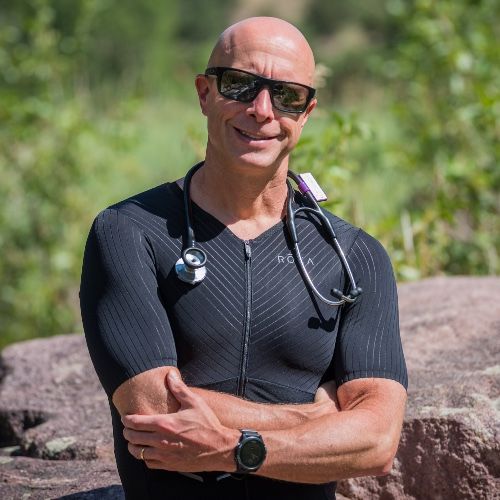
Speaker B: ,: Speaker B:I'm your host, Jeff Sankoff, the Tridock an emergency physician, a multiple Ironman finisher, a triathlete, a triathlon coach.
Speaker B:As always coming to you from beautiful sunny Denver, Colorado.
Speaker B:The voice you heard at the beginning of the podcast was that of my co host from my sister podcast, Tempo Talks.
Speaker B:Matt Sharp and I are having a conversation on this episode that is coming directly from the Tempo Talks episode that is also out today in which we converse about the unbelievably just stacked field that we'll be taking to the start line tomorrow morning in the woodland in Texas for the Ironman Texas.
Speaker B:I wanted to bring you that conversation here so that you could hear what takes place just about every week on Tempo Talks.
Speaker B:If you're not already a subscriber, I would urge you to consider doing so wherever you find your triathlon listening content.
Speaker B:You can download that on a weekly basis to supplement your Tridoc podcast listening habits as well.
Speaker B:It is about a 30 to 45 minute show that comes out weekly.
Speaker B:We discuss all of the hot topics in triathlon.
Speaker B:It's more of a news focused kind of program in which we discuss upcoming races, things around the world in triathlon.
Speaker B:We will occasionally discuss the training topics as well and sometimes we'll also take a little bit of a foray into kind of a science and evidence based approach to things similar to what you hear on this program as well.
Speaker B:Tempo Talks, that is the sister podcast to this one.
Speaker B:You will hear that segment coming up a little bit later on on today's program.
Speaker B:Before that, I will be joined as always by my co host Juliet Hockman for the Medical Mailbag in which we address a science question that is not so much question from a listener.
Speaker B:Although it is something that I have heard about frequently in the Facebook group for this show and it is related to a paper that come out back in the fall.
Speaker B:I believe it was October or November.
Speaker B:It was something I heard about at the time.
Speaker B:I commented on my YouTube channel at that time as well as on my Instagram, but I wanted to bring it back because it was something that I've now had more time to dissect and I asked one of my interns to look into.
Speaker B:And it is a paper that was really heavily promoted when when it came out by Dan Plews, the very successful age grouper and coach who has really made his whole thing about fueling with very low carbs and his strategy to race on a kind of a fat metabolism premise when he races long course endurance sport.
Speaker B:He has had great success doing so and he is very vocal about the fact that all of us are doing it wrong, that we should not be taking in high carbs.
Speaker B:And he used the latest paper that came out in Endocrine Reviews back in the fall as more evidence that he's right and that we need to reassess how we fuel for endurance sport.
Speaker B:Well, I take a look at that paper along with a lot of the other evidence that's out there and we come to you with our conclusions that yet again suggest that maybe Dan isn't the one who has it, that maybe for him a low carb strategy works well, but for most of us it's probably not going to be the way to go.
Speaker B:And yet again, I think even the papers that he shows as evidence in his favor, if you look at them, I think with a less biased view, you would tend to think maybe he's not on the right track there.
Speaker B:We will take a look at all of that and bring you our conclusions and that's going to be coming up very shortly.
Speaker B:I do want to revisit though, this discussion about Ironman Texas before I bring you the full segment coming up a little bit later on with Matt Sharpe, because the race that we're seeing this weekend is essentially a preview and maybe even a version of what we can expect to see in Kona a little bit later on this year at the World Championships.
Speaker B:I cannot remember a start field that is as stacked as this one and it's just amazing that a course that is flat, that is fast, that is maybe hampered only by wind and humidity, is drawing the kind of feel that this one is.
Speaker B:We are seeing 70.3 world champion Yella Ginz make his debut at the Ironman distance.
Speaker B:We are seeing the two defending champions at the world champions last year, Casper Sorens on the men and Solvag Lotzic on the women, both coming back and racing at this race.
Speaker B:Taylor Knipp, Kat Matthews for the women, Lisa Peterer for the women.
Speaker B:Grace Tech, who has really stormed the 70.3 world this year, is making her Ironman debut.
Speaker B:And on the men's side, it is just unbelievable.
Speaker B:Jason West, Sam Long, Lionel Sanders, Leon Chevalier, last year's runner up.
Speaker B:I'm so sorry, I'm blanking on his name, Antonio A.
Speaker B:That is not hugely familiar but has had success.
Speaker B:We will see the likes of Gustav Iden.
Speaker B:We will see Jonas Schomburg.
Speaker B:It just goes on and on.
Speaker B:And picking a winner on the men's side is just going to be so hard.
Speaker B:And of course I neglected to even mention defending champion Christian Blumenfeld, who is going to be very hard to pick against.
Speaker B:So why is it that we're seeing a race in the middle of Texas without a trouble?
Speaker B:Terribly challenging course, drawing this kind of field.
Speaker B:As Matt opines during our discussion, a lot of it just has to do with timing.
Speaker B:It's an early season race.
Speaker B:People are trying to line up their Kona spots.
Speaker B:There isn't a huge amount of competition for this race.
Speaker B:People are coming off of Oceanside, which also had a very big field, and they are leveraging the fitness that they've built for this early season, 70.3 and now bringing it to Texas where they can lay it all on the line.
Speaker B:But if you're a pro and you want to get the coveted Kona slot, does it behoove you to show up to a race like this where there is such a deep field?
Speaker B:I don't know what the calculus is for individuals like that.
Speaker B:I certainly know as an age grouper where slots are at a premium and you really invest a lot of time and money to try and get one of those slots.
Speaker B:Do you want to show up to a race where you know that there's going to be so many people?
Speaker B:Now clearly it is the North American World Championship, so there are more slots available.
Speaker B:I am not entirely sure if that's the case for the pros.
Speaker B:Probably is.
Speaker B:So maybe that's also part of it.
Speaker B:It is also part of the pro series, which means more money, more points online, so that's going to be a draw as well.
Speaker B:And for all of the names that I mentioned, clearly they all feel that they have a chance to win and that's why they're coming but man, great for us as spectators really shows what the quality of professionals are on both the men's and women's side and really demonstrates, I think, how great it is to be a spectator and how great it is to be a part of a sport like triathlon at this.
Speaker B:While everything else in the world is going on and all kinds of terrible things are happening to really give us pause, it's nice to have something like this to look forward to.
Speaker B:At least distract us for a few hours.
Speaker B:I'm curious, what do you think, what do you think is causing a race like this to have such an incredible field?
Speaker B:Who are your picks for the win?
Speaker B:I know there won't be a lot of time to get into the comments and get into the Facebook group and leave your opinion, but I'd love to hear.
Speaker B:So if you're hearing this episode early Friday morning, get in there before the race begins on Saturday and let us know what your thoughts are about who you think has a chance to win this race tomorrow.
Speaker B:On both the men's and women's side.
Speaker B:Both of them are just incredibly stacked.
Speaker B:There are a few notable people who won't be there.
Speaker B:Lucy, Charles Barkley, Laura Philipp on the women's side, of course, but just about everybody who's anybody on the men's side, except for people like maybe Matthew Marquardt who's over in South Africa, are going to be there for the men.
Speaker B:So really just an amazing race.
Speaker B:I really would love to hear who you think is going to be in there for the win.
Speaker B:Head over to the Facebook group if you're not already member.
Speaker B:Just search for Tridoc podcast on that platform, answer the easy questions, I'll gain you admittance and love to have you as part of the conversation.
Speaker B:All right, with that out of the way, let's move on to the medical mailbag and talk about low carb fueling strategies.
Speaker B:Is it something you should be considering?
Speaker B:We won't let you know what we think and that's coming up right after this short break.
Speaker B:All right, I'm not wasting time.
Speaker B:We have a lot to talk about before we get to our medical mailbag question.
Speaker B:Before we get anywhere, though, I do want to acknowledge Juliet has suffered a very personal loss recently.
Speaker B:I want to extend my personal condolences as I have already personal loss, but I'm going to do so again.
Speaker B:And on behalf of all the listeners, Juliet, could you tell us a little bit about your dad who just passed away recently?
Speaker C:Yeah.
Speaker B:Tell us a little bit about the man who I've heard so much about and I know was a major influence for you.
Speaker C:Thanks.
Speaker C:Yeah, my dad was a really remarkable human being.
Speaker C:He passed away three weeks ago today.
Speaker C:Boy, two weeks ago.
Speaker C:I can't even keep track.
Speaker C:Anyway, it's been a bit of a blur after a long illness.
Speaker C:We knew him, but that doesn't really make it any easier.
Speaker C:He was just an extraordinary guy.
Speaker C:He took huge risks, he started companies.
Speaker C:He was the sort of turtle of the American dream.
Speaker C:He's a Brit.
Speaker C:Came over from England with $600 and made him.
Speaker C:He spent the last 20 years of his life chairing nonprofit boards and quite literally savershed saving mountainsides entire community in South Africa.
Speaker C:And just as a dad, he was just an amazing guy and was inspirational and supportive and unconditionally in your corner regardless and just really encouraged the three of us to dream big and take big risks and get after it.
Speaker C:And then at the end of his life, he was actually recognized by the King of England for member of the British Empire.
Speaker C:Quite a huge honours one step low knighthood.
Speaker C:But we like to call him Sir Dad.
Speaker C:Anyway.
Speaker C:Anyway, he's a great guy and he'll be sorely missed and yeah, I think about him all the time.
Speaker C:So thank you.
Speaker B:Yeah, yeah.
Speaker B:I know what a big deal he was for you and your family.
Speaker B:And so our thoughts go out to all of you and our deepest condolences.
Speaker B:And I know that like you said, it was a long time coming, but of course not any easier.
Speaker B:And I know also you have a memorial planned already.
Speaker B:Your mom was planning one for the fall.
Speaker B:You will have a chance to celebrate his life as you plan for that and when you get together for that, onto happier things.
Speaker B:We have not talked about this, although I know that you and I both enjoyed this over the weekend.
Speaker B:Oh.
Speaker B:We're going to break from triathlon for a second and discuss the unbelievable events that took place in the north of France on Sunday.
Speaker C:North of Belgium.
Speaker C:Belgium, Not France.
Speaker C:No, it's in France.
Speaker C:Oh, no.
Speaker C:Yeah.
Speaker C:Roubaix.
Speaker C:Sorry.
Speaker C:We've had a successful races.
Speaker B:Yeah.
Speaker C:Every Sunday this time of year you've got this huge race and this is.
Speaker B:It's the Classics.
Speaker B:It's.
Speaker B:You go through.
Speaker B:That's right.
Speaker B:The Belgian Classics.
Speaker B:The Ardennes Classics are still to come.
Speaker B:But yesterday, what we saw on the cobbles of northern France was absolutely remarkable.
Speaker B:The drama of the last 120km.
Speaker B:I just.
Speaker B:I don't think you could script anything like that.
Speaker B:Now, I am an ardent Stan.
Speaker B:I know you are.
Speaker B:I don't think that you are not.
Speaker C:As much as you and your son.
Speaker C:For sure.
Speaker C:Yeah.
Speaker B:So what were your impressions?
Speaker C:Well, yeah, for you triathletes who may be listening and don't know what we're talking about, there's this whole series of spring races called the Spring Classics.
Speaker C:This is the queen of them all.
Speaker C:It's a lan.
Speaker C:It's called Paris Roubaix.
Speaker C:It's a race that goes from Paris to Roubaix.
Speaker C:And it's iconic because it crosses 36 different sections of cobbles, something like that.
Speaker C:And they're rated one to five.
Speaker C:They're extremely dangerous.
Speaker C:They run different tires, different tire pressures, even different bicycles.
Speaker C:If it's raining, it is unbelievably dangerous.
Speaker C:And you can find these pictures online of these guys just covered with mud and they're sliding out and there's crashes and there's drama and leads are constantly changing because the leaders get flat.
Speaker C:Three top guys got between them, 11 flats yesterday or something.
Speaker C:And then you've got to have the team cars catching up and they're not always there.
Speaker C:And you have teammates stopping to give their teammates wheels.
Speaker C:And it's just there's so much going on and it's so exciting and it's brutal at 260km.
Speaker C:These guys are gods.
Speaker C:So, yes, yesterday, of course, everybody knows the names Bagacha and van der Poel.
Speaker B:Vanderpoel.
Speaker C:Exactly, exactly.
Speaker C:And unfortunately, yeah, he wasn't there because he's.
Speaker B:Vingegaard does not race the cobblestone.
Speaker C:Oh, he doesn't do the cobblestone.
Speaker B:Just to give it a little more context.
Speaker B:So we had the Tour of Flanders recently and Pogacha won for the second time in a row, I believe.
Speaker B:And he is very strong on that race.
Speaker B:It goes over a lot of cobbled sections, but the cobbles are not exceedingly rough.
Speaker B:What makes that race very hard is just how long it is.
Speaker B:And there are these bergs, they're called in Belgium, and they're just very steep pitches and they pitch up to 20%.
Speaker B:And that's where Pogacha really is.
Speaker B:He excels.
Speaker B:So he's able to pull away.
Speaker B:On the Cuaremont is the famous hill.
Speaker B:And he pulls away and he's able to stay away and win.
Speaker B:There are five monuments, five major long standing one day races, and he's won four of them.
Speaker B:He won Milan, St. Remo for the first time this year.
Speaker B:He has won the Giro Lombardia several times, two or three times, I believe.
Speaker B:He's won Liege, Bastogne, Liege several times.
Speaker B:And he has won the.
Speaker B:Oh my Gosh.
Speaker B:What's the other one?
Speaker B:What's the other one?
Speaker B:In Selja?
Speaker C:Did you see what he said in Remo?
Speaker B:Okay, he won Milanza in Remo.
Speaker B:Giro Lombardia.
Speaker B:I'm totally.
Speaker B:Oh, Flanders.
Speaker C:Flanders.
Speaker C:Toro Flanders.
Speaker B:Sorry.
Speaker B:Yeah.
Speaker B:Sura Flanders.
Speaker B:So the last one was this one.
Speaker B:And he is not well suited to Paris Roubaix because to run over these cobbles, they're so horrid.
Speaker B:You have to be a big guy.
Speaker C:Yeah.
Speaker B:There's no hills.
Speaker B:It's a very flat race.
Speaker B:You just gotta be a big guy.
Speaker B:Because if you're a bigger guy, you don't bounce as much and you're able to maintain your power over these cobbles.
Speaker B:Pogaccia is not a big guy.
Speaker B:And yet he wants this race so badly.
Speaker B:So he comes in having just won yet again.
Speaker B:He's won every race he's raced this year.
Speaker B:And he comes in and he's up against Van der Poel, the three time defending champion of this race.
Speaker B:And Wout Van Aert, who has really struggled over the last couple years with major injuries, all kinds of.
Speaker C:And has been like second, third and fourth in this race, but never won it.
Speaker B:And an extremely popular rider and in Belgium is next to.
Speaker B:God.
Speaker B:The guy is just so popular.
Speaker B:And the three big favorites for the first time ever were basically in it to the end.
Speaker B:Even though they kept getting.
Speaker B:Pagacha had three flats, had to change his bike out, kept getting dropped, would come back.
Speaker C:He rode four bikes over the course of the race.
Speaker B:That's right.
Speaker B:Van der Poel gets.
Speaker B:Van der Poel has.
Speaker B:He gets a flat in the Ironberg trench, which is this horrendous sector of cobbles.
Speaker B:It's unbelievable.
Speaker B:Has to switch out his bike with somebody else who doesn't have the same cleat pedals as he does.
Speaker B:I don't know how that happened.
Speaker C:Yes, I know.
Speaker B:So he can't ride that bike.
Speaker B:So he's walking along waiting for his team car.
Speaker B:And he loses two and a half minutes, but he eats it all back to get within 20 seconds of the lead of the race.
Speaker B:But at that point, Pogachia and Wout Van Aert are away.
Speaker B:They are gone.
Speaker B:And they come into the world famous velodrome.
Speaker B:It is pandemonium.
Speaker B:They're side by side.
Speaker B:And vanart breaks away and wins.
Speaker B:And I have sent you all these reels at night.
Speaker B:My reels have been filled with people because Pagaccio's a very popular world champion.
Speaker B:He's a nice guy in a way.
Speaker B:People are like, oh, Enough with Pogacci wins all the time.
Speaker B:We need someone else to win.
Speaker B:But on the other hand, Pogaccia's just such a nice guy that they don't mind that he wins.
Speaker B:Just like a once in a lifetime talent.
Speaker B:But Vanart was such a popular win yesterday.
Speaker C:I was up this morning to go swim Masters.
Speaker C:I had opened my phone, there was a message from Jeff.
Speaker C:He sent me a reel on Instagram and it was a compilation of all.
Speaker C:I don't think I can even do this without getting choked up.
Speaker C:A compilation of all these different fans and bedrooms and dorm rooms all around Belgium watching the race and cheering.
Speaker C:And it was like.
Speaker C:And I just lost it.
Speaker C:I was lost it.
Speaker C:And it was just so great to see all of these people supporting this wonderful human being.
Speaker C:Right?
Speaker C:And in a race that he hadn't won, they were just so thrilled to be there to witness that he was winning it.
Speaker C:And yeah, we came down to the last 200 or 300 meters.
Speaker C:There is a 53 minute version of this race on YouTube.
Speaker C:You can go watch it.
Speaker C:I watched it last night with my husband.
Speaker C:So highly recommend.
Speaker C:They'll show you all the drama.
Speaker C:You'll get a sense of the cobbled.
Speaker C:And it wasn't even muddy this year, it was dry, which is incredible.
Speaker C:All you people who have anything to do with two wheels, go and watch this.
Speaker B:This is really exciting, really great.
Speaker B:And I have to tell you, the classics are not done.
Speaker B:We still have the Belgian Classics.
Speaker B:No, we have a bunch.
Speaker B:We still have Flage Wan.
Speaker B:We have the Liege, Bastogne.
Speaker B:Liege is coming up.
Speaker B:We have the Ardennes Classics, including the Amstel Gold.
Speaker B:All of those will go through.
Speaker B:And then finally we will get to the Giro d'.
Speaker B:Italia.
Speaker B:We still have a few races to go in the remaining weeks of April and into the beginning of May.
Speaker C:So I'll be honest, the only reason I know about this series of classics or timing of them and how they tie together, you have to remember these guys are racing every weekend and after they race, they go straight to the next location and preview how the worst series of cobbles are going to look this year.
Speaker C:They're going corners and they're going into the trench and they're hitting fans and the whole thing.
Speaker C:Anyway, the only reason I know about this series is because there's a local bike shop here, gravel riding, and.
Speaker C:And the guy who runs it puts together a series of what he calls the Sunday service rides.
Speaker C:This is church for all of you bikers, right?
Speaker C:And so every Sunday morning for six or seven weeks.
Speaker C:He creates these amazing, long, difficult 50 plus mile, 55,000ft of climbing plus gravel routes.
Speaker C:And we go and ride it together and then we end up at a different pub every week.
Speaker C:And he rolls in his flat screen and we watch this race and it's always.
Speaker C:We had street last week we had Belgian waffles with chicken this week.
Speaker C:Like he always does his theme.
Speaker C:So then we watched, which is why it's so exciting.
Speaker C:So anyway, so great.
Speaker C:I'm glad you remembered to bring that up.
Speaker C:It was fun watching.
Speaker B:So great.
Speaker B:And I just so happen.
Speaker B:I'm a big wild Van Aert fan.
Speaker B:So I really loved watching him and see him with his family.
Speaker B:And I don't know if you know this part of the story, but when he first raced as he was a rookie, one of his teammates died on the course of a cardiac arrest.
Speaker B:So he had vowed that he would win the race one day in his.
Speaker B:And so when he crossed the line, he was pointing.
Speaker C:I saw that.
Speaker C:I didn't know what's that.
Speaker B:That's why it was for his teammate who had died when wout was like.
Speaker B: So it was back in: Speaker C:Oh my gosh.
Speaker B:So good.
Speaker A:Yeah.
Speaker C:Wow.
Speaker B:Just a great guy.
Speaker B:Great man.
Speaker B:Yeah.
Speaker B:Anyways, okay, we have a medical mailbag question to answer.
Speaker B:Let's get to that.
Speaker B:We are going to be talking about what today.
Speaker C:All right, so this question has come up before and it is a regularly discussed last topic in multi sport, in endurance sports in general, and it's about low carb fueling.
Speaker C:So just when you thought we'd covered this topic and it was gone away for good, it is back and largely, not largely, but it is advocated by this one fairly well known coach, Dan Plews.
Speaker C:He's a coach.
Speaker C:He's a very successful age group triathlete.
Speaker C:He coached Sam Long for one hot minute.
Speaker C:He argues that everything that we've learned about using carbohydrates to enhance performance over the last five years is wrong and we should go back to low carb fueling because this is really where it's at.
Speaker C:So here we are to talk about this again.
Speaker C:What do you got, Jeff?
Speaker B:Yeah, I want to give Dan his props.
Speaker B:He's very adamant.
Speaker B:He feels very strongly about this and he himself has had great success as an athlete.
Speaker B:He won the overall age group, I believe, at Kona.
Speaker B:Oh, wow.
Speaker B:Using this strategy of low carb fueling.
Speaker B:He is, he's a phenomenal athlete.
Speaker B:And his success using this nutrition strategy can't really be argued.
Speaker B:What I have always said, though, Is that that's great, but I think he's an n of 1 and that the preponderance of research doesn't really bear out that his experience is going to be anybody else's.
Speaker B:And in fact, as we have seen in other research and even other people like Sam Long, who tried Dan as his coach and nutrition sort of guru, realized that it wasn't working for him.
Speaker B:And he just bombed out at Oceanside and had to get back to a high carb strategy and has done very well since then.
Speaker B:What does the research say?
Speaker B:All of this comes to?
Speaker B:Basically back in, I think it was November, October last year, a paper came out, it was a review paper by Dan's.
Speaker B:Dan was on it, but there were several other authors.
Speaker B:It came out in endocrine reviews and it looked at this synthesis of the data and said, look, we've got this all wrong.
Speaker B:High carb is not the way to go.
Speaker B: rs, and this goes back to the: Speaker B:And they postulated that if you could keep muscle glycogen levels from going away, that you would prevent exhaustion.
Speaker B:And this theory, there's a couple different names for it, it's abbreviated as tat.
Speaker B:But one way to think about it is like an energy crisis, what we're going through in the country right now, but at the cellular level, it's this energy crisis model that says, look, when we run out of cellular energy stores in the form of glycogen, we feel fatigued.
Speaker B:What the low carb people have said is, no, that's not what's going on.
Speaker B:What we think is going on is that central regulation is the issue, and fatigue is the brain signaling to reduce exercise to protect itself and the body.
Speaker B:And it's not so much intracellular glycogen that's the issue, but it's really serum glucose that's the issue.
Speaker B:And how this turns into don't take carbohydrates is not 100% clear to me because I've read all of their papers, I've looked at all of their posturalizing, and it doesn't make a whole lot of sense to me because when you take in carbohydrates, you raise your serum glucose, which should tell the brain that there's glucose.
Speaker B:So I don't totally understand.
Speaker B:There's no question that when you shift to a low carb strategy, your body already knows how to do these things, but you shift some preferential fuel burning so that your body starts using alternative fuels like fats and ketones, and will shift to gluconeogenesis, which is the liver making glucose so that the brain continues to get glucose.
Speaker B:It's very complicated.
Speaker B:I don't want to get into all of that.
Speaker B:But basically the long and the short of it is that there are innumerable studies that have looked at this research comparing high carbohydrate fueling with traditional carbohydrate guidelines.
Speaker B:Sure is scarce with low sample sizes, but said that, look, 30 to 90 grams per hour is a sweet spot.
Speaker B:That's what we have learned ourselves with our own athletes.
Speaker B:Right.
Speaker B:That if you can get your gut to tolerate 90 grams an hour, you're gonna be doing pretty well in these.
Speaker C:But 30 seems low to me, where.
Speaker B:You're really pushing yourself.
Speaker B:30 Does seem.
Speaker B:But that's where it started.
Speaker B:And I think over time, we've seen the research shift to these higher numbers.
Speaker B:It can tolerate those higher numbers.
Speaker C:I have a couple of guys who are taking in 100 per hour on the bike now and able to tolerate it.
Speaker C:It's something.
Speaker C:They figured it out.
Speaker B:Yeah, yeah.
Speaker B:The people who can do it, I think is pretty cool.
Speaker B:I can do about 90 and I do fine.
Speaker B:I probably could push it to 100, but I haven't really seen any at this point.
Speaker B:And the sweet spot seems to be 78 grams per hour.
Speaker B:That seems to be.
Speaker B:That's very specific.
Speaker B:But that's what some of the research seems to have shown.
Speaker B:And that 78 is predicated on this idea that we have to balance the need for energy with that sugar causing GI distress.
Speaker B:And 78 grams per hour seems to be that number where there is a tipping point for some people.
Speaker B:Other studies have looked at this idea of comparing the theory between feeding on sugars and not feeding on sugars, and looked at whether or not there is value to going on low sugar.
Speaker B:And it's really hard to find compelling evidence to suggest that low carb is the way to go.
Speaker B:But this particular paper that Plews really got excited about back in November, it was published by Noakes and Endocrine Review, and they did a big review on stuff.
Speaker B:And let's just.
Speaker B:Look, they say that.
Speaker B:Look, look.
Speaker B:They say that this energy crisis paper.
Speaker B:Sorry, this energy crisis theory.
Speaker B:They say, look, there's Not a huge amount of evidence to support it.
Speaker B:And so therefore it must be false.
Speaker B:That's not really true.
Speaker B:There's basically been 56 years since that paper initially came out and there has been not an overwhelming abundance, but there has been a trickle of consistent studies that have come out that have supported it.
Speaker B:So to say that there's been no evidence or to say that, look, there's been a lack of evidence, that's a fallacy in a way.
Speaker B:There has been some.
Speaker B:Then they go on, they give this other point.
Speaker B:They say, look, the original study that linked muscle glycogen and exercise duration ignored some key findings that high fat oxidation in carbohydrate restricted individuals actually works really well.
Speaker B:And they said there were points made in that at Bergstrom's paper back in the 60s that said, look, there were some sort of elements in the paper that sort of pointed to this idea that going low glucose actually was helpful.
Speaker B:And there's no question, if you read the text, Bergstrom does make that point that yes, it's true, but that he says, while saying that he says there's no question that this is true, but that high glucose does much better.
Speaker B:So, so where they're saying that Bergstrom diminished the value of the low carb, they're now turning that around and they're the value of low carb and diminishing what was really, I think the most important salient points that came out of that study.
Speaker B:They also talk a little bit about how they bring out some studies, talk about how, look, there are papers that show that low blood glucose is what actually causes exercise termination and that we shouldn't just be looking at liver and cell glycogen.
Speaker B:And I'm like, okay, but isn't that the whole point of taking in carbs?
Speaker B:So it's very hard to really understand what their arguments are.
Speaker B:And at the end of the day their paper is rife with cherry picking.
Speaker B:They have chosen that studies that bolster their arguments without necessarily taking things that are counter to their arguments.
Speaker B:And look, that's what you want to do.
Speaker B:Understand that.
Speaker B: r of a paper that came out in: Speaker B:And this is a really interesting study because the authors in that study report a small but statistically significant muscle glycogen sparing effect of carbohydrate ingestion.
Speaker B:In other words, if you take in high amounts of carbohydrate, you maintain that glycogen level in your cells.
Speaker B:They were able to show that and they did a subgroup analysis in running trials that the glycogen sparing effect is quite significant.
Speaker B:However, in cycling trials, the glycogen sparing effect didn't reach statistical significance.
Speaker B:The authors noted that this lack of statistical significance does not necessarily mean that there is no glycogen sparing effect, just that they didn't really see a statistical finding.
Speaker B:They then in the discussion went on to say this.
Speaker B:The primary finding from this meta analysis is that carbohydrate ingestion during exercise induces a small but statistically significant reduction in net skeletal muscle glycogen utilization.
Speaker B:Okay, okay, sounds good.
Speaker B:However, they hypothesize about the role of fat oxidation on why their effect size is small, saying that some of the energy from ingested carbohydrates replaces fat use instead of glycogen use, limiting how much glycogen is actually safe.
Speaker B:So despite the fact that their paper had no data to suggest that fat utilization was playing a role here, they just basically ignored all of their data that showed that carbohydrate ingestion was important and chose instead to focus on their theory that they really wanted to promote.
Speaker B:And the co author on that paper was Dan Plews.
Speaker B:So I just think that what we're seeing with a lot of this stuff about the low carb stuff is that there is, instead of coming into it with an objective hypothesis of, look, I'm gonna test this and I'm gonna try and prove it, they're coming in instead with an idea, a preconceived notion that, look, low carb's the way to go.
Speaker B:And I'm gonna.
Speaker B:And it doesn't matter what the data shows, I'm gonna argue for it.
Speaker B:And again, I wanna come back.
Speaker B:Dan has had remarkable success using this nutrition strategy.
Speaker B:And I have no doubt that there are other people that probably are like him too.
Speaker B:But the science would seem to bear out that for the vast majority of us, it's just not the way to go.
Speaker B:If you are exerting yourself for long periods of time at a high percentage of your endurance capacity, if you're an ultra runner, you're running at a low percentage.
Speaker B:Yes, that's where fat oxidation is your friend.
Speaker B:Very helpful.
Speaker B:But if you're doing triathlon 70.3 Ironman, where you're at 70% of your endurance capacity for many hours or 80%, even carbohydrates are the way to go.
Speaker B:I just don't see where again, for the vast majority of people, and I know there are gonna be some people out there who are gonna say, well, wait for me.
Speaker B:And I know there are.
Speaker B:I am confessing that there are probably people out there who can find success without carbs.
Speaker B:But for the vast majority, I think carbs are still the way to go.
Speaker C:Certainly.
Speaker B:And I know you feel the same way.
Speaker C:Yeah, by default.
Speaker C:Right.
Speaker C:And so you have new athletes coming on and they don't know how to fuel and they're worried about fueling for these 5, 6, 7, 8, 15, 16 hour efforts start here.
Speaker C:Because as you say, for the majority of athletes, we know that this is the tried and true methodology.
Speaker C:And as I was saying before we started, I worry about, particularly for athletes newer to the sport, creating a carb restricting approach because then you get into all kinds of other issues which might be difficult to separate from later on in terms of training under fueling for racing, we get into body image stuff, et cetera.
Speaker C:So I would just be very worried about communicating this as an absolute win for all age group athletes.
Speaker B:Yeah, I have to agree with you.
Speaker B:And I think that there's going to be people out there saying, okay, so there are people out there for whom this is a valid strategy.
Speaker B:How do I know if that's me?
Speaker B:So how would you counsel somebody who's coming to you and saying, I want to try this and see if it works for me?
Speaker C:I would look really hard at what I knew about that person, what I knew about their athletic background in terms of what sports they'd done, if they'd done any at all, and also just how they fueled and how they thought about food in general around the course of their entire day.
Speaker C:What had worked well in the past, point to pros who actually historically have not fueled very well and have seen great success.
Speaker C:Paula Finn talks about how she's horrible at fueling and doesn't fuel well at all, but she recognizes that over the last three, four, five years we've seen the incredibly positive influence, at least on the pro field, of higher carb intake.
Speaker C:But she'll talk about how, gosh, she's just terrible at it a little bit is about the history of that athlete, where they come from, their experience in sport in general, et cetera.
Speaker C:What about you?
Speaker B:I think if I had an athlete who said I was interested in doing this, it would have to be a discussion about doing this over a longer period of time because there's no question to me anyways, that if you're going to try this, you have to try this with a very low intensity for a period of time.
Speaker B:We know that this is an effective way of.
Speaker B:It's an effective strategy for low intensity stuff like we've said about ultra and stuff like that.
Speaker B:So I think if I was going to work with somebody who wanted to try this, I would say, okay, then let's spend the next month or two just doing low intensity and see how you're able to manage fueling on low carb.
Speaker B:But replacing with fats and doing protein and stuff like that.
Speaker B:Protein's a terrible fuel for endurance sport, but you can do it with fats and let's see how it works.
Speaker B:And I would have to do some research because I don't know how Dan fuels when he's on the bike for four and a half hours.
Speaker B:I don't even know what he's taking.
Speaker B:I'd have to look at what his fueling is.
Speaker B:But he's gotta be taking something because the guy doesn't have a ton of stores in terms of body fat.
Speaker B:So he's clearly taking in something.
Speaker B:So I would have to learn about that, about what the fueling strategy is.
Speaker B:And then I would say, let's try it low intensity.
Speaker B:Understanding that we're probably sacrificing any build to any race and then if it was successful, then we would start building the intensity up and then see how it goes.
Speaker B:But I would have a pretty low threshold for abandoning it and going back to carbs.
Speaker C:And I would also really worry about your age group athlete unless you're really very.
Speaker C:And they're into the data and they're into the science or they're on the pointy end or something like that.
Speaker C:Your typical age group athlete has so many things to think about over the course of their day.
Speaker C:Family and all these other stressors.
Speaker C:And I would really worry about athletes conflating a low carb approach versus intermittent fasting versus limiting.
Speaker C:There's so many that they would just have to be on it if they wanted to try it and measuring it.
Speaker C:So we.
Speaker B:Very intentional.
Speaker C:Yeah, very intentional.
Speaker C:So we could actually see if there was a positive result and it wasn't just throwing darts.
Speaker B:So yeah, I don't disagree with that at all.
Speaker B:And I think that it would have to be pretty supervised.
Speaker B:Right now I guide my athletes in terms of nutrition, but I don't build them to writing everything down.
Speaker B:I think if I was doing this, I would want to see something recorded because I would be Concerned about the caloric intake for some of these longer workouts.
Speaker B:And then the other thing is, I'd want to be following data very carefully in terms of weight, if they're a female menstruation, all of those things.
Speaker B:And yeah, I don't.
Speaker B:It seems pretty fraught to me.
Speaker B:I think that you would probably know pretty quickly if the athlete did respond to this and.
Speaker B:Cause as soon as you tried to ramp up the intensity at all, if they were not gonna be able to manage it, then that I think would tell you the answer, that this is not the strategy for them.
Speaker B:And yeah, it would be interesting.
Speaker B:But look, I'd be thrilled to hear from people.
Speaker B:Are you one of those people for whom this works?
Speaker B:Do you try or have you tried this and did you have success or did it not work and you had to go back to carbs?
Speaker B:I'd be really interested in hearing.
Speaker B:I think that for me it wouldn't even be worth trying because I know I've had success with carbs.
Speaker B:I know how I feel when I need carbs, and I'm getting to that point.
Speaker B:I've bonked before and it's not a pleasant feeling.
Speaker B:I'd be very interested to hear from people who are out there listening to this if they've tried this, if they've had success with this, or alternatively, if they've tried it and it didn't work, what did they do and how did they.
Speaker B:What did they take away from the experience?
Speaker B:So send us a comment.
Speaker B:Put it in the private Facebook group.
Speaker B:It's over on that platform.
Speaker B:Just look for trydoc podcast if you're not a member, already answered the three easy questions and you can join the conversation there.
Speaker B:We would really like to hear about your experience with this.
Speaker B:If you have done it or if you're contemplating it, what are you thinking about?
Speaker B:And if you have questions for a future medical mailbag, we hope that you will submit them over there.
Speaker B:Juliet, what do you have coming up?
Speaker B:Do you have no races before Oregon?
Speaker C:I have a local gravel race.
Speaker C:I have a local sprint tri.
Speaker C:Because I will be doing short course nationals this year.
Speaker C:I have three or four nicks that I'm teaching or hosting.
Speaker C:I'm hosting two camps, women's camps here in Hood River.
Speaker C:So even though Oregon is not until the middle of July, I feel like there's something every single weekend between now and then.
Speaker C:So, yeah, it'll be busy.
Speaker B:We've also.
Speaker B:So I've got Victoria coming.
Speaker C:That's right, yeah.
Speaker B:I'm happy to say that I'VE been able.
Speaker B:I had a good run.
Speaker C:I heard that.
Speaker B:I'm super excited.
Speaker A:Yeah.
Speaker B:So I'm hoping that is the light at the end of the tunnel and it's not an oncoming train and that I'll be able to ramp up my running because the biking's been going well.
Speaker B:Swimming still not great, but whatever.
Speaker B:And yeah, I'm looking forward to going out to Victoria.
Speaker B:I'm also enjoying the webinars we've been doing for Ironman.
Speaker B:So if anybody out there is listening and you're gonna be doing 70.3, we are going to be doing the webinar on the 22nd, which will be next Wednesday after this episode comes out.
Speaker B:Go head over.
Speaker B:Where can they find.
Speaker C:Yeah, they can find that information on the Facebook group for that particular race.
Speaker C:Race that'll probably be the easiest way to find it.
Speaker C:And we are covering most of the 70.3s west of Boulder.
Speaker C:So if you are doing any races in the western part of the United States, and we either have done them already and we can send you the recording or they are coming up and I'll be to come live.
Speaker C:So Jeff will be doing some.
Speaker C:I'll be doing some, and coach Dan Smith will be doing some.
Speaker B:Yep.
Speaker B:So we'd love to have you out there for those if you are doing any of those races.
Speaker B:Yep.
Speaker B:All right, Juliet, as always, thank you so much for joining me here today and we will chat with you again on the next episode of the Triad Hike podcast.
Speaker B:Looking forward to it.
Speaker C:Thank you, Jeff.
Speaker B:As I mentioned at the top of the program today, for the second segment of the show, I am bringing you a segment from my sister podcast that I host with Matt Sharp, an old friend of the show, a former professional triathlete and now an age grouper like the rest of us, Matthew Sharp.
Speaker B:Matt and I host a weekly podcast called Tempo Talks in which we discuss the ongoings from around the world of triathlon.
Speaker B:And on this week's episode that is also out this morning, we converse about the upcoming race in Houston in the Woodlands, specifically Ironman, Texas.
Speaker B:It has just an unbelievable field and I think that you will enjoy hearing our preview of the race that's coming up tomorrow.
Speaker B:I would love to hear your thoughts on this kind of conversation as well as your thoughts about the upcoming race.
Speaker B:Who do you see as your picks for the favorites?
Speaker B:And do you think we have it right or are we way off?
Speaker B:So here's our conversation from Tempo Talks.
Speaker B:You can subscribe to Tempo Talks wherever you get your audio content and we'd love to have you aboard as a listener on a weekly basis.
Speaker B:Thanks for listening to the Tridog podcast and I hope you enjoy this conversation.
Speaker B:Let's turn our attention to Iron Man Texas.
Speaker B:We have a just a sensational field lined up on both the men's and women's side.
Speaker B:Matt's going to give us his cursed picks in a few moments.
Speaker B:But shall we start with the women?
Speaker B:And why don't we talk about who is going to be lining up this weekend, who we can think might be our winners and who are some dark horses?
Speaker A:I mean, the men's race has definitely more athletes in.
Speaker A:In the field, but this women's race is just extremely.
Speaker B:Oh, there's like, there's seven or eight.
Speaker B:Yeah, there's seven or eight women.
Speaker A:Taylor, Nib, Solvag.
Speaker A:Love, Seth.
Speaker A:You know, almost like the big three.
Speaker A:If we just talk about the big three.
Speaker A:In men's cycling, you almost have the big Three.
Speaker A:Yeah.
Speaker A:In women's triathlon, long course triathlon, there's probably someone else you could throw in there.
Speaker A:Laura, Phil, maybe, but.
Speaker A:But, you know, it's fun to say the big Three.
Speaker A:We got the big three Y in Texas alongside, you know, Lisa Perder, who burst onto the long course scene last year with incredible results in the pro series in Kona.
Speaker A:You've got Hannah Berry, another veteran athlete who's really taken momentum from last year and just turned it into even more great results this year.
Speaker A:Mar Sanchez, she's someone who's always kind of near the podium, on the podium, podium adjacent.
Speaker A:Someone who we've talked about recently.
Speaker A:Grace Tech.
Speaker A:Grace Tech.
Speaker B:And that's her.
Speaker B:That's her Ironman debut, isn't it, Grace?
Speaker A:Or it is her Iron man debut.
Speaker A:And I do believe she will have a good debut based on the form that she's coming off.
Speaker B:She's coming off of a couple of big races against some pretty competitive fields, and she's done very well.
Speaker B:So I agree.
Speaker B:I think Grace Tech is a sleeper.
Speaker A:Jackie Herring as well.
Speaker A:Danielle Lewis.
Speaker A:This is just an exceptional field.
Speaker A:How do you think this is gonna play out?
Speaker B:Well, I mean, so right away, as always, you know, Kat, Matthew Taylor, Knibb, Solvag, Loek is pretty hard to get past those three.
Speaker B:I don't even know that I could possibly choose from those three.
Speaker B:I would like to see a race where Solvec actually beats Taylor as opposed to Taylor, you know, because right now Loveseth hasn't actually beaten Taylor Nip.
Speaker B:Taylor's beaten herself.
Speaker A:Correct.
Speaker B:Until Sovig can actually show me that she can Be Taylor.
Speaker B:When Taylor is having a good day, I am going to continue to believe that Taylor is going to win that, you know, head to head match each time.
Speaker B:So, you know, prove me wrong.
Speaker B:Solvik, I would love for you to, because you're the young up and comer and I have great faith that at some point you are going to do that.
Speaker B:So maybe this is the weekend.
Speaker B:We'll see.
Speaker B:Now, Cat Matthews, I mean, she is in an early season farm right now.
Speaker B:That.
Speaker B:And this is the first time she's going up against Taylor, I think.
Speaker B:No, she.
Speaker B:They raced in Oceanside.
Speaker A:No, Matthews wasn't there.
Speaker A:This is the first.
Speaker B:Okay.
Speaker A:They're going up against each other since.
Speaker A:Since Kona.
Speaker A:Since Kona, yeah.
Speaker B:So this is going to be interesting.
Speaker B:This is going to be very interesting because.
Speaker A:Yeah.
Speaker B:And I, you know, Cat Matthews, Taylor Knipp, who.
Speaker A:Yeah, I like, I'm just.
Speaker A:It's so hard to like even imagine.
Speaker A:Like my brain is just like, man, I know, crazy.
Speaker A:But I looked kind of down the start list a little bit and, and there is an interesting addition.
Speaker A:So there's a woman, her name's Margarita Ryan.
Speaker A:She swam NCAA swimming and now she's doing triathlon and she was in that kind of front group in Oceanside, kind of alongside Nib.
Speaker A:So, you know, if she's someone who's ready to push the swim, kind of I get to the front of the race early, it could be really beneficial for Taylor, who maybe won't want to lead the entire swim.
Speaker A:Maybe she'll want to sit on her feet for a bit.
Speaker A:Maybe they can swap turns in the water.
Speaker A:Like that would be massive for, for Nib to have someone because we saw in Oceanside, you know, she's just sat on Victoria Lopez's feet and started that bike in just prime position for them to also just absolutely dominate the bike.
Speaker A:So, so I think Nib may jump out to a pretty early lead in that swim.
Speaker A:And, and obviously her bike form is incredible.
Speaker A:She dusted a lot of athletes by like minutes in, in Oceanside and in the Gold Coast T100.
Speaker A:So expect her to kind of be leading.
Speaker A:And, and, and, and I have to bring it up because it's something that has been brought up in other places, but there definitely could be a little bit of a motor moto effect.
Speaker B:Oh, yeah.
Speaker B:Especially in this cameras.
Speaker B:Yeah.
Speaker A:And all that kind of stuff.
Speaker B:And.
Speaker B:Yeah.
Speaker A:And I don't think.
Speaker A:And I think athletes are really understanding this.
Speaker A:And so the ones who get to the front early, the ones who can kind of establish a Lead, I think they know they're going to get a benefit and that's just the reality of wanting to get coverage of these races.
Speaker A:There's just going to be motos.
Speaker A:So I think she's going to try and take advantage of that as well, especially on the flat roads and whatnot of, of Texas.
Speaker A:So I expect her to have, you know, multiple, multiple minute lead.
Speaker A:You could see her having up to 10 minutes lead, maybe even more off, off the bike, depending on how it plays out behind her.
Speaker A:But we've seen that can sometimes not be enough.
Speaker A:So we'll, we'll see what the gap is from Nib to, you know, where is, is Solvag going to be coming off the bike?
Speaker A:Where is Matthews going to be coming off the bike?
Speaker A:Because we know in Kona we obviously, obviously saw Solvag jump out to that kind of breakaway position where she was in between the front group of Lucy Charles Taylor and ahead of the group that had Kat Matthews, Laura Phillip.
Speaker A:So will she try and get away again to have a buffer over Matthews, given how well Matthews has been running?
Speaker A:I think she's going to try that again for sure.
Speaker A:That's my thought, that either she's going to do her best to try and get as close as she can to Nib or at least not come off the bike with Kat.
Speaker B:Well, the best runners here are Kat and Grace Tech and I guess Lisa Peterer.
Speaker B:Probably they're gonna be the even.
Speaker A:Solvag had a great run in Oceanside.
Speaker A:Like you saw her kind of bring back nip on, on the run there.
Speaker A:So she's, it's not like she's running poorly.
Speaker A:It's just if I'm gonna put them coming off the bike together, I'm gonna put Cat ahead for sure.
Speaker A:Just based on.
Speaker B:So you're right.
Speaker B:I mean, if Taylor gets the best of the bike, then yeah, it's gonna be.
Speaker B:How much of a gap is she gonna have?
Speaker B:Because I think she needs 10 minutes.
Speaker B:I, I, I think, you know, she's kind of, you know, we hearken back to when we used to see races between Natasha Badman and some of the runners like Laurie Bowden or even Rinny.
Speaker B:You know, they'd come off the bike and they'd chase them down.
Speaker B:And then, you know, you think of Chrissie Wellington and you know, she had those astonishing bike splits and she would run well, but she would give up 10 minutes or so, but she could afford to.
Speaker B:Cause she biked so well.
Speaker B:I think we're looking at that again.
Speaker B:I mean, it's not like Taylor is a slouch when she starts running.
Speaker B:She just doesn't.
Speaker B:She definitely gives up 10 minutes to Kat and so I agree with you.
Speaker B:Now another big question is what's the weather going to be like?
Speaker B:I haven't looked at a forecast and it's not going to be terribly accurate when we're recording it any.
Speaker B:We're recording this anyways.
Speaker B:But you know that, that can play into this too.
Speaker B:Texas can be windy on the bike and it can be hot and humid on the run and we know that Taylor has had problems with that.
Speaker B:At least she did last year in Kona.
Speaker B:So is that going to play into this?
Speaker B:We'll see.
Speaker B:We'll see.
Speaker B:To be determined.
Speaker B:But anyways, you know, you wonder if.
Speaker A:Maybe she wants to try and switch it up a little bit, maybe dial that bike back a bit kind of power wise just to see how she goes on the run.
Speaker A:Because I think if she comes off the bike and not having dug too deep of a hole, I think she's capable of having a great run and, and taking her first Ironman win.
Speaker A:She doesn't have a win in an Ironman distance race, I'm pretty sure.
Speaker A:So I think that's something that's maybe in the back of her mind a little bit.
Speaker A:You know, she hasn't been able to get that win and wins typically come very easy, quote easy to her.
Speaker A:So yeah, a bit of a monkey she's trying to get off her back for sure.
Speaker A:In this race, if you're going to.
Speaker B:Pick a dark horse, who would it be?
Speaker A:Yeah, I mean there's just, there's a lot of them, a lot of great.
Speaker A:Yeah, I mean I just, from what I saw, Grace, like where, the way she was running in Oceanside, coming off the, the podium in Geelong, I'm gonna have to say if someone's gonna break up the big three, it'll be Grace for sure.
Speaker B:I kind of agree.
Speaker B:And, and then in the back of my mind I'm thinking Lisa Petter, fifth in Kona.
Speaker B:You know, it's.
Speaker B:She hasn't raced this year.
Speaker B:Right.
Speaker B:This is her.
Speaker A:I think it's her first race.
Speaker A:So maybe I haven't been paying attention fully to, you know, what's going on with her.
Speaker B:Well, she raced in, she raced in Cozumel, she won.
Speaker B:But she, she didn't miss her chance to get her slot because she missed the awards.
Speaker B:But yeah, this is, yeah.
Speaker B:Anyway, so it's going to be, I mean, what a, what a, what a start field.
Speaker B:Okay.
Speaker A:You could just Stop right now and be like, yep, that's going to be a great weekend.
Speaker B:We have an, I mean, an unbelievable men's field.
Speaker B:So we have defending champion Christian Blumenfeld, who is coming off his win in Oceanside, a very commanding win.
Speaker B:Patrick Lange is back, three time world championship, making his debut for the year.
Speaker B:At what point do we say Patrick is kind of over the hill and done?
Speaker B:I don't know.
Speaker B:I mean, he's not really given us any reason to think that's the case.
Speaker B:So we'll see what happens this time around.
Speaker B:In Texas, making his Ironman debut, 70.3 world champion, Yella Gaines.
Speaker A:Amazing.
Speaker B:I know, Amazing.
Speaker B:Gustav Iden is there.
Speaker B:And then we've got a whole other bunch of names.
Speaker B:Rudy Von Berg, last year's runner up, Antonio Benito, Leon Chevalier.
Speaker B:And I mean, I'm, I'm this far down into the list and I'm, and I'm coming up on Sam Long, Martin Van Real, Casper's there, Cameron Cam Wolf, Jason West, Lionel, Ben Knuts, Jonas Schomberg.
Speaker B:I mean, Lionel doesn't even make it onto the list because of.
Speaker B:There's so many athletes with track records right now.
Speaker B:Lionel hasn't done an Iron man since.
Speaker A:Like two years ago.
Speaker B:Yeah.
Speaker B:So he's not even showing up like as a potential.
Speaker B:But how do you count him out?
Speaker B:You can't, you can't count the man out.
Speaker B:I, I mean, what are you thinking?
Speaker B:I mean, like, I don't even know.
Speaker B:I mean, listen, you can't count out Christian.
Speaker B:I mean, Christian is.
Speaker A:Yeah, you can't get out Christian.
Speaker A:It's an interesting dynamic I think especially with the new 20 meter draft zone.
Speaker A:I think someone like a Sam Long, he likes his chances.
Speaker A:He likes his, his chances in a race like this.
Speaker A:Even though there's so many good swimmers in this race.
Speaker A:You've got Martin Van Real, he was a breakaway at the Anise Ironman World champs alongside Jonah Schomberg, who is also in this race.
Speaker A:You've got like Vincent Louie is doing an Iron Man.
Speaker B:Oh, I didn't even know.
Speaker B:I didn't even have him on my list.
Speaker B:Oh my goodness.
Speaker A:I didn't even know he was going until I saw like impost a video with, when he was running with Van Real.
Speaker A:I'm like, okay, that changes things as well.
Speaker A:You've got Ben Knute, you've got Andreas Salvisberg.
Speaker A:Like these guys are all like many.
Speaker A:Like a bunch of these guys, they were in the front pack at the Olympics together, like, and now they're in the front pack so of an iron.
Speaker B:Tell me something, Matt, like, what goes into the calculus for a lot of these pros?
Speaker B:Like, I mean, why show up to a race that's this stacked?
Speaker B:Like, why not, why not go to a lesser race?
Speaker B:Like, like, like Matthew is in South Africa.
Speaker B:Like he's, he's not going to be racing against anything close to this kind.
Speaker A:Of, you know, I think people, a lot of people are looking at the start list and even if they're fit, they're like, man, I really wish I'd just gone somewhere else or, or, or started earlier.
Speaker A:And that was the whole thing with New Zealand.
Speaker A:It was such a golden opportunity if you were able to just kind of bite the bullet, make the trip down there.
Speaker A:Because the quality of feel field certainly much less in, in, in New Zealand than in, than in Texas.
Speaker A:It's just the timing, right?
Speaker A:There's so many people who are doing the ocean side Texas double who are coming from Europe, you know, making a big trip out of it.
Speaker A:There's just so many people in North America.
Speaker A:Like Matt Hansen's doing this race.
Speaker A:He raced Iron Man New Zealand.
Speaker B:Isn't Trevor, Trevor Foley's here too, right?
Speaker A:He's not, he's a, he's training.
Speaker A:I think he's one of the few who, who aren't at this race.
Speaker A:It's just wild how.
Speaker A:And, and of course, you know, this is what the T100 wanted, right?
Speaker A:The T100 wanted to have the best athletes at the, at the races.
Speaker A:Every, you know, Iron man seems to be doing that.
Speaker A:They seem to be eating their lunch.
Speaker A:So I'm sure Mr. Scott Derues might have some more words in his opening monologue.
Speaker B:This is bonkers.
Speaker B:This is a bonkers, bonkers men's field.
Speaker A:It's the most competitive race.
Speaker A:I want to say it's, it's more competitive than like many of the past world championships.
Speaker A:Like, that's the reality.
Speaker A:There's just so many good athletes.
Speaker A:And even a couple years ago, this race is more competitive than the world championships for sure.
Speaker B:Yeah, this is, this is, this is right.
Speaker B:Yeah.
Speaker B:But this, this race is like I, I can't remember a field like this at Roth.
Speaker B:I can't remember a field like this at Hamburg at like any of those big races.
Speaker B:This is unbelievable.
Speaker A:So there's just so many factors that, that have led to this, like the timing, the pro series, people wanting Kona slots because it's back in Kona.
Speaker A:Like it's just, just a perfect storm.
Speaker A:You had Ditlev, who was supposed to be there, right?
Speaker A:He was supposed to be there and then he got the shingles, which is great.
Speaker B:Yeah.
Speaker A:But so yeah, like it could have been even better.
Speaker A:And just like I'm speechless.
Speaker A:Like it's just not.
Speaker B:I, I, I, I wouldn't even know where to start here.
Speaker B:I mean, obviously big fan of Lionel.
Speaker B:Would love to see Lionel do well, but I, I have a hard time seeing him in the top three here.
Speaker B:I mean.
Speaker A:Well, this, the dynamic though with the 20 meter draft zone.
Speaker A:I just think these guys like a Lionel like Cam Wurf, like Sam Long.
Speaker A:I think they're heartened by it.
Speaker A:I think they're, they've got a little bit of swagger back because they know.
Speaker B:That they can, they can make up the deficit off the swim.
Speaker A:Yes.
Speaker A:And, and one factor that we'll really have to pay attention to is if it is a wetsuit swim or not.
Speaker A:Because if it is not a wetsuit swim, that definitely hurts.
Speaker A:Sam Long, Lionel, like that's another three minutes at least.
Speaker A:They're gonna lose to, to the front guys on top of the 4 to 4ish that they're probably already gonna lose maybe even more.
Speaker A:If it's a wetsuit versus non wetsuit that'll change things.
Speaker A:You're still gonna have a pretty ripping front group.
Speaker B:Is here again, you know, to potentially take advantage of like you said, that 20 meter draft zone Lionel too.
Speaker B:You know, Lionel does swim better than Sam and has shown some pretty good swimming in the last year.
Speaker B:So, you know, be interesting.
Speaker B:Be interesting.
Speaker B:I gosh, I don't know.
Speaker A:Yeah, I do think you're gonna have that front group out of the water.
Speaker A:Wetsuit or no wetsuit.
Speaker A:It'll be bigger if it's a wetsuit swim and then kind of starting the bike.
Speaker A:It's, it's more like who wants to go with Schomburg?
Speaker A:Because, you know, like this guy, he just attacks.
Speaker B:Yeah.
Speaker A:And he wants to attack.
Speaker A:He wants to be on the front run.
Speaker A:I think he knows the motos are an advantage.
Speaker A:So he's like, I'm going to jump on this and I'm going to be the guy in the front because I'm going to get a benefit from this.
Speaker A:And especially now where it's 20 meters, he knows the people behind aren't getting as much of a benefit.
Speaker A:But there's, there's going to be a front group, there's going to be a front pack.
Speaker A:And you know, it's, it's kind of a situation of are they going to work together?
Speaker A:Are they going to kind of all sit behind Schomberg, like, Van Real's always a guy who loves to attack, too, so he's going to be in the mix at the front as well.
Speaker A:But, like.
Speaker A:And then you think, okay, well, how far back is Yellow going to be out of the water?
Speaker A:Is he going to be with Blumenfeld starting the bike?
Speaker A:Is Blumenfeld gonna look at Yella and be like, well, I dusted you and Geelong, so I just need to stay with you and I'll outrun you, or is he gonna try and get rid of Yellow?
Speaker A:There's.
Speaker A:And Stornas is in there.
Speaker A:There's all those kind of subplots.
Speaker A:And then you've got Long, you've got Lionel, you got Cam Worth trying to come from behind.
Speaker A:So I don't know if they're gonna have enough cameras for this race because of all the different dynamics at play.
Speaker A:You've, you know, you've got Nick Thompson there.
Speaker A:That guy was a beast in Nice.
Speaker A:He's going to be ripping on the bike.
Speaker A:Christian Hoganhaug, the guy who almost beat Blumenfeld in Frankfurt last year, he's there.
Speaker A:Like, it's just nuts.
Speaker A:So there's just going to be so many lead changes.
Speaker A:I think there's going to be a lot of different dynamics going on.
Speaker A:You're definitely not going to know who's going to win, like, with, you know, in T2.
Speaker A:Like, you just.
Speaker B:No, it's going to be.
Speaker B:It's going to be like, later in the run before we really have a good sense.
Speaker A:I think it's more kind of like, okay, if Blumenfeld doesn't have a mechanical, like, who's going to beat him?
Speaker A:Who is ready to take him down in this race?
Speaker B:Yeah, well, I kind of feel like you do.
Speaker B:I think Blumenfeld's the guy to beat.
Speaker B:I think that.
Speaker B:I think our big cyclists could be a threat.
Speaker B:There's just so many.
Speaker B:There's.
Speaker B:I'm not gonna.
Speaker B:I mean, I'm just not gonna pick.
Speaker B:I mean, I just.
Speaker B:I think there's too many incredible athletes here.
Speaker B:I think it's gonna be an amazing race to watch.
Speaker B:I'm gonna be across the country with my daughter doing a college visit, so I'll be watching from afar, but it is something that I will be paying very close attention to and looking forward to.
Speaker B:So, yeah, it's gonna be amazing.
Speaker B:Do you have a.
Speaker B:Do you have a pick?
Speaker B:Fireworks.
Speaker B:Do you have a pick?
Speaker A:Yeah, I've got picks, for sure.
Speaker A:So I guess I'll start off in the men's race.
Speaker A:Like, I'M looking at this, this list and I guess Blumenfeld.
Speaker A:I don't know if I want to pick him for the win.
Speaker A:I kind of want to see maybe somebody dethrone him, but it's just so hard.
Speaker A:It's so hard to pick anyone other than Blumenfeld, obviously, unless he gets a mechanical or something.
Speaker A:So I, you know, I'll put Blumenfeld for the win.
Speaker A:Hard not to see him because I picked him for Oceanside, too, even though he did the Geelong race the week before.
Speaker A:Like, the guy's just coming in, he's hot.
Speaker A:I don't think anyone can take him down.
Speaker A:So.
Speaker A:So Blumenfeld for the win.
Speaker A:And then I'm looking down this list and, yeah, stores.
Speaker A:He looked great in Oceanside.
Speaker A:He was kind of coming along on the run.
Speaker A:Schomberg obviously is in great form, but is he in full Ironman form?
Speaker A:You know, that Challenge Roth race that he did last year was great.
Speaker A:Obviously.
Speaker A:N had a great race, too, man.
Speaker A:You got Van Real.
Speaker A:It's just.
Speaker A:It's hard.
Speaker A:It's hard.
Speaker A:But Bloomfeld for the win, man.
Speaker A:I'm gonna say I'm gonna go with Stornas for second, and I'm actually gonna bring up Sam Long.
Speaker A:Sam Long.
Speaker A:I think Sam Long's gonna be able to get back into the race quickly.
Speaker A:I think he's.
Speaker A:He's ready to run.
Speaker A:Well, I think he's.
Speaker A:He's ready to back his run off a pretty hard bike.
Speaker A:Cause I'm sure it'll be a hard bike.
Speaker A:There you go.
Speaker A:Sorry, guys.
Speaker A:I've probably cursed you there for the women.
Speaker A:You know, the big three.
Speaker A:I can't break up the big three.
Speaker A:They're just, they're just too good.
Speaker A:I do think Kat Matthews, she just has a great history on this course.
Speaker A:She's looks great over the full distance.
Speaker A:So I'm picking her for the win.
Speaker A:I'm going to put Nib second.
Speaker A:I'm going to put her second.
Speaker A:I don't know how she's going to do it exactly.
Speaker A:Is it going to be a big lead on the bike?
Speaker A:Is it going to be her on the run?
Speaker A:They got her second and they got Solvag in in third.
Speaker A:I think people are really keeping their eye on her, so I don't think they're going to let her get away like they did in Kona.
Speaker B:All right, well, what do you guys think we want to hear?
Speaker B:Head on over to the Talk Tempo Talks Facebook group.
Speaker B:If you're not a member already.
Speaker B:Just answered the easy questions.
Speaker B:We'll gain you admittance.
Speaker B:We would love to know your thoughts.
Speaker B:And yeah, we will check in next week and do a little recap of what went down because I anticipate lots of fireworks.
Speaker B:I think it's going to be a lot of fun.
Speaker B:Lots.
Speaker B:Yeah, it's going to be pretty amazing.
Speaker A:Yeah, I will be tuning in as much as I can this weekend for sure.
Speaker A:And yeah, it's gonna be awesome.
Speaker A:Great weekend for the sport, I'll tell you that.
Speaker B:Yep, that's for sure.
Speaker B:All right, well, that's gonna wrap it up for another episode of Tempo Talks.
Speaker B:We hope that you've enjoyed it.
Speaker B:If you have.
Speaker B:We hope that you will leave us a rating and a review wherever you download this content.
Speaker B:And if you didn't enjoy it, well, please do let us know because we always are looking to get better.
Speaker B:You can drop us a line or you could leave a comment in the Facebook group.
Speaker B:We will be back again next week with another episode.
Speaker B:Matt, always a pleasure.
Speaker B:Hope that you are recovering, getting in the Normatec, sauna, hot tub, whatever it is and everything.
Speaker A:We're thr everything at this body because it's, it's hurting.
Speaker A:So yeah, fun times racing.
Speaker A:Looking forward to the next one.
Speaker A:And yeah, enjoy that college vision.
Speaker A:That'll be good.
Speaker A:Yeah, father daughter bonding time.
Speaker B:There you go.
Speaker B:It's going to be fun.
Speaker B:All right, take care.
Speaker B:Cool.
Speaker B:We'll talk to you next week.
Speaker A:Thanks, everyone.
Speaker B:The Tridock Podcast is produced by me, Jeff Sankoff, along with my amazing interns, Cosette Rhodes and Sarah Lopez.
Speaker B:The editing is done by my incredible daughter, Sam Sankoff.
Speaker B:You can find show notes for everything discussed on the show today as well as archives of previous episodes@www.do you have questions about any of the issues discussed on this episode or do you have a question for consideration to be answered on a future episode?
Speaker B:Well, I hope that you'll send me an email@tridocloud.com if you're interested in coaching services.
Speaker B:I hope that you'll visit tridockcoaching.com or lifesportcoaching.com where you can find a lot of information about me and the services that I provide.
Speaker B:You can also follow me on the Tridoc Podcast Facebook page, Tridock Coaching on Instagram and the TriDoc Coaching YouTube channel where you could see videos of these podcasts on a bi weekly basis.
Speaker B:And don't forget to join the Tridoc Podcast private Facebook group.
Speaker B:Search for it and request to join today.
Speaker B:If you enjoy this podcast, I hope that you'll consider leaving a rating and a review, as well as subscribe to the show wherever you download it.
Speaker B:And of course, there's always the option of becoming a supporter of the podcast@patreon.com tridogpodcast the music heard at the beginning and the end of the show is radio by Empty Hours and is used with permission.
Speaker B:This song and many others like it can be found@reverbnation.com where I hope that you'll visit and give small independent bands a chance.
Speaker B:The Tridock Podcast will be back again soon with another medical question and answer and another interview with somebody in the world of multisport.
Speaker B:Until then, train hard, train healthy.