
Episode 197
Ep. 197- Get Fit to Train: The Secret to Running Success at Any Age + HRV Medical Mailbag
In this episode:
As we dive into the episode, the conversation flows with Mike Sheridan, a true running aficionado who has proven that you can achieve greatness at any age. Mike’s narrative is not just about his accolades—though they are impressive, including setting a record for the marathon at 70—but it’s also about the journey he took to get there. We discuss the pivotal moment that reignited his passion for running when his son challenged him to a half marathon, and how that sparked a newfound love for the sport. The episode tackles the realities of aging and running, with Mike sharing his strategies for injury prevention and recovery that have allowed him to keep pounding the pavement. There’s a certain irony in how society views aging athletes, and we explore the absurdities of these perceptions throughout our chat. Mike’s infectious enthusiasm and practical wisdom shine through as he encourages listeners to embrace their own running journeys, regardless of where they start. With a blend of sarcasm and sincerity, this episode serves as a powerful reminder that passion and perseverance can lead to extraordinary outcomes, no matter your age.
Segments:
[7:24]- Medical Mailbag: Heart Rate Variability
[33:51]- Interview: Mike Sheridan
Links
Transcript
The first thing I would say is just believe it's possible.
Speaker A:Now, clearly you're not going to run 20 minute 5k straight out the door.
Speaker A:But on my very first run, having received that call from my son, I put the trainers on, I went out of the door and it took me a half mile of walking before I was brave enough to lean forward and start running.
Speaker A:But I did that.
Speaker A:And that's so important.
Speaker A:You've just got to do it to the best of your ability on the day you're not going to win an Olympic medal.
Speaker A:That's not the point.
Speaker A:The point is you are doing something.
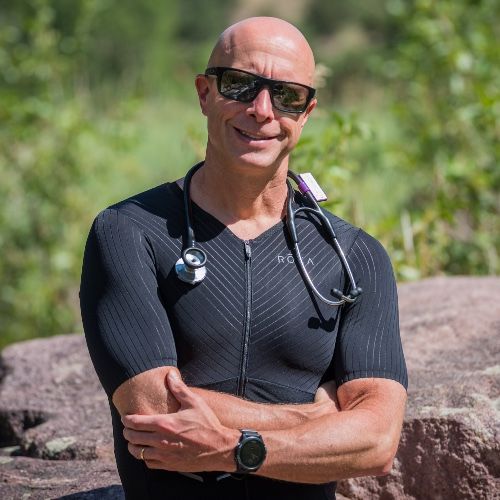
Speaker B: ,: Speaker B:I'm your host today, Jeff Sankoff, the Tridoc an emergency physician, a triathlete, a triathlon coach and a multiple Ironman finisher.
Speaker B:Coming to you as always from beautiful sunny Denver, Colorado.
Speaker B:The voice you heard at the beginning of the program this episode is that of my guest, Mike Sheridan.
Speaker B:Mike is a phenom in the world of running.
Speaker B:He has been running for the past 20 years or so, and as he gets older, he's only getting better.
Speaker B:At the ripe old age of 72, he is finding himself in scarlet danced in the upper echelons of his age group and recently ran the London Marathon yet again winning the older men's age groups and is proving himself to be like another of my recent guests, the phenom Natalie Grabow, somebody that we can all aspire to be like when we grow up.
Speaker B:Mike shares with me his journey through running.
Speaker B:He came to it a little bit later in life, similar to how Nat came to triathlon later in life, and he tells us some of the secrets about how he has managed to stay, for the most part fairly injury free and able to find success as a runner.
Speaker B:So many different stages of his life as he has grown into retirement and continued to find the joy and happiness as he continues to race.
Speaker B:Before we get to that interview, I will be joined as always by my friend and colleague Juliet Hockman, a fellow coach at LifeSport coaching.
Speaker B:And together we are going to answer another question from a listener on today's Medical Mailbag.
Speaker B:And this time it's a question that we have answered before, but it's something that has come up repeatedly.
Speaker C:It relates to heart rate variability.
Speaker B:This is a metric I'm sure you've all heard about.
Speaker B:It has been something that people talk about as being the end all, to be all when it comes to metrics.
Speaker B:But is it something that you really need to base your day to day decisions as to whether or not you're going to train based on what your heart rate variability is telling you.
Speaker B:I am going to look at the science of what heart rate variability is, how it's measured, whether we can really count on those measurements as being as accurate as our watches and other devices.
Speaker C:Would have us believe.
Speaker B:Believe, and most importantly, if that number is really all it's been advertised to be, or should we just be taking it in the context of greater kinds of questions like how are we feeling today?
Speaker C:We're going to talk about all of.
Speaker B:That based on the science and that's coming up in just a short moment.
Speaker B: don't have any idea where the: Speaker B:This to me is astounding.
Speaker B: ualification period opens for: Speaker C:We believe that the race will be.
Speaker B:Held in North America.
Speaker B:That part seems to be, for the most part, pretty sure.
Speaker B:But the longer this goes on, the more I begin to wonder if that's actually the case.
Speaker B:And I can't help but wonder if the recent goings on with what happened with the mayor of Nice is playing a role here.
Speaker B:Did Ironman get a little bit gun shy and now have to go back to their lawyers and rewrite a contract so that any cities that signs up to host the Ironman 70.3 World Championships isn't going to do what the mayor of Nice did and at the last minute turn around and potentially threaten the race and potentially threaten to not host it the way they did when they signed the contract.
Speaker B:I can only speculate on these kinds of things.
Speaker B:I have absolutely no insight or inside knowledge, but it does strike me as incredibly unusual that we don't have an announcement yet for where this race is going to be held.
Speaker B:We generally know well in advance of the qualifying period where these races are going to be because it generates enthusiasm and excitement.
Speaker B:And honestly, I wouldn't be surprised if it generates an increase in the number of signups for some of the early season races for people who are interested in trying to qualify for a world championship when they know where the location is, especially if it's someplace they want to go.
Speaker B:Now North America hasn't had the World Championships in quite a few years and so it is going to be fairly large demand.
Speaker B:We do after all have the largest number of triathletes participating in North America, so if the race is here, there'll be pretty good pent up demand to be a participant in there.
Speaker C:But knowing where the race is going.
Speaker B:To go a long way towards gauging exactly how much enthusiasm there is.
Speaker B:So I, like everyone else, is champing at the bit and also scratching my head wondering exactly what is going on, what's taking so long and are there problems potentially with a host city actually finalizing details or potentially a contract needing to be rewritten given what we saw in Nice?
Speaker B:I don't know, but I'll be very interested to find out.
Speaker B:And once the announcement is made, I will be wondering if we'll ever find out what the delay was.
Speaker B:What do you think?
Speaker B:Do you have thoughts on this?
Speaker B:I would love to hear from you.
Speaker B:You could send me an email@tridozcloud.com or you can head over to the Facebook group, that is a private group for the Tridark podcast.
Speaker B:Just search for Tridark podcast on that platform if you're not already a member.
Speaker B:Answers the very easy questions.
Speaker B:Be happy to gain you admittance and I'd love to have you as part of the conversation.
Speaker B:You can leave your comments on this question on this episode and of course submit questions for future medical mailbags.
Speaker B:All right, well, that's all I have to say on this subject right now.
Speaker B:Again, I would love to hear your thoughts on this.
Speaker B:Are you Interested in where 27 World Championships are going to be held?
Speaker B:Are you also perplexed as to why it hasn't been announced?
Speaker B:Let me know.
Speaker B:Join the conversation over there.
Speaker B:And leave your thoughts for now, though, let's turn our attention to heart rate variability, the science behind that metric.
Speaker B:Does it really add up to the kinds of excitement that a lot of people have for this quality measure?
Speaker B:Let's find out.
Speaker B:That's going to be coming up right after this break.
Speaker C:Hello and welcome once again to another episode of the Medical Mailbag.
Speaker C:And that can only mean that sitting across from me, not across the desk, but virtually across from me, is my friend and colleague Juliet Hockman from Life's More Coaching.
Speaker C:Juliet, how are you on this fine spring day?
Speaker D:I am very well, thank you.
Speaker D:And spring indeed has sprung.
Speaker D:It's been springing for a while here in Oregon, much to Our concern, given the oncoming fire season.
Speaker D:But yeah, no.
Speaker D:Beautiful day here.
Speaker D:How about you guys?
Speaker C:I see you have a lovely hummingbird feeder in the window behind you.
Speaker C:I got my lovely wife for Mother's Day.
Speaker C:I got her one of those bird feeders with the cameras in it.
Speaker C:She's very excited.
Speaker C:We had our first visitor today.
Speaker C:Yes.
Speaker C:I would think with your husband being the birdie that he is, I would think that you would.
Speaker C:And I'm very excited.
Speaker C:We had our first bird today, so that was really cool.
Speaker D:That's very exciting.
Speaker D:But more importantly, notice the flowers next to the hummingbird over my shoulder.
Speaker D:In those cases, my outstanding progeny that remembered.
Speaker D:Now, Mother's Day on Sunday, I was.
Speaker C:Going to ask if you had a nice Mother's Day.
Speaker C:So it was a good day for you then?
Speaker D:It was good, except for I crashed my bike for the second time in a week, so I know, I know what's going on.
Speaker D:A week ago today, I crashed my road bike.
Speaker D:On Mother's Day, I crashed my gravel bike.
Speaker D:Neither of them were significant, but it all right.
Speaker D:When you fall, it hurts that much more.
Speaker D:So I'm feeling like an old person today.
Speaker C:I'm sorry to hear that.
Speaker C:But I'm glad that nothing serious came of it.
Speaker C:No, no, it's fine.
Speaker C:But it's good because it brings up whether or not you are properly recovered from that injury.
Speaker C:And I suppose one of the ways that you might know that would have to.
Speaker D:Bridgeline.
Speaker D:Bridgewind alert.
Speaker D:Bridgeline.
Speaker D:Coming.
Speaker D:Segue.
Speaker C:Here comes the subject of our question today.
Speaker C:So what is that question?
Speaker C:Who's it coming from?
Speaker C:What are we going to be talking about?
Speaker D:Yes, huge shout out to Christopher Hart.
Speaker D:Thank you very much for leaving this message on our Tridoc Facebook page.
Speaker D:We really appreciate it when we get questions from the listeners, stuff they're interested in rather than making them up ourselves.
Speaker D:You can do that by going to the Facebook page.
Speaker D:You can reach out to Jeff or to me directly via all the different platforms if you have a question.
Speaker D:But our question today is once again about HRV heart rate variability.
Speaker D:We see this metric all the time as coaches using training peaks.
Speaker D:We see it on athletes.
Speaker D:Training peaks show up every day.
Speaker D:If they're tracking it, Garmin tracks it for you whether you like it or not.
Speaker D:If you wear your watch 24 7, you're always getting that training readiness store score.
Speaker D:All of the Garmin metrics are based on hrv.
Speaker D:It is supposed to be offering us some insight into training readiness, into fatigue, et cetera.
Speaker D:I know I have my own unfounded opinions on this metric.
Speaker D:But Jeff is going to tell us what the most recent research.
Speaker D:I know you've talked about this before on the podcast, Jeff, but people always ask about it.
Speaker D:So what's the most recent intel on hrv?
Speaker C:Yeah, and I've been really tepid in my enthusiasm for heart rate variability, mostly because I think it's a metric that is poorly understood and very much misused.
Speaker C:What is your kind of take on it?
Speaker C:I.
Speaker C:You mentioned that you, you, you see it, you use it to some degree, but you have opinions.
Speaker C:So what is your kind of take on it?
Speaker D:I have to admit I have not gone down the rabbit hole on this as much scientifically as you have.
Speaker D:I have, though, listened to a number of different YouTube broadcasts, podcasts, et cetera, on the subject.
Speaker D:And I know that some people really do trust this metric.
Speaker D:However, what I worry about is the consistency of this metric in offering athletes a really true snapshot on how ready they are.
Speaker D:Put it in the same bucket as your sleep score.
Speaker D:I have athletes, particularly athletes who are maybe newer in their triathlon journey or newer in their athletic journey, who when they don't get a good sleep score, they don't get a good HRV score, or their technology is telling them that their don't have good training readiness, they'll just throw on the towel right away.
Speaker D:They'll say, that's it, I'm not training today.
Speaker D:And I always want to say, okay, wait a second.
Speaker D:How do you feel?
Speaker D:How do you feel?
Speaker D:What's going on in your life?
Speaker D:Sort of.
Speaker D:What are your stressors right now?
Speaker D:Does your body hurt?
Speaker D:Does your head hurt?
Speaker D:Are you falling asleep at your desk?
Speaker D:Are you getting what is the whole picture which has ten factors in it.
Speaker D:I know I'm getting off topic a little bit, but that's how I feel about this or any individual number that athletes might be resting their entire training for the day upon when they see it, at six in the morning when they get up.
Speaker D:But you have all the data.
Speaker C:But I want to come back to what you're saying because I think what you're saying is really a lot of how I feel about heart rate variability as well.
Speaker C:Let's just talk about what it is and what kind of the pep culture take is.
Speaker C:I want to thank Cosette Rhodes, the intern that looked at the literature on this.
Speaker C:She really did a great deep dive on this and found a lot of narratives, a lot of papers, and all the references, as always, will be compiled and published in the newsletter that comes out on the week that offsets this podcast episode.
Speaker C:So if you're interested in seeing those references and finding them and reading them yourselves, I urge you to subscribe to the newsletter.
Speaker C:You could find a link on where to do that on the private Facebook page and of course on my Instagram profile as well.
Speaker C:And if you just send us an email or a note, we can hook you up with that as well.
Speaker C:At any rate, the pop culture take on heart rate variability is pretty simple.
Speaker C:If it's higher, then you have more parasympathetic activity.
Speaker C:So remember, your nervous system is divided into your motor, your voluntary nervous system, which is basically controlling your muscles, and then your non voluntary or your autonomic motor system, which basically controls your heart, controls your lungs, controls all of the processes that you do involuntarily.
Speaker C:And that autonomic nervous system is divided into two segments.
Speaker C:There is the sympathetic and the parasympathetic.
Speaker C:The sympathetic is that get up and go, the fight or flight.
Speaker C:And the parasympathetic is what kind of slows things down.
Speaker C:And those are always in competition to some degree.
Speaker C:Heart rate variability is essentially so if you look at your heart rate and you just map it out on a piece of paper, if you have graph paper, for example, and you just map out your heartbeats, you would see that even if your heart was beating 60 times a minute, those beats would not be separated exactly by one second.
Speaker C:Maybe two beats would be separated by 1.1 second and then the next time the two beats would be separated by.09 seconds.
Speaker C:And that difference between the actual difference between the beat to beat times is known as a beat to beat variability.
Speaker C:That's the simplest way to describe heart rate variability.
Speaker C:So the higher your heart rate variability, the more differences you have in that time between each beat.
Speaker C:Then the more parasympathetic activity you have, the more your parasympathetic tone is above your sympathetic tone.
Speaker C:If you have low heart rate variability, it suggests that your sympathetic autonomic system is more charged and is outpacing your parasympathetic tone.
Speaker C:And when you have a high heart rate variability, it suggests that you are in a lower stress state.
Speaker C:And this has been taken to mean that you are in a more recovered state.
Speaker C:Alternatively, a low heart rate variability means that you have more sympathetic drive, you are more stressed, you have more fatigue and insufficient recovery.
Speaker C:In the context of training, after a hard training or poor recovery, heart resurgent ability tends to drop because the sympathetic tone is higher.
Speaker C:And this indicates physiologic strain.
Speaker C:That's not Necessarily a bad thing.
Speaker C:When you over train, you expect to see that.
Speaker C:So there is this kind of pop culture, take that.
Speaker C:Oh, low heart rate variability is bad, but the reality is you want low heart rate variability when you've really pushed yourself.
Speaker C:But with good heart, with good recovery, sleep, rest, heart rate variability tends to come back to this baseline.
Speaker C:So the big question, is heart rate variability number one, that accurate is heart rate variability measuring the way it's measured tends to be, as you mentioned through our watch, the wristwatch sensor tends to be the way heart rate variability is measured these days.
Speaker C:And incorporate it, as we said, into all of these innumerable garment metrics and then is it useful to us?
Speaker C:Should we actually be using it as lavishly as some people do?
Speaker C:And I want to point out that heart rate variability is based on a type of mathematics called chaos.
Speaker C:It's chaotic mathematics.
Speaker C:What that means is that this is.
Speaker D:Like Jurassic park chaos theory.
Speaker D:It's like Jurassic Park.
Speaker C:Exactly, exactly.
Speaker C:Fractals, all that stuff.
Speaker C:So basically what that means is that it's nonlinear mathematics.
Speaker C:That's really what you need to know.
Speaker C:Chaos math is very complicated, but it's a way of describing non linear systems.
Speaker C:So for example, if you just think of your typical graphs, a two dimensional graph with an x axis and a Y axis and you have a straight line bisecting, that's a linear relationship.
Speaker C:Whereas a logarithmic relationship like it starts with this curve, it looks like a J where it goes in a curve and then it skyrockets straight upwards.
Speaker C:The math to describe that kind of line is nonlinear mathematics, chaotic mathematics.
Speaker C:It's very hard to predict how systems will react using that kind of mathematics.
Speaker C:And that's why you've heard of things like the butterfly effect.
Speaker C:Weather is described by nonlinear mathematics.
Speaker C:And what it means is that very small perturbations in the system can have very large effects downstream.
Speaker C:And that's what the butterfly effect is.
Speaker C:If a butterfly flaps its wing in Tokyo, it rains in New York tomorrow.
Speaker C:That's the whole idea of that.
Speaker C:The problem is that people are using heart rate variability as a very linear metric.
Speaker C:They're saying, oh, heart rate variability is low, bad, high, good, and everywhere along that line must be a very linear measure.
Speaker C:And I just need to look at that linear measure and make a determination as to my training readiness.
Speaker C:But this is a non linear metric.
Speaker C:And so the idea of taking non linear metrics and applying our linear thinking to them is in itself very troubling and not the way this was ever intended to be used.
Speaker C:That doesn't mean there isn't a component of linearity to it.
Speaker C:It just means we have to be careful.
Speaker C:So let's take a look at some of the studies on this.
Speaker C: t one we have here is from in: Speaker C:This was basically just a kind of a description of of heart rate variability and strength and conditioning focusing on athlete monitoring, recovery, overtraining and heart rate variability.
Speaker C:Guided programming and they reviewed literature and basically synthesized evidence on how heart rate variability responds to endurance training, resistance training, overreaching and recovery and went around describing the different methodologies of measuring heart rate variability and focused specifically on this RMSSD which is root mean square root of successive differences.
Speaker C:And it's the mathematical way of describing beat to beat variability.
Speaker C:And that is how our watches actually are calculating heart rate variability.
Speaker C:And what they found and they basically in this paper just described, look, normal people who aren't even training, they have tremendous amount of variability in their heart rate variability, doesn't he?
Speaker C:So it's non linear in the best of times.
Speaker C:I'll pause here just to.
Speaker C:For the viewers on the YouTube channel, you can see this graph that shows how heart rate variability in an athlete over the course of a month who's really not doing any significant hardcore training, it tracks a line like this.
Speaker C:There's just a ton of variability there, so very hard to really know.
Speaker C:And this paper also went on to say, look, there is when you overreach with your training, when you push yourself, you're gonna have heart rate variability degradation.
Speaker C:But that's okay, it's what you want.
Speaker C:And the main conclusion from this paper was that no single autonomic measure is sufficient.
Speaker C:And that instead of just looking at heart rate variability, we should be thinking of multiple heart rate based indices and we only measure one.
Speaker C:There are multiple that could be measured.
Speaker C:And so that makes it a little bit difficult to really say that oh, this thing that our watch is measuring is really what we should be using.
Speaker C: Another paper from: Speaker C:Insights from control, dual environment and dual position measurements.
Speaker C:I thought this was fascinating.
Speaker C:The main takeaway from this is that heart rate variability is generally stable and reliable.
Speaker C:When exceptionally strict protocols are followed.
Speaker C:Strict location, time of day, room temperature and humidity.
Speaker C:People present at the time that the measurement is being made to make sure that you're doing exactly the same thing every day.
Speaker C:Your posture has to be the same, your fasting stage, your bladder has to be empty.
Speaker C:We're talking a Host of variables that has to be identical in order for your heart rate variability measure to be exactly accurate from day to day.
Speaker C:How many Garmin watches are assessing any of these things?
Speaker B:None of them.
Speaker C:First of all, I don't even wear my Garmin watch.
Speaker D:No, right?
Speaker D:No.
Speaker D:I only wear it for training.
Speaker C:Yeah.
Speaker C:And if you don't wear it 24, 7, then all of those Garmin metrics are out the window because you're not getting a consistent, really good tracking of that heart rate variability.
Speaker C:And then the people who do wear their watches all the time, if it's being measured when you wake up, are you waking up in the same state every time or are you waking up one day, oh, super stressed because I got to get up, I'm running late.
Speaker C:And are you waking up another time with, oh God, I've really gotta pee, are you waking up another time?
Speaker C:Every day's different.
Speaker C:And therefore are you getting a very accurate representation?
Speaker C:So this is problematic, right.
Speaker C: Another: Speaker C:And this looked at the question of whether or not the watches are actually giving us accurate determinations.
Speaker C:It found that, it emphasized the importance of getting continuous interpretations of this rmssd, this mathematical determination of heart rate variability.
Speaker C:But it really said that if you want to do this well, you have to get complimentary markers of training adaptation and short term autonomic markers as well.
Speaker C:It said the heart rate variability by the RMSSD was just insufficient to be accurate on its own.
Speaker C:To give a really complete picture.
Speaker C: Another paper from: Speaker C:A cross sectional randomized crossover study, this from the European Journal of Science, basically like earlier studies, suggested that other measures of variability may be more useful than what's being measured by our watches.
Speaker C:Showed that the traditional heart rate variability measures tended to stay suppressed longer after vigorous exercise.
Speaker C:There are other measures that this paper looked at.
Speaker C:One of them called DFA1, which I'm not really sure what that is.
Speaker C:Blood pressure and pulse wave velocity, another way of measuring variability.
Speaker C:And they all found that these metrics tend to respond differently depending on how hard you train and tend to have changes in how long they show perturbations.
Speaker C:So basically showing again that relying on one solo metric is troublesome.
Speaker C: At: Speaker C:However, no single measure including HRV is sufficient on its own.
Speaker C:HRV simply does not give you the complete picture and is lacking.
Speaker C: And then finally, a: Speaker C:Basically, heart rate variability is a highly context dependent varying with recording length, sampling rate, device type and artifact correction.
Speaker C:Basically you can look at ultra short 5 minute 24 hour measures, you cannot interchange those.
Speaker C:Going back to what we were saying about how long they wear the watch and we've got a host of papers here all suggesting that HRV can be a useful metric.
Speaker C:But the limitations in day to day life are really important.
Speaker C:We're not wearing our watches all the time.
Speaker C:We're not measuring HRV under a strict protocol.
Speaker C:We are not using other measures of variability.
Speaker C:Instead we're relying on one solo marker and it's not the best marker.
Speaker C:And we are also, as you mentioned and I want to go back to this idea that oh, our HRV is low, therefore we shouldn't train today.
Speaker C:That is absurd.
Speaker C:I had a five hour bike ride on the weekend.
Speaker C:I have no doubt that my HRV remains perturbed.
Speaker C:A couple days later I'm training, of course I'm training and I'm pushing myself because I know that I, I'm gaining through this adaptive phase.
Speaker C:People are not understanding this metric and sometimes more data isn't better.
Speaker C:Sometimes understanding the data is much more important than just glomming as much data as you can.
Speaker C:And I think in this case people have put the cart before the horse in a very big way.
Speaker D:So do you get the sense that a lot of professional athletes in our sport pay attention to this metric as a very important indice?
Speaker C:It's a great question.
Speaker C:I don't know the answer to that.
Speaker C:I wouldn't be surprised if a lot of them do because when you're operating at that level they seem, listen, it's hard to know how much of these guys and women do these things because they're being paid to or if they do them because they believe it.
Speaker C:I'm watching these guys with their rhythm devices drawing their blood every week and I'm like, that is a complete waste of time.
Speaker C:But I also know that a lot of these people are, they're looking for anything, every single thing.
Speaker C:If somebody is telling them that this is the thing that's going to get you that.05% they're operating in those margins where that.05% matters, I don't know.
Speaker C:It's hard to know.
Speaker C:I wouldn't be surprised if they are.
Speaker C:But if they are, is it helpful?
Speaker C:I personally, I have never bought into HRV being nearly as helpful as some people say it is.
Speaker C:I think it's probably useful to some degree, but I think it's just one measure in a toolbox.
Speaker C:People forget the toolbox.
Speaker C:And I think what you said at the top, most important thing of all.
Speaker C:Oh, my HRV is low.
Speaker C:But how do you feel?
Speaker A:Yeah, how do you feel?
Speaker D:And also, as you learn how to be an athlete and you learn how to be a triathlete, this is a really important process.
Speaker D:Not all workouts are going to be perfect.
Speaker D:You're not always going to feel great every day.
Speaker D:But how do you feel in terms of.
Speaker D:And don't overthink it too much either.
Speaker C:Right, Right.
Speaker D:Just go out and get out.
Speaker D:Do the training.
Speaker D:I don't know about you, but I have athletes on some with some frequency who their watch runs out of juice.
Speaker D:And I'm like, if your watch was on the charger instead of on you 24 7, it wouldn't run out of batteries.
Speaker C:Yeah.
Speaker D:So.
Speaker C:Well, and then I have other athletes, I have other athletes who, if the watch is out of juice, they won't do the workout.
Speaker D:That's because they don't know what it is because they always wait for it to be in the watch.
Speaker D:But that's a whole other topic.
Speaker D:Yeah, I just, I do have a few athletes who really like to watch their rtv.
Speaker D:They'll comment on it and these are athletes that have actually quite a lot of experience or intelligent individuals, et cetera.
Speaker D:And they do like to watch their HRV and they'll comment on it from time to time in their training piece.
Speaker D:And with most age group athletes, there are so many things that we can suggest or that they can do which will make an impact on performance more than really paying attention to hrv.
Speaker D:Are they getting enough sleep?
Speaker D:Are they eating properly?
Speaker D:Are they trying to remove unnecessary stressors from their life?
Speaker D:Are they spending time with friends?
Speaker D:Are they being consistent with their workouts, all of these things.
Speaker D:You're an age grouper, I'm an age grouper.
Speaker D:We're constantly trying to balance all of these things as well.
Speaker C:Right.
Speaker D:And we know I haven't had good sleep for the last week.
Speaker D:I had a crummy bike workout today.
Speaker D:I know it's related.
Speaker D:I don't need HRV to go with that.
Speaker D:I think that, as you said, just because there's data out there doesn't mean it's necessarily helpful.
Speaker D:For us.
Speaker D:And there could be some very practical things that we can do to help improve our performance, which is not just tracking a number day to day, which is probably not giving us the accuracy or the information that we, common sense, in a common sense way, know to be true.
Speaker C:I do want to give some credence, though, to the idea that there are some people that do track this regularly and feel like they are getting some really valuable information.
Speaker C:I know Brian Dunn, for example.
Speaker C:Brian, a longtime listener of the show.
Speaker C:He has told me that he follows his heart rate variability pretty clearly and he gets a sense of when he's getting ill. Yeah, I don't know that he uses it.
Speaker C:I'd have to ask him.
Speaker C:I'm not sure how much he uses it to indicate his true recovery or his true training readiness.
Speaker C:But he has told me in the past that he can tell when he has an illness coming on because his heart rate variability will really drop off.
Speaker C:And he knows that, oh, I must.
Speaker C:Before he develops symptoms, he'll see that.
Speaker C:And I've heard that from other people, too.
Speaker C:There is science behind that because we know that before you start to get symptoms, your autonomic nervous system will start to ramp up.
Speaker C:That's that stress response to illness.
Speaker C:So it makes total sense that you would see your heart rate variability drop.
Speaker C:We also know alcohol, for example.
Speaker C:If you drink alcohol, your heart rate variability drops quite precipitously because of the effects of the alcohol on your system.
Speaker C:A lot of these things do make sense, and I think that heart rate variability can be sensitive to those kinds of things.
Speaker C:But I just think that you need to be cautious about this idea of lavishly.
Speaker C:Is that the right way to pronounce it?
Speaker D:Slavishly?
Speaker D:You said it a couple times now, but I do want to correct you.
Speaker D:I'm not sure, though, we should look at it.
Speaker C:Yes, all right, we'll look it up.
Speaker C:But I'll go with slavishly because it probably.
Speaker C:You're probably right.
Speaker C:You're more erudite than I am.
Speaker D:Oh, yeah.
Speaker C:So slavishly following it, because I just feel like it can be part of your determination of how you're doing.
Speaker C:But I think it should be placed in context because I think there are other things that are going to impact it, especially for us as age groupers who have regular lives.
Speaker C:And depending on what time of day you're training, your heart rate variability may just be influenced by those kinds of things.
Speaker D:A hundred percent on this, on a similar metric is not the horny metric, but another metric that shows up in Garmin every day is your stress score.
Speaker D:And again, that will all, as coaches, we will see that show up in training peaks if athletes are tracking in.
Speaker D:It's one of the garment metrics.
Speaker D:And I coached an athlete for 10 months who was at the very end of the Afghanistan conflict and she was based at Camp Agram amongst other bases in Afghanistan.
Speaker D:So very stressful, just as the US was.
Speaker C:Wait, are you talking about the training stress score?
Speaker C:Are you talking about the actual Garmin stress score?
Speaker D:No, the Garmin stress score.
Speaker C:Got it.
Speaker C:Yeah.
Speaker C:Okay.
Speaker D:Yeah, yeah.
Speaker D:And she was training over there.
Speaker D:She's doing a great job, she's keeping up with things, but totally hellish environment.
Speaker D:And her stress score was dead low for the entire time that she was there.
Speaker D:And after I saw that, I'm like, okay, this person's basically getting fired upon.
Speaker D:Not to mention the stress of her environment and her job requirements and their lack of sleep and the terrible food and the horrible air quality and everything else.
Speaker D:You can't tell me that the stress score has any merit whatsoever.
Speaker D:So once I saw that, I'm like, okay, there's no way.
Speaker C:Yeah, I think that the take home for me and I just want to button it up is just to be like, look, I think this is a metric that has utility.
Speaker C:I think it's misunderstood, I think it's overvalued.
Speaker C:But there are some people who have found it to be quite useful for them.
Speaker C:And I wouldn't tell them to stop using it.
Speaker C:I would just say to remember that it has its place, it should be taken in context and that it's perfectly fine to override what the number says if you're feeling fine and to just go out and do what you feel up to.
Speaker C:I think that's all good.
Speaker C:All right.
Speaker C:This is another, I think, interesting subject and an interesting topic.
Speaker C:And I'm really happy that Christopher Hart asked about heart rate variability.
Speaker D:Variability.
Speaker C:If you're out there and you've got a name that has an alliteration to what we're going to be talking about, I urge you to write in about it.
Speaker C:And ask us, Juliet, to let off by telling you all the ways you could submit your questions.
Speaker C:So I hope that you will take advantage of those methods and let us know.
Speaker C:But until the next time, Juliet, thank you so much for this conversation.
Speaker C:I have to run back down and catch up on what's going on.
Speaker C:Two Montreal hockey teams, Brother Hockey Canada for the women's league.
Speaker C:I gotta go catch them all.
Speaker C:See what's going on till Next time, Juliet.
Speaker C:We'll catch up in two weeks.
Speaker C:Bye now.
Speaker D:Thank you.
Speaker C:Bye bye.
Speaker C:Foreign.
Speaker C:Sheridan Mike is the author of Dared to Dream, the book in which he details his pursuit of becoming the British record record holder for the marathon, running a sub 3 hour 26.2 miles at the age of 70.
Speaker C: He did that in: Speaker C: laps in: Speaker C:He has run all of the original world marathon majors and has been an age group winner in nine of his 22 marathons.
Speaker C:He has found a way to run negative splits in marathons 6 so far, again something that I have not managed and many of my athletes wish they could manage.
Speaker C:Interestingly, and an unexpected byproduct of his running, he has been able to take his experience and success and become more successful in his personal and business life.
Speaker C:But today he is slowing down just briefly enough to join me here on the Try to podcast and I couldn't be thankful enough.
Speaker C:Mike, thanks so much for joining me here this morning and thanks for putting up with my travel.
Speaker C:A little bit of a weird background.
Speaker C:This is not where I usually record.
Speaker C:I am on the road in Syracuse today, Syracuse, New York.
Speaker C:We're doing a university visit for my daughter at Colgate University.
Speaker C:Thanks for being here and welcome to the TRADOC podcast.
Speaker A:Thank you very much Jeffrey, and thanks for the invitation.
Speaker C:Tell me a little bit about your marathon history.
Speaker C:How did you get into running?
Speaker C:Has it been a big part of your life for a long time or is this something you found at a later stage in your life?
Speaker A:I found a later stage in life.
Speaker A:I had been successful running college days, but then through pressures of work and other things, just basically stop running.
Speaker A:I did do some mountain biking for a while, but that got a little bit too dangerous for my.
Speaker A:I'm talking about racing.
Speaker A:That got a little bit too dangerous for me.
Speaker A:And I was at a loose end until my second son, Neil phoned me up one day and said, dad, how about running a half marathon with me?
Speaker A: That was in June: Speaker A:My first question was, when's the race?
Speaker A:And he said, september.
Speaker A:I thought, okay, plenty of time to train.
Speaker A:And the long story short, I trained for that.
Speaker A:I ran 1 hour 41.
Speaker A:He was aged 32, 33, something like that.
Speaker A:And I beat him across the line and he thought, ah, okay, so we've both got some work to do and I just enjoyed it so much and I put aside the bike and picked up running and that was it.
Speaker A:I was age 60.
Speaker C:Wow.
Speaker C:So really came to it later.
Speaker C:It's interesting.
Speaker C:I started endurance sport later as well and I have some regrets to that because I think that you have to put in the time to get the performance.
Speaker C:But I also feel like by starting later you avoid a lot of the injuries that come from overuse.
Speaker C:Doing things at a younger age where you can push yourself through recovery and push yourself to not take the time that you need to rest.
Speaker C:And I wonder if you have maybe found something similar starting at an older age where your body kind of forces you to need to rest and recover.
Speaker C:Are you managing with less injuries than you might expect?
Speaker A:I think the first thing, the first quality is wisdom actually.
Speaker A:We've lost the impatience of youth.
Speaker A:We're mindful of our age without being subservient to it.
Speaker A:And I just set small targets.
Speaker A:So I started at, obviously I did the marathon, which was rather extreme, but then I went back to 5Ks.
Speaker A:There's something in the UK called parkrun.
Speaker A:It's a community based 5K every Saturday in hundreds of towns across the country.
Speaker A: nk in a local town, let's say: Speaker A:And the two guys behind me were talking about running in 23 minutes for a park run, 5K.
Speaker A:I thought, whoa, that's way too fast.
Speaker A:But actually I managed it and then I thought, okay.
Speaker A:And I just kept building.
Speaker A:And then I thought, I've outrun the 5Ks, what's the next one?
Speaker A:And it turns out to be 10k.
Speaker A:I started to train for 10 and my method was to say again, take a random number.
Speaker A:If I was doing 23 minutes for 5K, my target for the 10 was simply to double it, to do that in 46 minutes.
Speaker A:And then I thought, what have I got to do to get to that state?
Speaker A:And that's how I progressed.
Speaker A:And then I picked five miles and I did a time and I thought my next target is to get close to 10 miles in double the time.
Speaker A:Now obviously you can't quite do that, but that was how I set out,.
Speaker C:Structured my program and had success along the way.
Speaker C:So clearly you said you were a runner in college, so obviously you're coming to this with not just a running background but with the ability to back up the goals.
Speaker C:Not everybody's going to be able to do that.
Speaker A:Yeah.
Speaker C:In this 10 years that you've been doing this, have you faced any Significant time offs because of injury.
Speaker A:Yes.
Speaker A:I've had all what I call the usual runner's injuries, high tendinopathy, which is literally a pain in the butt.
Speaker A:I've had Achilles problems and incidentally, I did also find a way of countering that.
Speaker A:Once I'd recovered a bit, I started to do weight training quite intensively.
Speaker A:So I'd do a long run on a Sunday and I'd do the weight training on a Monday when my muscles were depleted.
Speaker A:Tuesday I had off as recovery and then I pick up the runnings for the rest of the week.
Speaker A:And that actually, I think was the saving grace.
Speaker A:I did get injured because runners do, but I think I avoided most of the common injuries just because I was doing strength training.
Speaker C:Something we've talked about a lot on this program, the value of weight training and strengthening the muscles and tendons to mitigate the likelihood of injuries.
Speaker C:You can't prevent them all, you can't be a hundred percent.
Speaker C:But we have talked at length about the importance.
Speaker C:And you are living proof.
Speaker A:Absolutely.
Speaker C:What has been some of the highlights?
Speaker C:Obviously the record, the British record of breaking three hours, that's a.
Speaker C:It's a highlight for anybody at any age.
Speaker C:But there must have been along the way, I would imagine there have been some other things.
Speaker A: st marathon I did was back in: Speaker A:I joined a club, and in those days the London Marathon organizers would send out invitations to the clubs.
Speaker A:Our club had three tickets, so to speak.
Speaker A:Three people put their name forward.
Speaker A:I was one of them.
Speaker A:I just walked straight into the London Marathon.
Speaker A:That was just luck, basically.
Speaker A:Just luck.
Speaker A:But on that race, I ran 3:32, my first marathon, and that was good enough for a BQ.
Speaker A:So again, I had done a lot of training.
Speaker A:I'd gone the 5k, the 10k, the half marathons that I mentioned.
Speaker A:So I was fit.
Speaker A:But I didn't expect to get into Boston my first race.
Speaker A:In fact, the phone call at the end with my wife was, I was saying, oh, I missed the target for next year, I won't get into London.
Speaker A:She said, forget London, you qualified for Boston.
Speaker A: So in: Speaker A:And you all know what happened on that race, unfortunately.
Speaker A:But there's an instinct.
Speaker A:Amusing thing, because my wife wasn't used to me running marathons.
Speaker A:She wanted to know what time I was going to finish.
Speaker A:I thought, oh goodness, how am I going to work this out?
Speaker A: So I said, my Wave is at: Speaker A:It'll be two minutes across the line.
Speaker A:I'll get to Framingham at this Time.
Speaker A:And I worked it out, handed her the slip of paper and I said I should be finished at 1:42.
Speaker A:And if you look at my finish time for that race, I finished at 1:42.
Speaker A:Now happened, I have no idea.
Speaker A:I put a message up to all my friends and the message came back.
Speaker A:The most popular message was, mike, if you ever do the lottery, just tell us your numbers.
Speaker C:Yeah.
Speaker C:And what do you do for work?
Speaker C:Are you an engineer or.
Speaker A:I qualified as an accountant.
Speaker C:Okay, there we go.
Speaker C:Numbers.
Speaker A:Number.
Speaker A:Yeah, exactly.
Speaker A:I can look at patterns and numbers and analyze, but exactly that.
Speaker A:So I worked through.
Speaker A:I worked with Price Waterhouse, I worked with Lord and Guaranteed.
Speaker A:I worked with a major stockbroking company.
Speaker A:And then eventually I formed my own business.
Speaker A:And this is interesting actually, as success in running sometimes comes over into your private life, as you mentioned in the intro.
Speaker A:And at the age of 60 again, I started a new business.
Speaker A:And in that period from 60 to 65, with my business partner, several millions of dollars in funding for a couple of companies.
Speaker A:Some we bought in and sold and others we keep.
Speaker A:And I'm convinced that because I was getting more confident in running when I was making presentations and pitches for funding or things like that that somehow came across.
Speaker A:It's an indefinable thing.
Speaker A:It's a feeling.
Speaker A:But I think it was true for me.
Speaker C:I've talked about that a lot also personally about how I feel like just being an athlete bleeds into your personal life.
Speaker C:The dedication to training will definitely translate to how you approach difficult things in your life.
Speaker C:The perseverance to get to the finish line.
Speaker C:Also similar to handle past, but as you say, the confidence that you can do hard things, the confidence that you can overcome.
Speaker C:Have you noticed the change in your mindset in terms of how you approach everyday kinds of things related to your running life?
Speaker A:I never step back because of my age.
Speaker A:To me it's just totally irrelevant.
Speaker A:Why would age be a defining factor?
Speaker A:It's not age.
Speaker A:It's what you want to do and what you believe is possible today or next week or next month or if you're training for a marathon in six weeks.
Speaker A:Whatever it is, I'm never, ever doubtful because of my age.
Speaker A:Now sometimes I get health issues like everybody does, and you have to deal with those on the day.
Speaker A:But once I'm over that, in my mind, I'm over that.
Speaker A:It's not something that I'm going to carry into the next six months because I was ill eight months ago.
Speaker A:It's just beyond my comprehension.
Speaker A:Just don't Think like that.
Speaker C:Now, to be fair, not everybody is going to look the way you do at 70.
Speaker C:I was saying before we started recording that we should all be so lucky.
Speaker C:And not everybody is going to be able to start running at 60 and have the kinds of success that you have.
Speaker C:So what is your advice for somebody who is older and wants to take up running and wants to maybe consider doing longer distances like you have?
Speaker C:What would be your maybe three pieces of advice that you would give somebody to be successful?
Speaker C:And success can be defined different ways.
Speaker A:Yeah.
Speaker A:The first thing I would say is just believe it's possible.
Speaker A:Now, clearly you're not going to run 20 minute 5k straight out the door.
Speaker A:But on my very first run, having received that call from my son, I put the trainers on, I went out of the door and it took me a half mile of walking before I was brave enough to lean forward and start running.
Speaker A:But I did that.
Speaker A:And that's so important.
Speaker A:You've just got to do it to the best of your ability on the day you're not going to win an Olympic medal.
Speaker A:That's not the point.
Speaker A:The point is you are doing something.
Speaker A:And if you run 800 meters today, you still might be able to do 900 on Wednesday.
Speaker A:And then you might be able to do a thousand.
Speaker A:It's tiny baby steps as you just build up your confidence, obviously build up your fitness, but don't stop.
Speaker A:Just keep doing what's possible.
Speaker A:And it's what is just over possible for you, a little stretch each time, little stretch and that then starts to accumulate and you suddenly find that you can do a 30 minute 5k or whatever it is.
Speaker A:So there's no rocket burners on the first run.
Speaker A:You're just grateful that you were able to do it and it might take you two or three days to recover totally fine.
Speaker A:The other thing I would suggest is when you're starting at that level is if you can find a field or something that is not hard pavement, start there if you can.
Speaker A:So if you've got, I don't know, a school nearby that you could go into, run around the perimeter on the field or a track even, is better than the road.
Speaker A:But just don't give up.
Speaker A:Just keep believing that you can do it.
Speaker C:Now I've worked with some older athletes and I find that the development of an injury, no matter how hard you try to prevent it, is just a matter of time.
Speaker C:I think for all, especially triathlon where you're swim, bike, run, you are doing a lot and it's only a matter of time before something happens, usually some kind of overuse injury.
Speaker C:And with an older athlete we know that it can take longer to recover and that can be discouraging.
Speaker C:And I've seen several older athletes just give up because the injury just doesn't get better in a time frame that they're happy with.
Speaker C:So what's your advice for the older athlete who has that injury the first time it comes up, maybe the second time they get a second injury.
Speaker C:How do they persevere through that?
Speaker C:How do they deal with the disappointment that they have to lay off for a little while when they found something they really enjoy?
Speaker A:Yeah, obviously they've got to take the time to recover.
Speaker A:Weight training is important if there's an injury that would take weight or some kind of light stress.
Speaker A:So for example, a very common injury for beginners is an Achilles problem.
Speaker A:So I found that if you stand on a step with your toes facing up, the step, drop your heels just marginally and then pull up, drop your heel marginally, two footed to start with, and then go onto the single leg that's injured, that sort of thing is within your control.
Speaker A:There's no major stress, you can control the pressure.
Speaker A:And if you do all of the things that the physios say, lie on your back, do bridges, do hip extensions, on a carpet or something, if you will, even on your grass if you've got nice weather, all of those little things build your strength and build your resilience.
Speaker A:But the major thing is just don't give up because you will recover.
Speaker A:And the other tip I pass on, on my 70th birthday, my family, and this was a complete surprise to me, they all contributed for me to go on a trip to Iten, the Kenyan training camp.
Speaker A:I was sent out there for two weeks for training.
Speaker A:One of the things that they do, the Kenyans, is, and this is important I think for all of your listeners, they get fit to train.
Speaker A:They get fit first and then they train for the event.
Speaker A:And one of the things they do that's relevant to, for example, an Achilles type injury.
Speaker A:And I've seen them do this, they get a block of timber, they just lay it on the ground so it's stable, and then they just step up, step down, step up, step down.
Speaker A:And they do that for two weeks.
Speaker A:That's all they do for two weeks, 40 minutes a day, nonstop.
Speaker A:Now they're professional athletes, I'm not suggesting that any of our listeners try that.
Speaker A:But the critical thing to learn here is get fit to train, do whatever you can in your Own time in your own home, in the gym, and then step outside and start running if that's what you want to do.
Speaker C:I love that.
Speaker C:Get fit to train.
Speaker C:I think that's very important.
Speaker C:It's a very especially I think as we get older and we have forget how easy it used to be to just go out the door and just move.
Speaker C:And then as we get older and we're maybe a little stiffer, a little less forgiving of the pounding, we have to let our bodies adapt to what we're asking it to do.
Speaker C:And I think that's super important.
Speaker C:And great advice, great advice.
Speaker A:Can I just offer one extension on that?
Speaker A:Because we're coming into marathon.
Speaker A:You've got a marathon in York, neck of the woods tomorrow and we've got one next week.
Speaker A:An extension of get fit to train into a marathon scenario.
Speaker A:A lot of people just think in terms of a 16 week training program because that's what the coaches will give them.
Speaker A:But I say no.
Speaker A:You've got to get fit to train three months prior to starting the marathon training program.
Speaker A:So you start with five miles, you go to six miles, you go to 10 miles.
Speaker A:And if over that period of three months prior to the main training event, if you can get yourself comfortably to 15, maybe 16 miles longest run, then you are fit to train for the marathon.
Speaker A:And that's how I got the results that I got running sub threes and all the rest that you mentioned in the intro.
Speaker C:That that is very sage.
Speaker C:I think that makes a lot of sense.
Speaker C:I think the counterpoint to that would be a lot of people who are younger are so busy with family and work and everything else.
Speaker C:The idea of taking that time to get to that 16 miles is all they have in actual TR training time.
Speaker C:But your point is so valid because if you could get yourself fit by just easy training to get up to allow your body to adapt, to be able to handle the volume, to handle the distance, get yourself to 16 and then start putting in the speed work.
Speaker C:Because I know when I work with my athletes are often champing at the bit to go fast.
Speaker C:And I tell them all the time, no, we have to get your body able to handle running distance very slowly for a very long time.
Speaker C:And then we'll start layering in hills, we'll start layering in speed work.
Speaker C:And I find invariably my athletes who get injured are the ones that try and go too fast or too far too quickly.
Speaker C:And it's like I can't control that.
Speaker C:I can only make suggestions as their coach.
Speaker C:But at the end of the day, they're going to do what they want to do.
Speaker C:And you know, when they get injured, it's because they've not trusted that process.
Speaker C:And without.
Speaker C:I often don't have the luxury of building them up to 16 miles and then starting the hard training.
Speaker C:I have to incorporate it before we get to that 16 miles.
Speaker C:But I think what you're saying is definitely in keeping with my philosophy and it so makes sense.
Speaker C:And I think if you are a dedicated runner, especially an older dedicated runner, that is the way to do things, to really.
Speaker C:Because.
Speaker C:Because it's our body's adaptation to running that volume that makes us more resilient.
Speaker C:And especially when you layer in the strength training, I think you've definitely tapped into some universal kind of truth about run training for with health.
Speaker C:Speaking of health, I think one thing that a lot of older athletes worry about as well is, is this idea that I'm old, I'm getting older.
Speaker C:How do I know that running isn't gonna result in some kind of hidden cardiac problem or hidden other things?
Speaker C:Do you get any kind of surveillance testing done or does your wife say, you know what, Mike, I need you to go and make sure the doctor thinks it's okay for you to keep running.
Speaker C:Have you done any of those things or do you just go by how you're feeling?
Speaker A: eling and touching wood until: Speaker A:I was feeling pretty good and doing some good times.
Speaker A:But since you mention it, I have got a medical history which thankfully touching wood here, I seem to have overcome.
Speaker A:I'll give them to you in order.
Speaker A: training back in the fall of: Speaker A:I was getting ready for a hard, tough session and I suddenly thought, this doesn't feel right.
Speaker A:And I abandoned, walked home and I had.
Speaker A:I have to be slightly graphic here.
Speaker A:I had blood in my urine.
Speaker A:I called the doctor.
Speaker A:Our doctors closed their surgeries at half past six.
Speaker A:I managed to call at about 20 past six.
Speaker A:They said, yep, come in tomorrow.
Speaker A:First thing usual, blood tests.
Speaker A:And the upshot was I had a kidney stone just poised to go down through the urethra and cause a lot of problems.
Speaker A:That was dealt with.
Speaker A:And it was the most excruciating episode in my life.
Speaker A:I can't describe how painful it was.
Speaker A:It just was horrendous.
Speaker A:So that was the first one that was ticked off.
Speaker A:It was dealt with.
Speaker A:And three weeks after that procedure, I ran a half marathon.
Speaker A:Now that was probably ill advised and I ran it I think from memory, I think it was about 138.
Speaker A:I have to say I was disappointed, but it's ridiculous, I know, ridiculous.
Speaker A:So that was the first thing.
Speaker A: And then I trained in: Speaker A:If any of your listeners want a beautiful place to go, I thoroughly recommend Seville.
Speaker A:Two reasons.
Speaker A:It's great for the runners and it's a beautiful city.
Speaker A:Two winners.
Speaker A:Anyway, just getting ready.
Speaker A:Literally days before the race, I suddenly felt faint and I thought, that's a bit weird.
Speaker A:I ran the race, but I had an incident which I thought I was going to black out.
Speaker A:I didn't.
Speaker A:And I finished the race and I finished that in 3 hours 20.
Speaker A:But I went to the doctor when I got home and he said, you've got heart flutter.
Speaker A:So I said, okay, well, what happens now?
Speaker A:I went to see a specialist.
Speaker A:I told him my history and he could see I was quite upset, thinking I wasn't going to be able to run.
Speaker A:And he said, I'll tell you, what do you do?
Speaker A:I saw him on a Thursday.
Speaker A:He said, what are you doing on Monday?
Speaker A:I said, nothing that I know of.
Speaker A:I can't run.
Speaker A:What else?
Speaker A:He said, come in and we'll do a procedure.
Speaker A:And I nearly burst into tears in his office because I just didn't expect that.
Speaker A:I had the procedure.
Speaker A:I walked around my block for every day for a month, and there's a little dip, a dip and a rise.
Speaker A:And on the third week I ran the rise just to see what would happen.
Speaker A:And nothing happened.
Speaker C:Because you had an ablation.
Speaker A:Yeah.
Speaker A:So basically I recovered from that.
Speaker A:Then I started marathon training and I managed to do a marathon in 3,25 after that.
Speaker A:So after kidney after heart rate problem, and then last year, and this is the end of it, I had gallbladder issues.
Speaker A:They wanted to take my gallbladder out.
Speaker A:And I said, no, they're not going to do that.
Speaker A:If you get to the emergency process, what happens?
Speaker A:They said, we do a kind of a male caesarean, we take the organ out.
Speaker A:And I said, well, hang on, if you do that, how fast have I.
Speaker A:What have I got to wait for to recover?
Speaker A:How many months?
Speaker A:She said, four months.
Speaker A:I said, no, not doing that.
Speaker A:Long story short, my oldest son lives in Singapore where they've got basic medicine that we would.
Speaker A:Westerners would understand, but they've also got Chinese medicine and had a conversation with her.
Speaker A:She said, you just need to change your diet.
Speaker A:So I completely changed my diet over six months and that issue has actually disappeared.
Speaker A:I've managed it through Changing my diet.
Speaker A:I've given up dairy.
Speaker A:I've consumed far less processed food.
Speaker A:I basically stopped alcohol, and I went for a checkup three weeks ago.
Speaker A:Completely clear.
Speaker A:So those are three issues I've had to deal with.
Speaker C:Okay.
Speaker C:I want to say that you're not being the poster child for what I always tell my athletes, which is if you are having symptoms that are concerning, you need to stop and go see someone right away, not run a marathon.
Speaker C:Especially if you're having things like lightheadedness, which could represent a serious heart issue, as Mike had.
Speaker C:Fortunately, he's none the worse for wear.
Speaker C:But if you're feeling like you're gonna pass out when you're running, that's a danger sign.
Speaker C:Please stop and go see your doctor.
Speaker C:Mike did have a heart problem.
Speaker C:Yes.
Speaker C:He ran a marathon first, which is like.
Speaker A:No, it was.
Speaker A:No, it was.
Speaker A:Okay, let's move on.
Speaker A:You're right.
Speaker C:Yeah, we'll move on.
Speaker C:But the point is, he got it taken care of, and he's doing great, and I'm very happy.
Speaker A:Exactly.
Speaker C:Let's take the time we have left now, because I want to hear what you have that you're looking forward to, because you're obviously not done.
Speaker C:The what's lying ahead for Mike Sheridan.
Speaker A:Next week, London Marathon.
Speaker C:Wow.
Speaker C:I didn't realize London and Boston were so close together.
Speaker C:That's.
Speaker A:Yeah, they often switch.
Speaker A:Sometimes it's London first and then Boston.
Speaker A:This time, it's obviously, it's Boston tomorrow, isn't it?
Speaker A:Yeah.
Speaker A:No.
Speaker A:So next Sunday, I think my start is quarter to 10 in the morning.
Speaker A:Something like that.
Speaker A:London Marathon, I think, for the.
Speaker A:For me, it's the ninth time.
Speaker A:Something like that.
Speaker A:I've done London.
Speaker C:Fantastic.
Speaker C:And then.
Speaker C:Do you have any other marathons?
Speaker C:I know you've said you've done all the majors.
Speaker C:Have you done Sydney?
Speaker C:I know the unofficial.
Speaker A:I've done the first six.
Speaker A:I've done the original six.
Speaker A:And I don't think I'm too interested in Sydney.
Speaker A:It's another trophy course, but it's not a course that attracts me because it apparently is very hilly.
Speaker A:And so I'm just thinking, I don't want to be a tourist to do the marathon.
Speaker A:I'm obsessed by times, if you will.
Speaker A:And Cape Town, I think, is also coming on schedule.
Speaker A:And again, I've lived in Kenya, actually, when I was a small boy, so I've no great desire to go back there.
Speaker A:So as far as I'm concerned, and certainly as far as my wife is concerned, this one will be the last One for the time being.
Speaker A:There's some negotiations to how to be had.
Speaker C:Mike, I can't thank you enough for taking some time to chatting with us a week before London.
Speaker C:We wish you the very best of success at that race.
Speaker C:And if people are interested in reading your book, is it available on Amazon?
Speaker A:It's Amazon.
Speaker A:Also Barnes and Noble.
Speaker C:All right, excellent.
Speaker C:In the US and in that we can learn about your journey to becoming the fastest British marathoner at age 70.
Speaker C:What else is in there?
Speaker A:It's in there.
Speaker A:What I've done, I've woven my personal story, my business story, my running story all in the book.
Speaker A:And at the back end of it is actually literally the schedule.
Speaker A:The program that I use to go sub 3, 8, 70.
Speaker C:Wow.
Speaker C:Okay.
Speaker A:It's in there week by week, day by day.
Speaker C:All right, you can look for that there.
Speaker C:I will put the link to where you can find that book in the show notes.
Speaker C:Mike Sheridan is a very accomplished runner, a nine time age group champion.
Speaker C:He has run sub three hours at the tender young age of 70 and he will be toeing the start line yet again for the London Marathon a week from the day that we're recording this.
Speaker C:It will be if I remember correctly, this will actually this episode will come out after he has run the marathon.
Speaker C:I'm sure that he will have met with his usual amount of success.
Speaker C:Mike Sheridan, thank you again so much for joining me today.
Speaker C:I really appreciate it.
Speaker A:My pleasure.
Speaker A:Thank you.
Speaker A:Jeffrey, thank you for hosting me.
Speaker C:Radio.
Speaker C:I want to broadcast everything in stereo.
Speaker E:Hi, I'm Sam Sankoff and I'm the proud editor of the Tridock Podcast.
Speaker E:The Tridock Podcast is produced by Jeff Sankoff, my dad, along with his amazing interns Kazette Rhodes and Sarah Lopez.
Speaker E:You can find the show notes for everything discussed on the show today as well as archives of previous episodes@www.tridockpodcast.com.
Speaker E:Do you have questions about any of the issues discussed on this episode or do you have a question for consideration to be answered on a future episode?
Speaker E:Send Jeff an email@trydocloud.com if you are interested in coaching services, you really should please visit visit tridococcing.com or visit lifesportcoaching.com where you can find a lot of information about Jeff and the services that he provides.
Speaker E:You can also follow Jeff on the Tridoc Podcast Facebook page, Tridock Coaching on Instagram and the TriDoc coaching YouTube channel.
Speaker E:And don't forget to join the Tridoc Podcast private Facebook group.
Speaker E:Search for it and request to join today.
Speaker E:If you enjoy this podcast, I hope that you will consider leaving a rating and a review, as well as subscribe to the show wherever you download it.
Speaker E:And of course, there's always the option of becoming a supporter of the podcast@patreon.com tridockpodcast the music heard at the beginning and at the end of the show is radio by empty hours and is used with permission.
Speaker E:This song and many others like it can be found at www.revverbeenation.com where I hope that you will visit and give small independent bands a chance.
Speaker E:The Tridock Podcast will be back again soon with another medical question and answer and another interview with someone in the world of multisport.
Speaker E:Until then, train hard and train healthy.