
Episode 206
Ep. 206- Understanding KA-EX, Meeting Sheila Kealey, and talking about Nice World Championships
In this episode:
Cross-country skiing gives a fantastic endurance base without the pounding — and Sheila Kealey swears by it, using winter ski training to crush Ironman and 70.3 age groups, so yeah, skiing → triathlon actually works. I’m Jeff Sankoff and we geek out about how non‑impact, full‑body skiing sets you up for spring races, why keeping a little running in the winter matters, and how waxing, skin skis and snowmaking all play into whether you actually get to train. We also take a hard, sarcastic look at KA-EX, the Swiss‑looking recovery drink that promises cortisol salvation but delivers tiny doses of phosphatidylserine and an expensive invoice — long story short, skip it unless you want to flush money down a very stylish drain. I give a race report from Nice (beautiful scenery, killer descent that probably shouldn’t decide world champs, indoor T2 quirks, hot aid stations) and we debate whether a technical downhill should crown a champion. Finally Juliette and I answer listener mail, mock the marketing nonsense, and invite you to tell us whether you think Chattanooga can measure up to Nice — spoiler: it ain’t Nice, but we’ll still argue about it.
Segments:
[15:45]- Medical Mailbag: KA-EX
[41:40]- Interview: Sheila Kealey
Links
Transcript
What's your thought about how cross country skiing can prepare someone for triathlon?
Speaker B:I think you'll get a fantastic endurance base and as you said, without the pounding running.
Speaker B:Not that cycling is pounding.
Speaker B:I also think if you're doing it over the years, it adds just a really nice variety to your year.
Speaker B:Not that three sports, you think I can't add another sport.
Speaker B:But every spring you kind of have a new beginning.
Speaker B:It's a different focus.
Speaker B:You train for skiing in the winter, you get a really good endurance base.
Speaker B:It's full, full body, it's non impact, you're outside.
Speaker B:It just translates really well.
Speaker A:Hello and welcome once again to the Tridoc Podcast.
Speaker A: ,: Speaker A:Coming to you as always from beautiful sunny Denver, Colorado.
Speaker A:If you're watching on video, then you can see that I still have the remnants of the number tattoos that have yet to be washed off my skin with enough vigorous scrubbing.
Speaker A:If you're listening, then you'll just have to take my word for it.
Speaker A:And I am recording this just after returning home from France from the Amazing Race that took place in Nice just this past weekend.
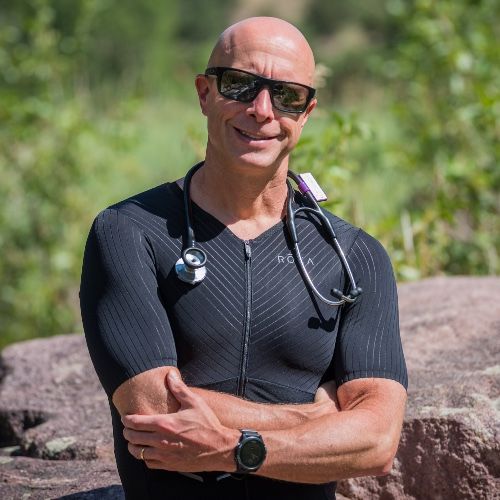
Speaker A:But before I get to a little summary of my thoughts on that amazing event, I want to tell you that the voice that you heard at the beginning of this episode is that of my guest.
Speaker A:She is Sheila Keeley.
Speaker A:She is a health researcher, a Nordic ski coach, and a master's endurance athlete based in Ottawa, Ontario.
Speaker A:She came to me by way of one of the many listeners who reached out with suggestions for guests for the program and I am ever indebted for those suggestions.
Speaker A:You have a suggestion for as equally an amazing a guest as Sheila is.
Speaker A:I hope that you will send them my way as well.
Speaker A:Sheila joins me to talk about her amazing success at the Ironman distance, something that she has come to fairly recently in life and has really held herself amazingly well.
Speaker A:She was the recent winner of the Ironman Ottawa age group for her particular age and also won The Mont Tremblant 70.3 Women's age group for her and I'll let her divulge what that age group is during our discussion, but she also talks about her role as a public health worker, how she leverages the benefits of cross country skiing.
Speaker A:It seems like every year about this time we seem to have another discussion about cross country skiing and I know that there are several who use cross country skiing to this kind of effect.
Speaker A:So maybe it's something we all need to pay a little bit more attention to.
Speaker A:But Sheila is yet another who uses cross country skiing and really attests to its benefits in endurance sport and to how it has helped her become the kind of triathlete she is.
Speaker A:That conversation is going to be coming up in just a little while.
Speaker A:Before that, I will be joined, as always, by my colleague and friend from Life Sport coaching, Juliette Hockman.
Speaker A:We are going to have a medical mailbag subject a question that was sent in by another listener to look at the benefits of a supplement called KA Ex.
Speaker A:We decided to call it cax.
Speaker A:We don't actually know how it should be referred to, but that's what we settled on.
Speaker A:You will hear our conversation that was recorded before I went to France and so there'll be a lot of conversation about how Nice supposedly went.
Speaker A:I'm going to tell you a little bit more about how Nice actually went coming up in just a couple of seconds.
Speaker A:But we recorded that before I left for France and we looked at the evidence about this supplement, what it is purported to do, whether or not it actually lives up to the hype and if it is something that you should consider incorporating into your training regimen, that's gonna be coming up just a short bit.
Speaker A:But before that, I do want to talk a little bit about the world Championships that took place this past weekend.
Speaker A:First and foremost, it was a sensational location.
Speaker A:Anybody who has been to France and certainly to the Cote d' Azur will know what a beautiful location Nice is.
Speaker A:And it did not disappoint, both in terms of a race course, in terms of an event host and in terms of just a place to be in order to celebrate the sport of triathlon.
Speaker A:The professional races went, I, I think pretty close to what we would have expected.
Speaker A:I know that when Matt and I talked about the men's race, we were not sure if Hayden Wilde was participating.
Speaker A:In fact, he was.
Speaker A:And not surprisingly, he led from pretty much, I think about a third of the way into the bike and had a sensational day and ended up taking the tape for his first 70.3 world championship.
Speaker A: credibly comfortable doing so: Speaker A:On the women's side, Taylor Knibb unsurprisingly, led pretty much from early in the bike all the way through.
Speaker A:Never really challenged in any way, any meaningful way anyhow.
Speaker A:And the rest of the podium shaped up pretty much the way we thought it would.
Speaker A:I don't think there were any real shocks along the way.
Speaker A:I think the biggest surprises came about as to how the race developed.
Speaker A:And I'm going to talk a little bit about that when I talk about the race course itself.
Speaker A:I think that the biggest takeaway for this event was that Ironman really rebounded after I think what a lot of athletes felt was a disappointing event in Marbella.
Speaker A:Marbella was very much chaotic.
Speaker A:Marbella didn't feel like it had the space to host the number of athletes on a race course and didn as good of a job organizationally as is the usual for a 70.3 World Championships.
Speaker A:Nice.
Speaker A:Clearly much better, much more experienced.
Speaker A: rld championships now back in: Speaker A:So they have much more experience and it shows because they really were much more on top of things.
Speaker A:There were a couple of snafus.
Speaker A:For example, the briefing, the race briefing certainly for the English race briefing did not have sufficient space to accommodate the number of athletes that wanted to get in for it.
Speaker A:I for one, was just not able to get in.
Speaker A:I showed up a little bit late and was among several hundred athletes who could not gain entrance to the briefing and therefore were just unable to hear it.
Speaker A:Now, most of what was said in the briefing was really contained within the athlete guide.
Speaker A:So there wasn't a whole lot new that needed to be divulged or that I needed to hear.
Speaker A:And I was able to get some information from people who attended.
Speaker A:But still, if you are attending a World Championship for the first time, and certainly if you have any anxiety about a race course that is as significant as the one in Nice, you kind of want to be there.
Speaker A:And it would have been nice to be able to attend if I had really felt strongly about it.
Speaker A:So that was one minor hiccup.
Speaker A:And again, I don't really necessarily hold that against race organizers, but knowing that they had a limited seating capacity, knowing how many English athletes were going to be attending, they may have wanted schedule more than one English race briefing.
Speaker A:Another hiccup was that like Marbella last year, T2 was indoors.
Speaker A:So in Marbella last year, T2 WAS in a garage facility.
Speaker A:Very cramped, very small, was not viewable by male athletes the day before.
Speaker A:And that made for real chaos on race day.
Speaker A:Nice.
Speaker A:Also had an indoor facility.
Speaker A:It was much larger, much easier to navigate, but again, wasn't really available at a lot of times for athletes to view the day before they did this year provide a viewing opportunity.
Speaker A:But I was there with family and friends and it was kind of hard for me to dedicate all of my free time just to do race events.
Speaker A:And so I wasn't there to compete to win my race.
Speaker A:So I wasn't going to dedicate all of my free time just to doing race events.
Speaker A:And because of the location of where T2 was, it just wasn't convenient for me to go over there and preview the whole transition area.
Speaker A:So the first time I got to see where my rack was on the day of the race, when I showed up with my bike in T2 and had to navigate that indoor facility and find out where my bike went, was this a huge deal?
Speaker A:No.
Speaker A:Is it ideal also?
Speaker A:No.
Speaker A:There were ways that they could have done things better.
Speaker A:They could have, for example, indicated in the athlete guide or perhaps on a sign somewhere in the athlete village.
Speaker A:This is what it's going to look like.
Speaker A:These are where your rack numbers will be on specific letter racks.
Speaker A:When you arrive.
Speaker A:Just look for your letter and then you can find out where to go.
Speaker A:So there are ways that they could make this a little bit easier and a little bit less stressful.
Speaker A:But again, these are minor quibbles when you consider what a fiasco it was in Marbella.
Speaker A:Nice.
Speaker A:Really went off without much of a hitch.
Speaker A:So now let's talk about the race itself.
Speaker A:We'll begin first with the swim.
Speaker A:The swim was very easy to navigate.
Speaker A:It was beautiful.
Speaker A:The water was not wetsuit legal, but it was in the Mediterranean, which was fairly calm.
Speaker A:You were very buoyant just because of the salinity of the water.
Speaker A:It was age group based, self seated, rolling start, honestly, very uncomplicated, easy to sight along the buoys.
Speaker A:And I thought swim went great.
Speaker A:I didn't swim particularly fast because I haven't been swimming particularly fast, but I had a reasonable swim and I was okay.
Speaker A:Transition was very long, long.
Speaker A:It was very big, but it was manageable and went pretty quickly.
Speaker A:The bike course was diabolical.
Speaker A:It's a similar bike course to what we've had before.
Speaker A:The climb was very lengthy, very steep in pitches, and the col de vence was difficult but doable.
Speaker A:But then, you know, then it became a bit of an issue.
Speaker A:And this was an issue, I think the pros had, and it was an issue I definitely had as an age grouper and that is the descent.
Speaker A:So the descent was very fast, very treacherous, very sketchy for a lot of people.
Speaker A:Very narrow two lane mountain roads, not great sight lines for a lot of it.
Speaker A:A lot of sharp curves.
Speaker A:And there were no question there were a lot of bikers out there who were incredibly proficient, incredibly brave, able to ride that descent very aggressively.
Speaker A:And what that turned into is that people who were able to climb very well may have lost the race because of their inability to descend quite as well as others.
Speaker A:And so what this race ended up doing, and you saw it in the pros, and a lot of the pros spoke to this, is that it highlighted the ability of riders to descend over anything else.
Speaker A:And I was pretty surprised to see that it impacted the professional race as much as it did.
Speaker A:But I definitely saw how much it impacted the age group race.
Speaker A:And I think that in triathlon a race should not be decided by your ability to descend a technical mountain descent.
Speaker A:That's just my thought.
Speaker A:I'd be interested in what other people think.
Speaker A:It definitely promoted, especially in the men and I heard in some of the women's age groups as well, it promoted descending that was not safe for the individuals doing it and certainly not safe to those around them.
Speaker A:I was cut off by an 18 to 24 year old in a very dangerous manner and passed by others on very narrow twisting roads in ways that I would suggest was not particularly safe either for them or for me.
Speaker A:And it just, I'm not sure that's what triathlon should be about.
Speaker A:I loved the course itself.
Speaker A:I had pre rode the descent and so I kind of had a better sense of where I could go fast and when I had to be careful.
Speaker A:And I have nothing but respect for those riders who were able to ride it as aggressively as they were and do so and get down safely.
Speaker A:But I just don't feel like that is what a world championship should be be decided upon your ability to descend that kind of road.
Speaker A:I don't know.
Speaker A:What do you think?
Speaker A:I'd be very interested in hearing for those of you who have competed at world championships before, and even if you haven't, even if a world championship is not at all in the cards for you, what do you think?
Speaker A:Should that be the determining factor for who is the world champion either at the pro ranks or for age groupers?
Speaker A:Because that really did have an impact here.
Speaker A:As for the run was great.
Speaker A:It was fast, it was flat, it was well supported for the entirety of its length.
Speaker A:It was beautiful.
Speaker A:The only thing about it, it was very hot.
Speaker A:And for whatever reason, despite the fact that France has canceled races for heat, they didn't have a lot of ice at the aid stations, which made it a little bit harder to cool yourself.
Speaker A:I know that I, with a later start group, was running in a much warmer environment than people who may have started earlier than me, and so heat management was important.
Speaker A:I took a lot of time to keep myself cool.
Speaker A:It definitely impacted my ability to run a faster run split than I would have otherwise.
Speaker A:But all in all, I was quite, quite happy with how it all went.
Speaker A:And all in all, this was a phenomenal event.
Speaker A:All of the negative things I have to say are minor quibbles because I want the overall take home to be that this was a phenomenal world championship.
Speaker A:I was very happy to have taken part in it and I'm sure everybody else who was there also felt the same way.
Speaker A:I do keep at the forefront of this the question and the comment about whether or not descending skills should determine a world champion.
Speaker A:And I do think that is worth having a discussion about.
Speaker A:But it's not going to be as much of a discussion next year when the race is in Chattanooga.
Speaker A:And honestly, that race in Chattanooga is not going to hold a candle to Nice.
Speaker A:And that's not to take away anything from Chattanooga, which does put on a good event and has a nice course and everything else.
Speaker A:But it ain't nice.
Speaker A:And this was a spectacular event in a spectacular location on great roads.
Speaker A:And Chattanooga doesn't have all of that.
Speaker A:It doesn't have quite the same environment.
Speaker A:It doesn't have the great road surfaces.
Speaker A:It's just not going to measure up in the same way.
Speaker A:So very interested to hear what others think.
Speaker A:Were you there?
Speaker A:What did you think of Nice?
Speaker A:Did you have a comparison thought between Nice and Marbella?
Speaker A:Are you excited?
Speaker A:More less the same for Chattanooga?
Speaker A:And what are your thoughts about the descent?
Speaker A:And should the descent be as important as it was in Nice?
Speaker A:As always, you can put your thoughts and answers to these questions into the Facebook group for the Tridoc podcast.
Speaker A:If you're not already a member, please do head over to the Facebook and search for Tridoc Podcast.
Speaker A:Answer the three easy questions, I'll gain you admittance and I'd love to hear your thoughts and comments on this conversation along the way.
Speaker A:Also, you could submit suggested guests and of course, questions for the Medical Mailbag.
Speaker A:And speaking of the Medical Mailbag, that's what I have for you now.
Speaker A:Juliette Hoffman's gonna join me.
Speaker A:We are going to look at the evidence as to whether or not KA X K A E X should be a supplement worth your consideration.
Speaker A:That's coming up right after this short.
Speaker A:It is time for the medical mailbag.
Speaker A:The first medical mailbag after the 70.3 World Championships.
Speaker C:Jeff, how was the race?
Speaker C:I can't wait to hear all about it.
Speaker A:I would love to tell you but I being a type A person and being a little bit organized, we are recording this a few days before I actually leave for easy Good with a good thing.
Speaker D:Yeah.
Speaker A:So the monologue, the intro for this episode will contain my thoughts and my.
Speaker C:Okay, good.
Speaker A:Can't wait to hear that stories and hopefully those will be good.
Speaker C:You know, it's so funny.
Speaker C:I have four athletes going to.
Speaker C:We have a group of 16 from LifeSport going.
Speaker C:Four of them are the ones I coach individually and on the one hand I'm giving them all of the typical free race advice about being careful what you eat and timing calorie intake at a certain time, et cetera, et cetera.
Speaker C:But at the same time, like eat all the food, you're in France.
Speaker C:Drink the wine.
Speaker A:The last time the race was in Nice, I went with my daughter and we stayed in a little VRBO that was right above a boulangerie.
Speaker A:And every morning we would go down and I'd be like because we both speak French and so we would interact and they were so excited that we were like tourists spoke French and my daughter speaks beautiful French.
Speaker A:And so we would go in and we would.
Speaker A:Oh yeah.
Speaker A:We were just loading up on the quest on stage and I was like grew it.
Speaker A:I'm in France.
Speaker A:And that's exactly.
Speaker A:We're actually, we're staying.
Speaker A:The place we're staying at this time we're going and we're meeting a couple of friends who have retired to Toulouse.
Speaker A:We're spending a few days in Toulouse and then we're going to Nice.
Speaker A:And the VRBO that we rented is owned by a guy who owns a Michelin starred restaurant in Nice.
Speaker C:Oh, for goodness sakes.
Speaker A:Okay, guess where we're going.
Speaker A:It will lead up to the.
Speaker C:I can't do all that afterwards because then you can really indulge.
Speaker C:I know.
Speaker A:Well, you know what?
Speaker A:This is my.
Speaker A:I, this is my last hurrah for a little while.
Speaker A:I'm gonna do this race as just, you know, I'm going, I'm gonna, I'm gonna enjoy the bike ride.
Speaker A:The run's gonna be a slog.
Speaker A:Yeah, the run's Gonna be a slog and just whatever.
Speaker A:I just.
Speaker A:You know what?
Speaker A:It's fine.
Speaker A:I'm going to have fun in France, and that's what it is.
Speaker C:Yeah.
Speaker C:It's funny, I've been, as.
Speaker C:I've been talking to some of the people who are going over, and I keep reviewing or previewing the race course with them and talking about the bike and.
Speaker C:And when to get in nutrition and what to be thinking about.
Speaker C:And particularly with that descent, I would say one out of the four of them are really confident descenders.
Speaker C:So talking to the other three about descent and also looking at the waves and when they're sending different people, so that perhaps the less experienced or more timid descenders can be thinking about the fact that there may be faster people coming through them and what to expect, et cetera.
Speaker C:And at one point, they.
Speaker C:I don't know what is on them.
Speaker C:I do know what is on the men's side, but for the women's side, anyway, they're doing kind of a younger age group and then an older age group and then a younger age group and then older age group, which is great because it means for these younger, perhaps less confident cyclists, they won't have that many people coming through them.
Speaker A:Right.
Speaker C:But then I was looking at one today, and the woman was going.
Speaker C:And the next age group back to her as my age group, and I'm like, oh, you won't have any.
Speaker C:You might have some people coming through.
Speaker C:Because I was thinking, if I was riding this course and I would love to ride this course hard and fast, I'd be like, okay, you're gonna have some people in my age group coming through.
Speaker A:Yeah.
Speaker A:And every age group will listen to.
Speaker C:They'll always have some.
Speaker B:Yeah.
Speaker A:The descent is technical.
Speaker A:It is potentially fast, but it is.
Speaker A:I will.
Speaker C:You're a good descender.
Speaker A:I'm a good descender, but what I need to descend fast is good sight lines.
Speaker A:And this frequently does not have.
Speaker C:Not have those good sight lines.
Speaker A:And so for me, this descent is not one that I open it up on.
Speaker A:I just not comfortable if I can't see well ahead.
Speaker A:I just don't feel comfortable unless I know it really well, and I just don't know it that well.
Speaker A:Yeah.
Speaker A:Are you going to.
Speaker C:Are you going to.
Speaker C:Are you going to drive up and descend it once before you.
Speaker A:I don't know if I'll be able to, but if I can, I will.
Speaker A:Yeah.
Speaker A:The pro race is going to be interesting.
Speaker A:We heard again, we're recording this.
Speaker A:We're recording this early.
Speaker A:So it's before I've even left and I just read today that Lucy Charles Barkley is not going to be competing.
Speaker A:So.
Speaker C:Yeah, it was all over the place.
Speaker A:Yeah, it'll be very interesting.
Speaker A:It's still the women's race is phenomenal.
Speaker A:It's very packed with amazing stars.
Speaker A:We also have just an incredible men's field, so gonna be great.
Speaker A:I'm looking forward to the trip, if not necessarily to the race, but we'll see what happens.
Speaker C:Oh, I'm excited.
Speaker A:We have a medical mailbag and it's a question from a former life sport athlete, one of my former athletes, who a dear friend.
Speaker A:What is the question?
Speaker A:Who's it coming from?
Speaker C:So this question is coming from Mira Rao.
Speaker C:Mira, thank you so much for sending this in.
Speaker C:Mira is a, A, I was gonna say Washington based, but I think she actually thinks she's in Vancouver.
Speaker A:No, she's in Vancouver.
Speaker C:She's in Vancouver.
Speaker C:Okay, so she's poor in the metropolitan area, but that includes Vancouver, Washington.
Speaker C:Yeah.
Speaker C:Longtime life sport athlete, coached by Jeff.
Speaker C:Also tri club for a while.
Speaker C:Came to a couple of our camps.
Speaker C:Anyway, Mira, thank you for sending this in.
Speaker C:So Mira's curious about this Swiss product and we're gonna probably mispronounce it.
Speaker C:So apologies but it's K A E X.
Speaker C:We think we're gonna say cax.
Speaker A:Yes.
Speaker C:So product TA X which is supposedly a air quote miracle cortisol stress reducing post workout drink.
Speaker C:So big promises with this drink, how it helps us recover.
Speaker C:They even have a very sexy packaging approach or strategy here which probably makes it even more scientific looking.
Speaker C:But I'm sure you have an opinion about this.
Speaker C:So what did your team find out, Jeff?
Speaker A:So Sarah Lopez was the intern on this one and she did a phenomenal job.
Speaker A:I just was so excited talking to her about this because she did such a great job in finding all the research and I hope that I will do her justice with explaining this all to you guys because this is a fascinating product mostly because it's pretty much made up in terms of what they want you to do.
Speaker A:So let's just talk about their claims.
Speaker A:Their claims.
Speaker A:Cortisol stress deducer is, and this is straight from their website, post exercise recovery drink.
Speaker A:It is marketed as a Swiss engineered.
Speaker A:Very exciting.
Speaker C:Yeah, like a train.
Speaker A:Yeah.
Speaker A:Multi nutrient formulation designed to accelerate post workout recovery, support sleep quality, improve heart rate variability, preserve lean muscle mass and normalize elevated cortisol levels following intense training.
Speaker A:And that really is the crux of what this product is purported to do is that it is Targeting this issue of elevated cortisol levels following intense training.
Speaker A:So let's spend some time talking about that.
Speaker A:Then we will return to this KA X and talk about what it is purported to do and whether or not it actually does what they say.
Speaker A:So what's the deal with cortisol?
Speaker A:Cortisol is our stress hormone.
Speaker A:It's secreted by the adrenal glands.
Speaker A:And, you know, I want to emphasize that it is completely normal for cortisol levels to rise in response to.
Speaker A:Yeah, if you go out and do a hard workout, you need your cortisol level to rise.
Speaker A:The reason being it helps with metabolism, it helps with cellular responses, and it also, it triggers this inflammatory response, which is important for recovery, for the building up of your tissues so that you can withstand another insult or another hard workout later on down the road.
Speaker A:Now, now the issue is most people, when they do a hard workout, their cortisol level rises appropriately, and then within 24 to 48 hours, it comes back down to its normal levels and you go back into your circadian or daily rhythm of cortisol.
Speaker A:And we know that cortisol that stays too high definitely can have issues, right?
Speaker A:If cortisol stays too high, it can have problems by suppressing immune function, it can actually impair muscle recovery by causing catabolism.
Speaker A:So that's where this, this statement comes from.
Speaker A:The company that we'll help preserve your lean muscle mass by decreasing your cortisol.
Speaker A:It will impair fuel availability because if cortisol level goes up, then so too does the breakdown of protein and the breakdown of fat and all these things.
Speaker A:So it's true that if cortisol levels stay very high post exercise for very long, that's not really a good situation.
Speaker A:There's really not a huge body of evidence that suggests that cortisol levels stay high in most people after exercise.
Speaker A:Okay, we want cortisol levels to stay high, at least initially.
Speaker A:But for most people, cortisol doesn't really cause adverse outcomes post workouts.
Speaker A:Now, just imagine, you do a hard workout, right?
Speaker A:I do a hard workout.
Speaker A:It's.
Speaker A:Now we don't know.
Speaker A:I mean, we're not measuring our cortisol.
Speaker A:You can't actually, it's not a good idea to measure your cortisol post workout because you're gonna get this elevated levels, and it doesn't mean anything because we know it, right?
Speaker A:So people haven't done a lot of studies to say, oh, there's this problem of elevated cortisol post workouts that we need to address.
Speaker A:So this is.
Speaker C:So we don't know anything.
Speaker C:We don't know anything about the people recover faster if their Cortisol remains elevated 30 minutes past versus 90 minutes past.
Speaker C:We don't really know anything about that.
Speaker A:No, not really.
Speaker C:Okay.
Speaker A:All right.
Speaker C:Okay.
Speaker A:And there's not been a huge amount of evidence that suggests that we need to address this.
Speaker A:So this is creating a problem where there is a problem and problems.
Speaker C:Yeah.
Speaker A:So we know that cortisol levels rise, but the issue for endurance athletes, the issue to be concerned about would be chronically disturbed cortisol patterns with persistent symptoms that indicate elevated cortisol.
Speaker A:But that is a very rare thing.
Speaker A:Most athletes do a workout, a hard workout, their cortisol spikes, and it comes down appropriately within 12 to 24 hours.
Speaker A:Okay.
Speaker B:Okay.
Speaker A:So that's where Kaex now comes in.
Speaker A:So Ka X is now saying, hey, our product contains a compound.
Speaker A:It actually is a mix of compounds, but it contains a compound called phosphatidyl.
Speaker A:I can't even say it properly, but phosphatidylserine.
Speaker A:Okay.
Speaker A:I refer to it as PS because it's much easier that way.
Speaker A:Phosphatidylserine.
Speaker A:It is a.
Speaker A:That has been shown to blunt cortisol levels.
Speaker A:Okay.
Speaker A:This is good.
Speaker A:Or at least it accomplishes what they say.
Speaker A:And is there evidence that shows this actually does this?
Speaker A:Yes, there is some evidence.
Speaker A:We found some studies.
Speaker A:The literature consistently shows that if you take phosphatidylserine or ps, you can blunt exercise induced.
Speaker A:And this gets a little complicated.
Speaker A:The adrenal glands don't secrete cortisol on their own.
Speaker A:They secrete cortisol in response to your pituitary gland.
Speaker A:The pituitary gland secretes something called acth, adrenocorticotropin stimulating hormone.
Speaker A:Acth.
Speaker A:ACTH gets into the bloodstream, goes to the adrenal glands.
Speaker A:The adrenal glands respond to that signal by releasing cortisol.
Speaker A:Okay.
Speaker C:Okay.
Speaker A:P.S.
Speaker A:Blunt exercise induced release of ACTH from the pituitary.
Speaker A:Therefore, cortisol levels stay low.
Speaker A:Okay.
Speaker C:Okay.
Speaker A:The studies that have been done on this have shown that if you take 6 to 800 milligrams a day for 10 to 14 days, then you can actually see a measurable decrease in your cortisol.
Speaker A:Now, nobody has actually shown that this results in improved performance, improved recovery, or anything like that.
Speaker A:So this is purely a.
Speaker A:Remember, we've talked about disease oriented outcomes and patient oriented outcomes.
Speaker A:So this is an example of a disease oriented outcome where, hey, look at this.
Speaker A:If you take ps, you get Lower cortisol levels.
Speaker A:Yeah.
Speaker A:What we're interested in is do you recover better?
Speaker A:Are you able to come back the next day and exercise harder?
Speaker A:Do you have any metrics that show that, oh, my heart rate variability is better, my lean muscle mass is better.
Speaker A:All these things.
Speaker A:Right.
Speaker A:Those are what you care about.
Speaker A:And the patient oriented outcomes, not so much.
Speaker A:They don't really show much change.
Speaker A:So what do some of the studies show?
Speaker A: So here's a study from: Speaker A:It was a proof of concept trial study Al from the journal of International Society of Sports nutrition.
Speaker A:They had 10 healthy male athletes, double blind placebo controlled trial.
Speaker A:They gave phosphatidylserine 600 milligrams a day versus placebo.
Speaker A:They found if you went cycling for 15 minutes at 65% VO2 max followed by 20 minutes at 85% VO2 max.
Speaker A:So a pretty reasonable workout that you actually saw Plasma cortisol levels fall pretty substantially if you took this stuff.
Speaker A:But they didn't translate that into anything else.
Speaker A:One thing they did look at though is we know that when cortisol level goes up, testosterone levels go down.
Speaker A:So they found in these athletes that when the cortisol levels were blunted, the testosterone levels were a little bit higher.
Speaker C:Okay.
Speaker A:Again, they didn't measure any performance outcomes, so can't say whether or not that turned out.
Speaker C:Also, would we want to be taking anything that suppressed cortisol before working out before training?
Speaker C:Wouldn't that?
Speaker C:Isn't cortisol important to stimulate that sort of.
Speaker A:That's what I would say.
Speaker A:Yeah.
Speaker A:Yeah.
Speaker A:I'm not sure.
Speaker A:We have other studies that look at 800 milligrams of PS versus 400 milligrams.
Speaker A:And this is a study from way back in 92 and basically showing that you really need to take about 800 milligrams a day.
Speaker A:If you take 400 milligrams, half the dose, you really get no.
Speaker A:No difference in cortisol.
Speaker A:So 400 milligrams does not work.
Speaker A:I want you to keep that in your memory bank.
Speaker C:Okay?
Speaker A:Got it.
Speaker A:You need 800 milligrams.
Speaker A:400 Milligrams does not work.
Speaker A:Okay.
Speaker C:Okay.
Speaker A:2006 Sports medicine endurance capacity review.
Speaker A:Another study of giving PS showing that cortisol levels in runners had some change in running time to exhaustion, but did not change the cortisol levels, which was interesting.
Speaker A:So not really sure what to make of that.
Speaker A:And then post exercise cortisol kinetics a more intensive look at what our hormones do when we exercise.
Speaker A:And this just looked again, at whether or not cortisol levels responded to PS and we see that cortisol levels definitely go up post exercise and then come down over a period of about 48, 72 hours.
Speaker A:And then giving, giving this stuff can reduce cortisol.
Speaker A:But interestingly, in this study, this was a deep dive into how much cortisol spikes last.
Speaker A:And what they found was cortisol spikes acutely after high intensity and long aerobic bouts, but naturally returns to baseline within two hours post exercise across all modalities, as long as you give basic carbohydrates and hydration.
Speaker A:So the cortisol spike is worse if you're not taking enough carbohydrates, but for most people it's down within two hours.
Speaker A:So this idea that you have this prolonged 48 hour cortisol spike is a little bit made up.
Speaker A:Right?
Speaker A:Okay.
Speaker A:Cortisol.
Speaker A:So KA X has like internal research data that's not been published.
Speaker A:So hard to know what to do with it.
Speaker A:Yeah, hard to know what to do with it.
Speaker A:And they say that they worked with some football, soccer, football team in Europe and they said that, oh, we were able to show faster cortisol recovery, improved REM and improved hrv, but not published.
Speaker A:So we can't verify whether or not this is true.
Speaker A:And we have not found anything that shows cortisol levels and is correlating really well with endurance exercise or with recovery.
Speaker A:Okay, so what is in CA x?
Speaker A:KA x contains some carbohydrates, 15 to 20 grams of fructose to glucose, some amino acids, some electrolytes and minerals, and some vitamins.
Speaker A:And it contains PS phosphatidylserine.
Speaker A:Each packet or each drink contains 100 milligrams.
Speaker C:And of course we know we need 800.
Speaker C:We need 800 to make a difference.
Speaker C:So you're gonna have to drink a lot of this stuff.
Speaker A:So here's the problem.
Speaker A:Right?
Speaker B:Right.
Speaker A:The recommended dosage is one packet or one bottle, which is 100 milligrams.
Speaker A:And there is abundant research to say that 100 milligrams is basically like not taking the stuff.
Speaker C:Yeah.
Speaker C:Right.
Speaker A:So what have they done?
Speaker A:They have created a problem that for the most part doesn't exist.
Speaker B:Right.
Speaker A:They have found a product that addresses this problem which probably doesn't need to be addressed in the first place.
Speaker A:And oh, by the way, their product doesn't actually do anything because the dose isn't correct.
Speaker C:This is too slow.
Speaker C:Yeah.
Speaker A:It's too low.
Speaker A:The dose is 100 milligrams instead of the 800.
Speaker A:That's needed.
Speaker A:And oh, by the way, you need to take it for several days.
Speaker A:You can't just take one packet.
Speaker B:Yeah.
Speaker A:So not terribly.
Speaker A:Now again, their marketing is very slick.
Speaker A:They have a very nice looking website and I think that the vast majority of people are just going to catch the.
Speaker C:Oh.
Speaker A:Phosphatidylserine lowers cortisol.
Speaker A:Cortisol's bad.
Speaker A:Phosphatidylserin is good.
Speaker A:We've got phosphatidylserin in our drink.
Speaker A:And how much does it cost?
Speaker A:I'm glad you asked.
Speaker C:How much does it cost?
Speaker A:Jast 30 packs of powder costs $70.
Speaker A:Wow.
Speaker C:And it's one a day.
Speaker A:Yeah.
Speaker A:You should take them out.
Speaker A:Yeah.
Speaker C:Eight a day.
Speaker A:You take them around their workouts.
Speaker A:No, they suggest their recommended dosage is one.
Speaker A:But remember, one is doing nothing.
Speaker C:Right.
Speaker C:Nothing.
Speaker B:Yeah.
Speaker A:And the little drinks, the drinks that, the water with the little package, 12 of those is like a hundred bucks.
Speaker A:Yeah.
Speaker C:That's incredible.
Speaker C:Yeah.
Speaker C:I just.
Speaker C:Nothing about this makes sense.
Speaker C:Yeah.
Speaker C:What you said.
Speaker C:We're creating a problem where there isn't one and then we're creating a product to create a problem that doesn't exist.
Speaker A:To solve a problem that doesn't exist.
Speaker A:Solve a problem that doesn't exist.
Speaker A:And not even at the right dose where it would actually solve the problem that doesn't exist.
Speaker A:So I was just.
Speaker A:We had such a good time going through this because she did such a good job of lining up this literature to say, okay, let's look at what their problem is.
Speaker A:This doesn't actually seem to be a problem.
Speaker C:They have a problem.
Speaker B:Right.
Speaker A:Let's see what they're trying to fix.
Speaker A:And then how are they.
Speaker A:Oh, there is some evidence that shows that this stuff does work, but not at the dose they're providing.
Speaker A:So this is pretty.
Speaker A:This is pretty.
Speaker B:Is.
Speaker A:So after we just came off, what a couple episodes ago where we talked about core control.
Speaker A:Right dose, right stuff that actually has claims.
Speaker C:Does what it claims.
Speaker A:Yeah.
Speaker C:It doesn't make.
Speaker A:It may not work for a lot of people because of the caveats and because it's only going to work in certain types of environments.
Speaker A:But still, we've considered that now our gold standard of supplements.
Speaker A:This does not come anywhere close.
Speaker A:No problem.
Speaker A:It's not an issue.
Speaker A:A dose that's nowhere close to what's actually needed to treat the faux problem.
Speaker A:And.
Speaker A:Yeah.
Speaker A:And very expensive for.
Speaker C:You know what would be really cool is if we could put in a spreadsheet all of the products that are reviewed on this podcast and then see where those Companies are in 12 months time.
Speaker C:See if they exist, see if they've grown, see if they've fallen through the cracks, see if.
Speaker C:I don't know, it's just always so interesting.
Speaker A:The thing around that is I think a lot of these companies.
Speaker A:So I reviewed a while ago, before you joined me, I reviewed Liquid iv, which has gone mainstream now and is really big in advertising.
Speaker A:Oh, you need Liquid iv because you may be all the time you need your electrolytes.
Speaker A:And I'm like, this is such ridiculousness.
Speaker A:It's like, come on.
Speaker C:Yeah, drink water, people.
Speaker A:And now Gatorade too.
Speaker A:Gatorade is starting to do it.
Speaker A:Gatorade's jumping on the bandwagon.
Speaker A:They sell these little packets too.
Speaker A:And I'm like, wow.
Speaker A:But people, it is interesting because we have these competing things where you have this constant undermining and disinformation around science.
Speaker A:We have this current sort of environment where it's like science is science and the people who do science are bad.
Speaker A:And yet we have all this marketing that is telling you you need electrolytes because science shows.
Speaker A:So it's very interesting how you have.
Speaker A:And it's all disinformation too because on the one hand you have people saying science is bad and they're making it up.
Speaker A:And then you have people saying this stuff's based on science, but the science is based on.
Speaker A:Is either non existent or it's very weak or it's not really applicable.
Speaker C:I feel.
Speaker C:And I also feel like this is a typically American problem because we're always so trying to do things quickly in this country.
Speaker C:We're trying to find, find, you know, the sort of the silver bullet.
Speaker C:We're trying to get ahead.
Speaker C:We're trying to.
Speaker C:We don't eat as many, just regular normal whole foods.
Speaker C:Our diet isn't as good and so we're constantly trying to find the shortcuts.
Speaker A:Yeah.
Speaker C:And I just, I think that is a.
Speaker C:Not, maybe not uniquely American, but typically American.
Speaker A:Well, it's a very western civilization where we have done a very good job of taking away the ability for people to get access to good food.
Speaker C:Food.
Speaker A:And so it's so cheap to produce these highly processed foods that are very high in calorie content and very low in nutrients.
Speaker A:Right.
Speaker A:It's not good.
Speaker A:Bigger problems than we're gonna fix here.
Speaker A:But folks, save your money.
Speaker A:Skip the KA X.
Speaker A:This one goes into the dustbin, into the bad bucket.
Speaker C:Right?
Speaker A:Dustbin.
Speaker C:Yep.
Speaker A:Mira, thank you so much for the question.
Speaker A:We always appreciate them and we have some Good questions coming up that also come from other listeners.
Speaker A:But if you have a question and you want to hear something reviewed, oh, and I should mention, if your name is Andrew per se and you disagree and want to use KA X, by all means.
Speaker A:That's a, that's an inside, that's a joke.
Speaker A:That's an inside thing for me and Julia, you know, but you'll have to let me know how it goes.
Speaker A:We love you.
Speaker A:We love you.
Speaker C:And we do.
Speaker D:We love you.
Speaker A:All right, if you have a question, whatever it might be, please do send it my way.
Speaker A:We love to investigate, we love to bring you the evidence based answers and it's a great joy to dig into these things and the interns really enjoy it as well.
Speaker A:So send your questions my way either by email@triodocloud.com or head over to the Facebook private group for the Tridark podcast.
Speaker A:If you're not a member, just look it up on that platform.
Speaker A:Answer the very easy questions.
Speaker A:I'll gain you admittance.
Speaker A:You can join the conversation about all the things you hear on the show as well as submit your questions for future episodes on there.
Speaker A:Julie Juliet, wait.
Speaker C:Before you say goodbye, I want to say one thing.
Speaker C:Last weekend I was out in eastern Washington.
Speaker C:I was running a race Preview clinic for 70.3 Washington, which is coming up in three weeks.
Speaker C:And the day before there's this little local, wonderfully local race called, it's an Olympic or sprint called the Plutonium Man.
Speaker C:And at the Plutonium Man I was walking towards the pre race meeting and a guy came up next to me and said never seen this guy before in my life.
Speaker C:Said, I just want you to know that I think you and Jeff do such a good job on the podcast.
Speaker C:Oh yay.
Speaker C:I know.
Speaker C:And this is a little race and so if you happen to run across us, if you hear our voices across the transition and you think, wait a second, I know that voice, please always come up.
Speaker C:It just absolutely makes my day.
Speaker C:It makes Jeff's day.
Speaker C:So please come up and say hi and just even if you don't like the podcast, you can come and say hi.
Speaker A:Oh yeah, no, we want to hit, we want constructive criticism as well.
Speaker A:I gotta tell you, you it, you're absolutely right.
Speaker A:This is a labor of love for both of us.
Speaker A:We don't take any sponsors.
Speaker A:This is totally done as something we just enjoy doing and bringing to you guys.
Speaker A:So when you come across us, if you're going to be in nice, if you've, when this comes out, east will have already happened.
Speaker A:But hopefully you came up to me in Nice if you were there.
Speaker C:Yes.
Speaker A:But wherever you may be, if you happen to come across one of us, please do come and say hi because we really do enjoy interacting with you guys and hearing about how the program.
Speaker A:Program has impacted you makes a big difference to us.
Speaker A:Yep.
Speaker C:Yes.
Speaker A:Awesome.
Speaker A:Juliet, thanks so much.
Speaker A:You have.
Speaker A:So this comes out.
Speaker A:This comes out, actually, I think the weekend of Tri Cities.
Speaker C:Okay.
Speaker C:Yeah, Tri Cities is.
Speaker C:Yeah.
Speaker C:So you have worlds on the 13th, right?
Speaker A:Yeah.
Speaker A:And this comes out the next weekend.
Speaker C:Okay.
Speaker C:And the 20th is tri cities or 70.3 Washington.
Speaker B:Yep.
Speaker A:I will miss you.
Speaker A:This will be my first time not being there.
Speaker A:I love that race.
Speaker A:Good luck.
Speaker A:And my athlete Justin will be racing there.
Speaker A:He's very excited about it.
Speaker A:I'm excited for him to do it it and I can't wait to hear about how it goes.
Speaker A:And have they changed the course at all?
Speaker A:Is it the same?
Speaker C:The run course is a little bit different, but nothing to worry about.
Speaker C:Yep.
Speaker C:Instead of taking you out along the road and having you come back into the Riverfront Pass at a mile, they're going out completely on the riverfront path and back and then the very top of the course instead of, they're just changing a tiny little loop up there, I think to keep people from running through the middle of campus.
Speaker C:So small changes but noted.
Speaker B:Yeah, that's.
Speaker A:Yeah, that's good.
Speaker A:All right, excellent.
Speaker A:If you're doing the Tri Cities race, please do enjoy yourself.
Speaker A:It's a great event.
Speaker C:Come find me.
Speaker A:Go find Juliet.
Speaker A:All right, we'll see you again on the next episode.
Speaker A:Juliet, look forward to discussing another medical mailbag topic at that time.
Speaker C:Thank you, Jeff.
Speaker C:Have a good one.
Speaker A:My guest on the program today is a health researcher and a public health worker, which is why I'm wearing the T shirt I'm wearing in case any of you are watching the video.
Speaker A:If you're not, you will have to go over to YouTube to take a look because I promise you it's worth it.
Speaker B:Anyways.
Speaker A:Sheila Keeley.
Speaker A:She is a health researcher, a Nordic ski coach, a master's endurance athlete who is based in the capital of my home country, Ottawa, Ontario, Ontario.
Speaker A:The name of name of that big lake.
Speaker A:Yes, we are going to keep calling it that.
Speaker A:With a background in public health and cancer prevention research, Sheila brings a sharp evidence based lens to training and nutrition.
Speaker A:She is the head coach for the University of Ottawa Nordic Ski Team and focuses primarily on competitive cross country skiing throughout the winter before pivoting to triathlon each spring.
Speaker A:And summer.
Speaker A:She has done incredibly well in multi sport.
Speaker A:And I have to thank my listener Jen, who connected me to Sheila on Facebook after my latest request for guests.
Speaker A:And so this is just one of several of the guests that I've been connected to.
Speaker A:So thank you, Janice.
Speaker A:But Sheila's latest multisport results include back to back age group wins at Ironman Canada and Ironman 70.3 Mont Tremblant in 25 and 26.
Speaker A:Congratulations, Sheila and thank you so much for being my guest today on the Tridoc podcast.
Speaker B:Thank you and thanks for having me on.
Speaker B:Looking forward to chatting.
Speaker A:Yeah, me too.
Speaker A:Sheila, I want to begin first with just your history in multisport.
Speaker A:How long have you been in triathlon?
Speaker A:What got you into it and have you always been successful?
Speaker B:I got into triathlon probably at McGill.
Speaker A:Okay.
Speaker B:In Montreal.
Speaker B:Yeah, I thought, oh, this looks like fun.
Speaker B:Not super serious.
Speaker B:I definitely wasn't a swimmer.
Speaker B:I had ridden my bike and ran, did some short triathlons, moved to San Diego for grad school, mecca of triathlon of course, but got really busy working and doing a master's.
Speaker B:So I thought I can't do three sports.
Speaker B:So I did some duathlons while I was there.
Speaker B:I really regret not keeping up with swimming when I was there.
Speaker B:And then we had an opportunity to return to Canada and then my main sport even in at McGill when I was in high school as well was cross country skiing.
Speaker B:So then when I came back to Canada I just full of forests into cross country skiing and mainly cross country ski training.
Speaker B:Of course we only have winter like 5ish months of the year, so usually in the summer.
Speaker B:Like beyond roller skiing, swimming, cycling and running are all really good cross training for cross country skiing.
Speaker B:So that then how I've been doing it is I've been skiing in the winter and then I pivot in the summer to triathlons.
Speaker A:And are you a classic or a skate skier?
Speaker B:We do both, so most.
Speaker B:Yeah, so it's the distances also range from when I was racing more it was like sprints which are about one kilometer to 50 kilometer races.
Speaker B:So you have to be pretty, pretty diverse in what you do.
Speaker A:Now as a multi sport athlete, I'm surprised to hear that you don't do biathlon.
Speaker A:That's not something that I know.
Speaker A:Guns in Canada are not really a big thing.
Speaker A:But still I've always loved watching biathlon,.
Speaker B:Triathlon and it is an amazing sport and I actually coach by athletes not in the, not in the shooting portion, but it would add a whole other level like the beyond skiing, fast and everything, they have a whole other sport to do and it is really fascinating.
Speaker A:So were you always good at triathlon or was it something that you realized one day, hey, I'm actually not bad at this?
Speaker A:How did your success come?
Speaker B:It's.
Speaker B:No, I was pretty mediocre all around.
Speaker B:Like even I was never a crazy fast runner.
Speaker B:In high school I didn't really run track.
Speaker B:I did cross country because everybody's allowed to run cross country.
Speaker B:And then early 20s when I got a little bit more into training and running, I was, I got better trying to think how well I did.
Speaker B:But then, yeah, I'd say over the years, in my twenties every year as I got a little bit more into smarter trading then I guess I was winning some local races.
Speaker B:Didn't do a lot of long races until recently.
Speaker B:But yeah, I'd say it's been a lifetime.
Speaker B:And maybe because I was never at the top or really good, I think that's kind of kept me motivated to keep improving.
Speaker B:And I have slowed down, but maybe not as much as, as you normally slow down when you get to your 60s.
Speaker B:So.
Speaker A:Okay, so I'm just going to call out your, your humility here.
Speaker A:You won your age group at Ironman Ottawa by 1 hour and 27 minutes.
Speaker A:So I'm going to just say I think the idea that maybe you're not so fast is.
Speaker A:I don't know, that seems a little humble.
Speaker A:That's pretty impressive.
Speaker A:You were third out of the water with a swim of 121.
Speaker A:You were first off the bike, 5:34.
Speaker A:And then you had a very impressive run at 4:08 and, and yeah, you won your age group by an hour and a half.
Speaker A:So that's pretty good.
Speaker B:Okay, thank you.
Speaker A:I'm gonna say, I'm gonna say that at some point you clearly became very quick.
Speaker A:Are these your first age group wins?
Speaker A:Are these your first big races?
Speaker B:These I'd say are my first big Ironman races.
Speaker B:I've been, you know, doing smaller local races and I never wanted to do an Ironman.
Speaker B:It just wasn't.
Speaker B:I didn't think I had time to train and I always did think quick speed and sprints never came to me naturally.
Speaker B:So I, that I should really focus on shorter stuff.
Speaker B:But then when Ironman came to Ottawa, my hometown last summer, I was like, I think they're going to close all the city streets for three sports that I do.
Speaker B:And I think this would be fun to train for.
Speaker B:And an interesting kind of physiological puzzle.
Speaker B:What do you need to do to be able to spend that long on the bike and how much you need to eat.
Speaker B:So I looked at it as a fun little training experiment and I actually really liked.
Speaker B:Was a lot of fun.
Speaker A:Yeah, it's a lot of fun when it goes fast and you can be at the front like that.
Speaker A:Yeah, I bet.
Speaker A:So very scientific of you to approach it that way.
Speaker A:I love it.
Speaker A:Which brings me to really.
Speaker A:I want to talk later about your background and what you do in with your public health and how you approach your nutrition and stuff.
Speaker A:But I first want to just kind of talk a little bit about how cross country skiing informs your approach to endurance sports and how you believe it really helps you as a triathlete.
Speaker A:Because most of us spend our winter months on the trainer, we try to run outside, or if we can't run outside, we're on the treadmill.
Speaker A:But you believe that cross country skiing is.
Speaker A:And you're not the first.
Speaker A:I've spoken to several people who really believe that cross country skiing is potentially the best way to really get the pressure off.
Speaker A:And you're not beating down on your joints, you're not having a lot of.
Speaker A:It's not an impact spot sport and yet it's one of the better endurance sports that you can do.
Speaker A:So what's your thought about how cross country skiing can prepare someone for triathlon?
Speaker B:I think you'll get a fantastic endurance base and as you said, without the pounding running.
Speaker B:Not that cycling is pounding.
Speaker B:I also think if you're doing it over the years, it adds just a really nice variety to your year.
Speaker B:Not that three sports.
Speaker B:You think I can add another sport.
Speaker B:But every spring you kind of have a new beginning.
Speaker B:It's a different focus.
Speaker B:You train for skiing in the winter, you get a really good endurance base.
Speaker B:It's full body, it's non impact, you're outside.
Speaker B:It just translates really well.
Speaker B:I'd say the cycling usually comes back super quickly.
Speaker B:I do try to keep some swimming in over the winter because I find it's just too hard to start all over again.
Speaker B:And it's also the master's programs are really popular.
Speaker B:So you kind of have to to get your name in there for the whole year.
Speaker B:But I do think it translates really well.
Speaker B:Except the running, I'd say because of the pounding.
Speaker B:It's also.
Speaker B:You keep some running in the winter.
Speaker B:Usually I don't run as much as I should, but I think that's a little bit too harsh on your body to stop running and just start again every spring.
Speaker A:So you're keeping some Running in there, sort of.
Speaker A:So you keep that adaptation of the muscles and the joints to load.
Speaker A:And do you just drop biking completely during the cross country season?
Speaker B:Season, I'd say almost completely.
Speaker B:And it's not that I don't like riding on the trainer.
Speaker B:I get back in the spring and I was like, well, you know, the train's kind of fun.
Speaker B:But say, yeah, maybe I did a little bit more this year because of Ironman, but not that much more skiing, I guess.
Speaker B:Also it involves.
Speaker B:You have to get to the venue and wax your skis.
Speaker B:So there's a lot of time involved with that so that by the time you get home, it's like, I already did my exercise for the day.
Speaker A:Yeah.
Speaker A:And how much are you skiing during the winter?
Speaker A:Are you skiing every day?
Speaker B:Day?
Speaker B:I'd say probably around five, at least five days a week.
Speaker B:Okay.
Speaker B:So either myself or because of the coaching, I'm out there coaching at least three days a week.
Speaker B:And I'll always try to tack on a little bit of extra skiing on my own.
Speaker B:And then.
Speaker B:Well, also on my own.
Speaker B:We have fantastic ski trails in Ottawa.
Speaker B:Like, there's the Gatineau Park.
Speaker B:We have nacrodoc Nordic.
Speaker B:It's a fantastic facility.
Speaker B:And the city is now we have all these local trails, like throughout the city that I can run from my house with my skis and just do some skiing really close to home.
Speaker A:So now here in Colorado, we had a terrible winter.
Speaker A:We had no snow last year.
Speaker A:Have you seen impacts of climate change there affecting the ability to get to skiing done?
Speaker B:We have seen impacts.
Speaker B:And the center that we ski at now is snowmaking.
Speaker B:So that makes a big difference to the base.
Speaker B:So we can, as soon as it's.
Speaker B:I'm talking Celsius here below zero, they can start making snow.
Speaker B:So that makes a really good base for us.
Speaker C:And.
Speaker B:And it maintains the snow longer.
Speaker B:So I think because of the snow making, it's really made a difference to that.
Speaker A:Now, the last time we had a cross country ski guy on here, he was a guy who actually ran a cross country ski place up in the northeast US and he was talking about how equipment has really changed.
Speaker A:And he was saying that it was becoming increasingly common to ski with skis that don't need wax.
Speaker A:Is that something that just the mere mortals like myself would be doing and then people who are really more into it are going to rely on wax?
Speaker B:That is a really good question.
Speaker B:I'd say that varieties of no wax skis or skin skis are becoming a lot more popular.
Speaker B:Now, and for good reason.
Speaker B:It gets kind of tricky to wax when it's quite warm because I coach, and in ski racing, the coach wears many hats.
Speaker B:And one of them includes choosing the wax for races so that I almost exclusively always wax my skis so I can keep learning more about wax.
Speaker B:And I'd say that a waxed ski will always be faster, or let's say almost always be faster than a skin ski or something like that.
Speaker A:And is the wax important for the grip or is the wax important for the glide?
Speaker B:Both.
Speaker B:When you're classic skiing, that's when you need grip so that we'll be gripping the skis.
Speaker B:We also glide the glide zones.
Speaker B:And then for skate skis, yeah, There's a whole variety of different waxes you can put on to improve the glide of the skate skis.
Speaker A:And which one is more taxing aerobically?
Speaker A:Is it skate skiing or classic, or are they pretty similar?
Speaker B:Ah, that's a good question.
Speaker B:I'd say they're both taxing.
Speaker B:It depends on the course.
Speaker B:A lot of people say skate skiing might translate a little bit better to cycling because you might be using more quad.
Speaker B:Quads and glutes.
Speaker B:And classic might translate a little bit better to running.
Speaker A:Okay, interesting.
Speaker A:And do you do some of the, like the marathons, the ski marathons, or are you really focused on the speed stuff now?
Speaker B:Mostly the marathon.
Speaker B:We do have a local event, the Gatineau Lappet.
Speaker B:So I'll try to do that one every year.
Speaker B:It's pretty enjoyable.
Speaker B:And I jump into shorter events now and then.
Speaker B:I just find that they.
Speaker B:It's always good to keep working on speed.
Speaker B:Speed.
Speaker A:And have you had the same kind of success in cross country skiing as you have in multi sport?
Speaker B:Yeah, I'd say I've been pretty successful.
Speaker B:Yeah.
Speaker B:Okay.
Speaker A:Oh, you're very humble.
Speaker A:You could tell us how many, like, what championships have you won?
Speaker B:I'll say just the past few.
Speaker B:I did the.
Speaker B:The Gatineau Lopet.
Speaker B:It's one of our big Lopet events.
Speaker B:It has a 50 kilometer skate race and a 50 kilometer classic race.
Speaker B:And if you want, you can do both of them back to back.
Speaker B:And I thought that'd be really good training for Ironman racing.
Speaker B:I did that this year and I think I was like, top three overall when they combine the times.
Speaker A:Very impressive.
Speaker A:Very nice.
Speaker B:Yeah.
Speaker A:Okay, so for people who are listening to this and are thinking, wow, I live in a place that gets snow.
Speaker A:I live in a place where cross country skiing is available.
Speaker A:What do I need to do to get into this.
Speaker A:Do I need to buy equipment?
Speaker A:Is this something I can rent equipment?
Speaker A:Do I need to get lessons?
Speaker A:What does somebody need to do if they want to incorporate this into their off season training?
Speaker B:Yeah, I'd say maybe start by renting equipment if you can, just to see if you like it.
Speaker B:Lessons or clubs or groups are always a good idea.
Speaker B:We have a lot of them in the area, a lot of masters groups that you can join, same as triathlon.
Speaker B:Like when you can join a group day you're training, it always makes it a lot more fun.
Speaker B:Just get out there and give it a try.
Speaker B:And even if you're not efficient, it's like swimming, you'll still get a really good workout out.
Speaker B:And the better your technique gets and the more efficient you become.
Speaker B:Yeah.
Speaker B:The further and faster you can go.
Speaker A:That's awesome.
Speaker A:All right, I want to switch gears a little bit and talk about what you do on a day to day basis outside of skiing, obviously and triathlon.
Speaker A:And I understand that you have a master's in public health.
Speaker A:You do work in epidemiology.
Speaker A:What exactly is it that you do in your day job?
Speaker B:So I was working with UC San Diego when we lived there on a long term study looking at diet and breast cancer.
Speaker B:I still continued working on that when I moved to Ottawa for a long time.
Speaker B:And at the end of that study I did more consulting work with the school of Medicine and with the cancer center, working mainly on research papers, helping write grants.
Speaker B:So a lot of different areas of public health and that's kind of dwindled in the last few years.
Speaker B:The main contract I was working on was cut one day to the next because I don't think, I don't think Trump liked the title of the project because it was.
Speaker B:He had an underserved population.
Speaker B:So that was my last contract.
Speaker B:So now I'm not doing as much in that area.
Speaker B:Still super interested, mainly spending my time, have a little bit more free time, which is nice.
Speaker B:And coaching cross country skiing.
Speaker A:That's awesome.
Speaker A:And you have like, I do a interest in looking at the science behind athlete nutrition, behind all of the stuff that's marketed at athletes.
Speaker A:What are the kinds of things that drive you to distraction when you see all this stuff?
Speaker A:Yeah, that's an open ended question.
Speaker A:I know we could be here for a while, but what are the kinds of things that just drive you crazy when you see them either marketed to athletes or just on socials, whatever.
Speaker B:Oh, there's so much.
Speaker B:And probably like yourself, when I started to look into it more you just realize like, how much crap and scams there are out there.
Speaker B:Oh, and I.
Speaker B:You probably get a lot of people asking you questions and you're like, why?
Speaker B:Why are they gonna use that?
Speaker B:And then when you look into it and you go, oh, because this person's advising it.
Speaker B:So some of the.
Speaker B:Okay, I'd say some of the bigger ones that might affect, you know, endurance athletes is the whole carbohydrates are bad for you.
Speaker B:Not.
Speaker B:Not just even in the general population.
Speaker B:It'll equate a lentil, which is a lot of carbohydrates, to a jujube or something like that.
Speaker B:Put them all in the same.
Speaker B:Put them all in the same boat.
Speaker B:And then for endurance athletes as well, if you start restricting carbohydrates, especially if you're really active, that can.
Speaker B:That can lead to a lot of problems down the road and probably not the best training.
Speaker B:You're more apt to get sick.
Speaker B:So I'd say that's.
Speaker B:That's probably one of the bigger ones.
Speaker B:But there are of a lot.
Speaker B:Lot.
Speaker A:Are there any supplements that you use that you have found that actually have science that you realize that, you know what, this is something I.
Speaker A:Is worth me incorporating?
Speaker B:No.
Speaker B:Well, let me be so if.
Speaker B:So I'm not saying all supplements are bad.
Speaker B:If somebody is low iron and needs an iron supplement, maybe vitamin D. If you've been recommended something by your doctor and.
Speaker B:And not.
Speaker A:Yeah, not any person on social media.
Speaker B:Yeah.
Speaker B:And any.
Speaker B:It's really important if you are looking into a doctor or something on social media.
Speaker B:If they do sell supplements.
Speaker B:To me, it's almost a red flag.
Speaker A:Yeah.
Speaker A:The one that I'd be interested if you've done any reading on this, but the one that I'm getting more interested in, and it's not for endurance sport, but it's more for brain health, especially as we age, is creating.
Speaker A:The research that's coming out on creatine is just more and more compelling.
Speaker A:Not just for cognitive benefits, but even for mental health benefits.
Speaker A:It just seems like creatine, one of these things that was initially advocated for.
Speaker A:Oh, you could use it to build muscle.
Speaker A:You could use it to build strength.
Speaker A:You could use it to build endurance.
Speaker A:Yes, it will build muscle.
Speaker A:It will not build endurance.
Speaker A:It actually seems to have no impact or potentially negative impact on endurance.
Speaker A:But the initial studies that looked at post concussion turned out to be pretty good.
Speaker A:And now we're seeing just really interesting stuff coming out.
Speaker A:Perimenopause post peri and postmenopausal women showing Improved cognition and even in aging men as well, showing improved overall mental health and cognition.
Speaker A:Have you read anything on that?
Speaker A:Do you have any thoughts on that?
Speaker B:I'll tell you, as soon as you started to say the one, I was like, oh, it's probably creatine.
Speaker B:Because.
Speaker B:Because also that is the one where I'm like, oh, like there's a lot coming out now.
Speaker B:Maybe I should look into this more.
Speaker B:There's a lot.
Speaker B:Yeah.
Speaker B:So I'd say I don't.
Speaker B:And I'm not saying don't take creatine or that it's good or bad.
Speaker B:It is one.
Speaker B:I would say now that warrants.
Speaker B:Warrants a second look.
Speaker B:And as you were describing, you're describing a body of evidence, right?
Speaker B:You're not talking about cherry picking one specific study, which is what a lot of people do, but it's the way you're talking.
Speaker B:There's mounting evidence over the last five years, over the last different people in different populations.
Speaker B:And that's where.
Speaker B:Oh yes.
Speaker B:So maybe, maybe this is something to look at.
Speaker B:So I'd say.
Speaker A:So what is your approach then as a public health expert when you are confronted with these people who are saying you got to use this because this is going to be the end all to be all to give you the best advantage.
Speaker A:How do you approach those claims?
Speaker A:Because I know how I do it and I know how I tell my listeners to do it.
Speaker A:But I'm curious, I want to hear how you approach that because I'll be interested to know if it's the same way I do it.
Speaker B:Usually I'll look into the research.
Speaker B:So go to either PubMed or whatever and I won't.
Speaker B:There are a lot of individual studies and if you do read the individual studies, you might be convinced as well.
Speaker B:But it's trying to look at the body of evidence.
Speaker B:So review studies instead of individual studies.
Speaker B:Or if there are, if there's a consensus statement where experts.
Speaker B:Because I'm not an expert in any particular area, but if there is an expert consensus statement where they'll look at all the evidence and they'll.
Speaker B:So I find that if you can find something like that, it's tend to go towards the consensus statements, the review papers.
Speaker B:And if I do know that there's a certain expert in that particular area and they've written about it even in the lay population, not a research paper.
Speaker B:There are some researchers that I will trust their opinion more than others.
Speaker A:And is there an effect size that makes something more important?
Speaker A:Because a lot of times we see things and I'll review things on this program where the effect size is minuscule.
Speaker A:Other times the effect size is real, but.
Speaker A:But it's pretty questionable as if it's going to actually make a difference.
Speaker A:So is there an effect size for you that matters?
Speaker B:I'd say it depends.
Speaker B:And then again, I think I'd still look at the body of evidence and be looking for a consensus statement and not one research study.
Speaker B:And it's not to say that one study is not good.
Speaker B:I worked in research.
Speaker B:I know what goes into a clinical trial.
Speaker B:It's huge.
Speaker B:But even then, I think things have to be replicated in different populations.
Speaker A:Yeah, it's that replication, right?
Speaker A:That.
Speaker A:That generalizability.
Speaker A:It's so important.
Speaker A:It sounds like we're very much on the same page in terms of how we evaluate these things.
Speaker A:So I'm glad to hear that.
Speaker A:It warms the heart.
Speaker A:It's so nice.
Speaker A:What is next for Sheila Keeley?
Speaker A:Are you headed to Kona?
Speaker A:Did you take your slot?
Speaker B:Oh, that's a good question.
Speaker B:No, I didn't.
Speaker B:I know.
Speaker B:I hear that it's really a great place to be, but no, and then I thought, like, even after this year's raise, I thought, I think 70%.3s or something shorter is really.
Speaker B:I think that's where it's at.
Speaker B:It's a little bit easier to train for.
Speaker B:I still feel like I'm racing and not surviving these parts of it.
Speaker B:Like in ironman Montrembla, the 70.3 has already sold out in 24 hours.
Speaker B:So I was like, darn, okay, I'm not doing that one.
Speaker B:But yeah, I was thinking maybe shorter triathlons, maybe a running focus back into a little bit more strength training.
Speaker B:Because I find that something.
Speaker B:Something that's super important.
Speaker B:And then when you're training for an Ironman, it's really hard to get in the gym and do the strength training that we all need.
Speaker A:Yeah.
Speaker A:And I actually was going to ask about that.
Speaker A:In terms of cross country skiing, how much do the cross country skiers do strength training?
Speaker B:I'd say at least twice a week, especially in the off season.
Speaker B:Yeah, it's quite important.
Speaker B:There's a lot of power and explosiveness that you want in a lot of skiing and upper body strength as well.
Speaker B:So quite important to cross country skiing.
Speaker A:Okay.
Speaker A:And so you're doing it throughout the year or.
Speaker B:No, that's okay.
Speaker A:So that's the thing.
Speaker B:Not as much as I should, but I think I do have a better base of just, you know, working on being explosive and trying to keep that.
Speaker B:Trying to keep that.
Speaker B:Because we know that as we age, that's what we lose.
Speaker B:Right.
Speaker A:Yeah.
Speaker A:So important, especially for women who are postmenopausal, maintaining muscle mass and strength is again, research that's been evolving over the past decade or so.
Speaker A:Just seeing the importance of that and.
Speaker A:Yeah, just huge.
Speaker B:So, yeah.
Speaker B:So I think, yeah, getting back into the gym and working a little bit more on that, working a little bit more on speed.
Speaker B:Try to see if I can get my 5k time down because even when I train for the long stuff, you're only.
Speaker B:Your distance is only as fast.
Speaker B:It's a percentage of you sort of.
Speaker B:Of.
Speaker B:I don't know if you'd call 5K top end speed, but tickets really threshold speed.
Speaker B:Yeah, yeah.
Speaker B:Focus on those.
Speaker A:Yeah, that's the thing, right.
Speaker A:A lot of triathletes find that is difficult to marry doing, and there are some people who are really good at it.
Speaker A:My colleague, Juliette Hockman, she won a 70.3 race and then just a couple weeks later went to USAT Nationals and won the sprint national title.
Speaker A:She's a remarkable athlete.
Speaker A:If we look at Christian Blumenfeld, a guy who has amazing success at Olympic distance and Ironman distance.
Speaker A:But it's not that common that you can marry the top end speed of the shorter course racing to the.
Speaker A:The ability to go for very long distances and still have the kinds of speed that you need to have to win at those distances.
Speaker A:There are more and more athletes who are coming from the short course world to the long distance world and somehow bringing that ability.
Speaker A:It's really quite remarkable.
Speaker B:It's incredible.
Speaker B:Yeah.
Speaker B:To watch them is something else.
Speaker A:And we're seeing it on both men and women's side.
Speaker A:It's just been a joy to watch.
Speaker A:And we're heading into championship season now.
Speaker A:We have 70.3 worlds, we have Ironman Worlds coming up.
Speaker A:And yeah, it's always so much, so entertaining to watch the men and women really take on those challenges.
Speaker A:Sheila, I can't thank you enough for taking the time to join me today on the podcast and share your just amazing story of how you've married cross country skiing with this incredible ability at multisport.
Speaker A:We very much look forward to seeing your continued success on the triathlon circuit and hopefully, just maybe, you'll get to Kona someday and show the world what you can do with that incredible talent of yours.
Speaker A:Thank you for being here today.
Speaker A:I really appreciate it.
Speaker B:Thanks for the opportunity.
Speaker A:Singing stereo.
Speaker D:Hi, I'm Sam Sankoff and I'm the proud editor of the Tridock Podcast the Tridock Podcast is produced by Jeff Sankoff, my dad, along with his amazing interns Cosette Rhodes and Sarah Lopez.
Speaker D:You can find the show notes for everything discussed on the show today as well as archives of previous episodes episodes@www.tridockpodcast.com.
Speaker D:Do you have questions about any of the issues discussed on this episode or do you have a question for consideration to be answered on a future episode?
Speaker D:Send Jeff an email@tridocloud.com if you are interested in coaching services you really should.
Speaker D:Please visit tridoccoaching.com or visit lifesportcoaching.com where you can can find a lot of information about Jeff and the services that he provides.
Speaker D:You can also follow Jeff on the Tridoc Podcast Facebook page, Tridock Coaching on Instagram and the Tridock Coaching YouTube channel.
Speaker D:And don't forget to join the Tridock Podcast private Facebook group.
Speaker D:Search for it and request to join today.
Speaker D:If you enjoy this podcast, I hope that you will consider leaving a rating and a review as well as subscribe to the show wherever you download it.
Speaker D:And of course there's also always the option of becoming a supporter of the podcast@patreon.com tridockpodcast the music heard at the beginning and at the end of the show is radio by empty hours and is used with permission.
Speaker D:This song and many others like it can be found at www.
Speaker D:Revverbnation.com where I hope that you will visit and give small independent bands a chance.
Speaker D:The Tridock Podcast will be back again soon with another medical question and answer and another interview with someone in the world of multisport.
Speaker D:Until then, train hard and train healthy.